Showing posts with label Art. Show all posts

Tuesday, March 21, 2023

The Van de Veldes: Greenwich, Art and the Sea


My last art post was about the simply awful Hogarth exhibition at the Tate, which was just terrible, having no interest in art or Hogarth or historical accuracy. So it was some trepidation that I went over to the Queen's House in Greenwich to see the new National Maritime Museum exhibition on the Van de Veldes: Greenwich, Art and the Sea.

I need not have worried as the NMM have aced it with a fascinating exhibition that shows real knowledge and interest in art, history, the sea and sailing, with an amazing set of exhibits in a stunning building.

The Queen's House is an excellent location because that was where the Van de Veldes actually worked, with a studio in the basement. It is also a gorgeous building:


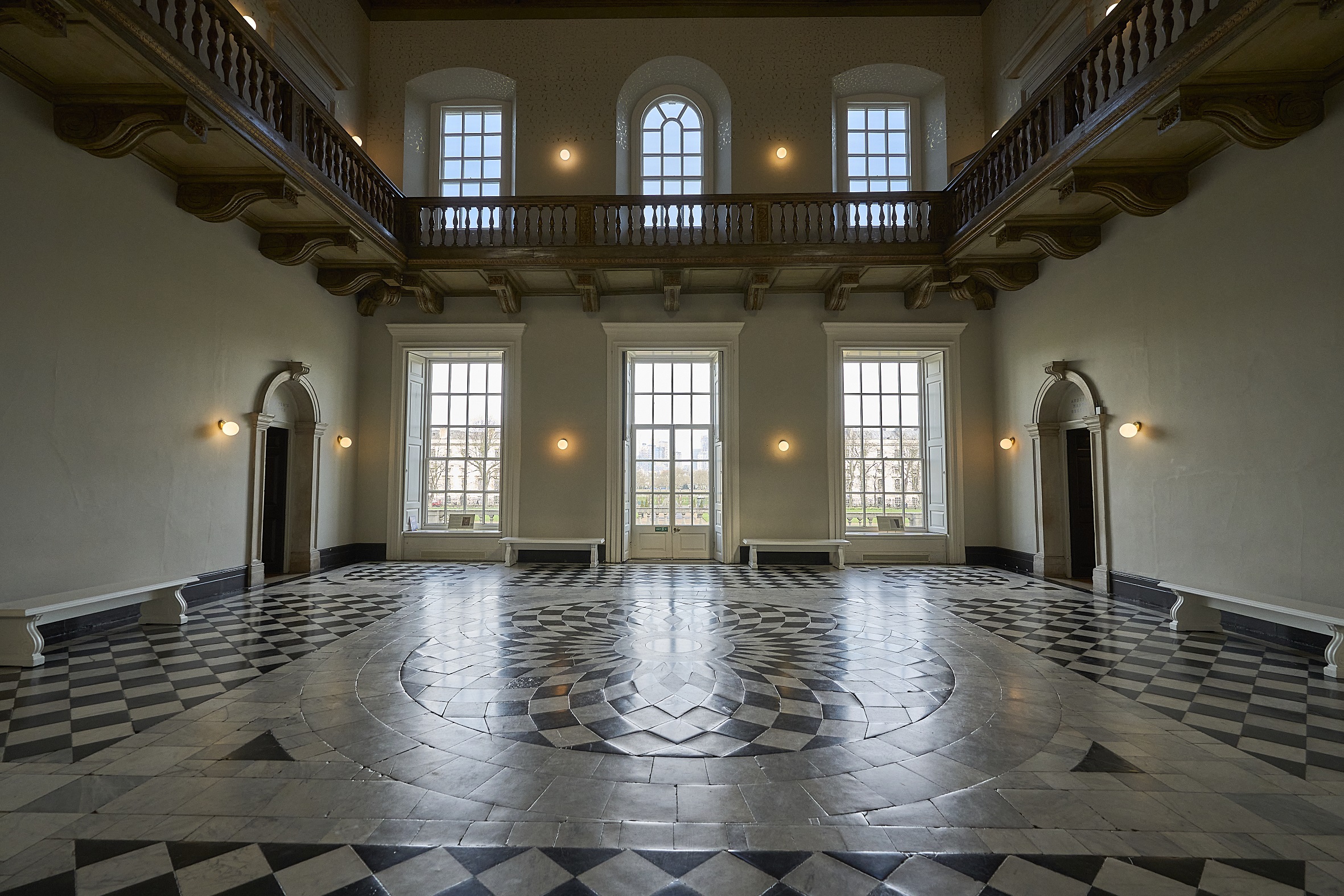

The Van de Veldes were the great Dutch artists that were lured to London with promises of £ 100 per year and went on to document some of the great naval battles between the English and the, er, Dutch, which is some what ironic really.

Indeed, one of the most amazing exhibits was a small drawing of the battle of Solebay in which King James II and Van de Veldes the elder draw their recollections of the positions at 2 pm - as both were present, but on different sides!

The star of the exhibition is the magnificent giant tapestry (top image) which shows the battle in amazing detail. You can see a video of it being hung here after its recent restoration - which is well worth a view, if only to get a sense of scale. It's huge - completely filling one wall all the way to the ceiling.

Van de Veldes the elder often worked in graphite which resists water, and so can be used, as he was wont to do, on the deck of a boat at sea, sometimes in the middle of the battle. The NMM has some of his sketches in its archive - the largest collection of Van de Veldes in the world.

The other benefit of using graphite was it could be used to make a mirror image copy, so template ships could be pasted into larger scenes, and then adjusted accordingly.

There was amazing attention to detail: all the rigging looked right. Ships, wind, sails, anchors, light - all were as they should be. Look at this one, and notice the ship heading into wind having transported the king to his flagship:


Each painting or drawing was just exquisite:

It reminded me a bit of the Turner and the Masters exhibition, back in the day when the Tate was actually interested in art. That looked at how Turner was inspired by greats such as Van de Veldes and had some examples where very similar scenes were painted, deliberately. For Turner said that seeing Van de Veldes the younger had "made me a painter".

A fantastic exhibition in a beautiful building, and what's more its free!

If you're in London and interested in art and the sea, its well worth a trip down to Greenwich.

More information on the NMM web site here.

Wednesday, December 29, 2021

PSA: Hogarth and Europe at the Tate Britain


I've just been to the Tate Britain to see the Hogarth and Europe exhibition, and rather than reviewing it thought it might be better to give a Public Service Announcement (PSA) for anyone wondering if they should visit.

1. Ignore the "and Europe" 

I really couldn't see the benefit of connecting Hogarth to what was happening in Europe at the time. It wasn't like the Turner and the Masters exhibition where you could put paintings side by side and show how Turner (or in this case Hogarth) developed his ideas. The connections were vaguer, more on the lines of similar genres, such as social commentary and urban life. 

It was more like the curators were still smarting from Brexit and wanted to show that Hogarth was part of a wider Europe (geddit?) even though Hogarth was as rude about the French as he was about, well, the British. As was to be apparent (see next point), the Tate seems obsessed with politics and issues over art.

Basic rule of thumb: if it's not by Hogarth it's ok to ignore it.

Anyhow, as with all art galleries, less is more. Too many rooms with acres of canvases leads to burn-out. What is best is a couple of well curated rooms with a highly focussed message. 

So that's a double fail for the Tate (see below).

2. Ignore the puerile wall text

The accompanying text seems to have been written by the Woke Committee for Political Correctness and is an example of toxic negativity. One panel was written by this group:


The themes are pretty basic:
  1. Britain in the 18th century was bad, sexist racist colonial etc etc etc
  2. Hogarth was a white male living in Britain in the 18th century and hence suspect, bad etc etc
The consequences are by implication the following:
  1. The Tate is bad for showing the work of Hogarth
  2. You, the viewer of this art, are bad for attending this exhibition
It didn't actually tell you anything you wanted to know. It was so ghastly that even woke-friendly The Guardian called it "a massive own goal for the gallery". The Sunday Times hit the nail on the head when it described it as:

"the collapse here of useful scholarship and its replacement by wokeish drivel. Caption after caption wastes precious explanatory space on à la mode speculations about Hogarth’s intentions that are thunderously unreliable."

For a more general review of what the newspapers thought, check out this article for The Art Newspaper.

3. Fire up Wikipedia

I got to the end and realised I knew almost nothing about Hogarth and each of the art works on display and so opened up Wikipedia and it's entry on Hogarth. It changed the exhibition for me, massively for the better. Having done that, I went back to some the big sequences such as:

  1. The Harlot's Progress
  2. The Rake's Progress
  3. Marriage a-la-mode
  4. Before and After (well, at least, one of those pairs)

On Wikipedia there are good, informative, illuminating descriptions of each of the works and their context. 

Thank you Wikipedia! (and take note the Tate)

4. Enjoy the amazing map of London

At the start of the exhibition there is an amazing, huge map of London of the time and I spent a long time pouring over its details. 

I (and others) spent ages comparing it to modern London, checking out the lack of bridges, the non-existent Regent Street and Buckingham Palace, where London was expanding, the Fleet ditch (still there), the docks, the ships etc etc.

Loved it!

If the curators had any imagination (and not the toxic negativity of a woke committee) they could have marked out where some of Hogarth's pictures had been located so we could have put it in context.

But alas...

5. Go First Thing Midweek

It might be Covid restrictions, but booking the first slot on a midweek morning meant the gallery was amazingly quiet. You really could get up close to each picture and have time to explore the details - once, of course, you'd loaded Wikipedia on your phone.

Sunday, September 26, 2021

The Illuminated River Tour


Over the last few years some of the bridges of London have been lit up as part of the Illuminated River installation.

Designed by New York based artist Leo Villareal, LED lights have been installed in 9 bridges of central London from London Bridge to Lambeth, together with controlling software. It is said to be the longest public artwork in the world.

On Friday, as part of the Totally Thames Festival, there was a special Thames Clipper tour of the river with commentary from project director Chris Waite and I went along.

It was a lovely evening, warm with clear skies, and we left from Tower Pier heading up river to Lambeth Bridge and the back down again. We learnt a lot about the project, and there was a lot more details to it than you might expect, from the engineering and abseiling required to install the equipment to the environmental angles, whereby lights could not point into the water to avoid confusing the fish.

The best bit was we could take photos from the front of the Thames Clipper boat and we're not usually allowed there, plus the moon was rising over the City:

Must admit I did spend rather a long time admiring the view and not listening too closely, though I did catch a few phrases that sounded interesting such as "secret chamber within the Boudica statue" and "no one knew where the light controllers were, not even those in MI6".

The colours and pace of movement of the lights were carefully chosen. For example, the photo at the top shows Westminster and Lambeth bridges which are green and purple to reflect the colours of the benches in Westminster itself. Pedestrian bridges typically have faster moving changes than other bridges.

We went back down to Tower Bridge and then returned to Tower Pier.

I stopped to have a chat with the project director while others disembarked. We were then all a bit surprised when the Thames Clipper boat without warning let loose its lines and headed out into the river.

But all was well as we ended up getting a short ferry ride over to City Pier, which was great for me as meant I could get an earlier train home.

The good thing about this art work is its available to all, for free. Just walk along the Thames path on either side in the evening after dark and admire the bridges.

But I do recommend seeing them from one of the Thames Clipper which has by far the best view.

Thursday, July 01, 2021

Lea Valley Walk 1: The Line at the O2


I started my Lea Valley walk at the O2 Arena, which is definitely not on the Lea River, being on the south side of the Thames.

But it is opposite where the Lea joins the Thames and the end point of The Line sculpture walk which I was effectively doing in reverse.

The O2 Arena is a good place to start as it has excellent transport in the form of the North Greenwich Jubilee line station and facilities if you need them like sandwich places and loos.

This leg was a short 1.8 km walk round the O2 looking at the art work, ending up at the cable car aka the Dangleway.

First up was Alex Chinneck's A Bullet from a Shooting Star:


This looks like an electricity pylon that has fallen like a javelin, ending up stuck in ground. It used to be impressive to see while on Thames Clippers zooming by, but they seem to have built this ugly black building between it and the Thames which seems a bit of a shame.

Here's one of those Thames Clippers with Docklands behind and a junk sailed yacht passing by:


Next up is a sign saying "Here 24,859" which is located exactly on Longitude = 0 after which there is the much cooler 1/8th slice of an ocean going sand dredger, the Arco Trent:


Impressive! And it can't be hidden from those travelling up the Thames, unlink the upside down electricity pylon.

Next there's Gary Hume's Liberty Grip, an abstract in bronze, before we get to a Gormley, which are always good value. 

I've seen a few before, including this exhibition at the Hayward Gallery back in 2007. In this case it's Quantum Cloud:


There's a figure at the centre of those tetrahedral sections, which is very cool. I'm seriously not sure about the quantum angle, as that's a word that is overused, particularly by those that don't understand it (though arguably that is everyone).

From here it's a short walk to the cable car station to catch the Dangleway...

Monday, April 13, 2020

Talk to Sailors!


There's an interesting article in the Times today about research into the Viking Tune ship, above, in the Oslo Museum (as visited on my way up to Svalbard).

Apparently recently it has been identified was an especially fast vessel, with significantly larger rig than would be expected for its length, and particularly sea-worthy. However, as the article puts it:

Norwegian archaeologists had missed the significance of the boat because “they didn’t actually talk to people who knew boats and ships”. In contrast, [Dr Paasche] sails and is in touch with traditional Norwegian boatbuilders.

They should have talked to the sailors!

I have thought that before. Archaeologists seem obsessed in seeing religious significance in everything - no doubt future archaeologists will write articles about the religions of London involving worshipping of the gods Arsenal, Chelsea, Fulham and all.

So when they find evidence of a causeway near Vauxhall into the Thames of course its a religious site. The fact that the location is the highest point that the Thames was tidal (at the time) and hence could alternatively be a trading site, where boats would be able to take produce up and down is ignored.

The role of trade in driving humanities history of the oceans is the subject of the book "The Boundless Sea" by David Abulafia which is in my to-read pile of books, though it is dauntingly fat, heavy, long (over a 1,000 pages) and uses a small font.

Archaeologists aren't the only ones who don't seem to get sailing. I remember seeing this painting of a wave by August Strindberg at the Tate Exhibition on that artist:


In the blub around this painting, called "The Wave" (obv.) the museum described the fear the wave brings.

But to me it reminds me of sailing offshore where the wave, if coming from astern, means in a few seconds time the yacht will be surfing down its edge. So the emotions are (also) anticipation and excitement at the thrill to come.

Given one of the Strindberg's themes is the creative process, those emotions are as important if not more so than fear.

I'm guessing the museum curators are not sailors, and have not surfed a yacht down waves like those.
But Strindberg would have, as he travelled a lot by boat across the Stockholm archipelago.

The Tate too should have talked to some sailors.

Sunday, December 23, 2018

Greenland Glaciers: Melting in London


Earlier this year I saw the damage that global warming is already causing to our planet. The glaciers in Svalbard are retreating so fast that charts can not be updated quick enough and indicated our yacht was stuck in the ice when the reality was we were floating freely.

But not many get a chance to head up to 80N to see that for themselves. So ice blocks were brought from Nuuk, Greenland to the City so that Londoners could see this melting for themselves.

It was an art installation by Scandinavian artist Olafur Eliasson and there were multiple sites, including one in the City (above & below, which I saw a week ago) and also another outside the Tate Modern.


If you put your ear to the ice, you could hear quiet pops as it melted, and see the blue layer going through it (top).

I'd rather see them in the amazing wildernesses of Greenland but global warming is all too real, too serious and it is time to do something about it.

Wednesday, October 24, 2018

Royal Academy Exhibition: Oceania


Lets just say it: the Oceania exhibition at the Royal Academy is amazing!

It was full of the art and culture of Polynesia from Australia to Hawaii where travel is by water, over horizons to islands far away. It started with their boats and tools, such a navigation (another stick map) and lots of paddles (including those brought back by Captain Cook himself!):


The art work on some of the paddles was extraordinary:


Then there were the figures, gods and ancestors:


Then there were domestic, carved wooden beams and carpets, and weapons, spears and shields:


Finally there's an amazing audio-visual installation. Now often these are bit gimmicky but this was a delight.

It was a long wall on which a scene slowly panned to the left (Updated: see an extract here). The scene had the look of a water colour, the type that artists on Captain Cook's voyages might have painted of scenes of the islands and the islanders they encountered.

But within the painting were actors playing out characters from the indigenous population and also the visitors in the tall ships from Britain. Scenes were played out, from pre-contact days, to contact up until a dramatic recreation of the death of Captain Cook in Hawaii.

Beautiful and moving, this gives a feel for what one scene showed, the mix of indigenous and European, arts and sciences:


If you get a chance, definitely add it to your to-do list for your next trip to London.

Its on until the 10th of December

Monday, October 22, 2018

Lates at the Royal Academy: Cosmic Ocean


Recently I've discovered the joys of Museum Lates. These are events which, as the name suggestions, museums and galleries across London have special late openings. But not all Lates are the same, and the Londonist web site has identified two categories:
  • Museums and art galleries that open late
  • Museums and art galleries that have events hosted in their spaces in the evening
I'd been to the National Gallery late before, and that had been an example of the first category, but the Royal Academy [of arts] was firmly in the second category, described by the Londonist to be grand affairs with "DJs, cocktails, bizarre performances and so much more" that sell out quickly.

I wanted to go to the Oceania exhibition anyhow so when the email for the "RA Lates: Cosmic Ocean" came round thought why not? and it turned out to be a lot of fun. Indeed, at one point I thought I might give the actual exhibition a miss and just do the event.

First up were some talks, including "A guide to ocean sailing" by Oliver Beardon of Sail Britain. He touched on navigation techniques including those used by the Polynesians such as this stick chart:


One of the focuses of Sail Britain is to highlight the danger of plastics to our ocean, and there were some slides on this include the famous ocean gyres:


I had a brief chat with him afterwards and mentioned my experience from Svalbard of finding plastic on every beach and suggested he read Tristan's book on water.

The Polynesian navigation theme continued with a pop-up (or rather blow up, given it was inflatable) planetarium that showed the southern skies and how they were used to navigate. For example, this shows how to find south:


Around the horizon you can see the 32 directions that the Polynesians used - which is just like the 32 points of the compass used in the west. As they say, great minds thing alike.

The event was described as Cosmic Ocean so as well as a inflatable planetarium there was a similar hemisphere for a video of life in the ocean:


This video was more artistic, though less informative. It had a weird 180 degree field of view and there was no sense of scale. Many of the creatures looked like they were from the deep, dark depths where here be monsters:

Some of the best bits were abstracts, like the bioluminescence creatures flickering across the globe:


It certainly made the sky => stars and sea => bioluminescence connection very vividly.

There was lots else to see, with bars selling cocktails all over the place, rooms full of plot plants like a tropical jungle, courtyard with food stands and music complete with Hawaii dancers, London Hula!!


The audience looked similar to the dancers as there'd been a strong dress-to-impress message: "cosmic constellations, stars and moons, or alternatively opt for a deep sea creature". So some came as mermaids, many had glitter on their face or fair lights in their hair. I was a bit more modest but had dug out an old space themed t-shirt.

Along with the luau in the RA Cafe there was also a talk elsewhere about its "secret" history and why it is both authentic but also not-authentic (I think; must admit only got the tail end of this talk as was waiting for the Sail Britain one).

I missed some bits, like there was what sounded like a fascinating video on Polynesian voyaging traditions called Star Travel - see the trailer for it here. Unfortunately it was 50 minutes long and I didn't have that much time. I also skipped the coral sketching class and a site-specific art-film called "Exotic Savage: The Decolonisation". I was tempted by the DJ who seemed rather good but suspect it was aimed at a younger audience - i.e. those who weren't thinking it might be time to head off home.

It was all a lot of fun, plus there was the exhibition...

Friday, October 20, 2017

The Richmond Bridge Boathouse

Richmond is one of those places where the craft of boat building has remained strong. As the Richmond Bridge Boathouse's web site puts it:

 "Master Boatbuilder Mark Edwards MBE leads a team of dedicated craftsmen excelling in traditional Thames Boatbuilding, heirs to a heritage stretching back centuries."

Mark Edwards was the builder of the Royal barge Gloriana and can be seen above putting an extra layer of varnish on this boat:
This is actually a film set boat which was used in the Robin Hood from 2010 (not that I saw it) and was about to be shipped to the island of Islay for another.

I had a chat about it with Mark Edwards who said the shape was designed by filming needs not sailing and it would be pretty hopeless upwind given the lack of proper keel. He also explained the difference between the hull shape and that of the Vikings - all pretty fascinating.

Also at Richmond during the Totally Thames Festival was the creation of artist Ros Burgin which used wood from various Thames built boats to recreate the curves of the tidal river from Teddington Lock out to the Thames Barrier:

It was good to see both forms of craft work on display in such as nice part of London, and was all part of the wider Totally Thames focus this year on boat building on the river:


Monday, September 18, 2017

Totally Thames Installation: Future Dust

 
The reason I returned at night to St Katharine Dock was to see the amazing installation "Future Dust" (above) by Spanish artist Maria Arceo (below) and light artist Tim Scheffer, part of Totally Thames and the Thames Plastic project.
As well as being stunning it had a serious message, one that I feel pretty strongly about, namely the dangers to our environment that comes from plastics.

I've seen this in the Thames when out kayaking or doing one of the Thames 21 clean-ups, but its not just our river its a global problem with our seas polluted with this material that doesn't decay but ends up returning to us in the fish we eat.

Maria Arceo was artist in residence on the eXXpedition which sailed with a crew of 14 women across across the Atlantic, taking samples as they went. It was really good to have a chance to meet with her and hear her stories first hand.

The installation (by day, below) consists of cages containing plastic rubbish, all of which was collected by the banks of the Thames in London over a year or so. The cages are arranged in the shape of a footprint, as can be seen if you get a view from above:

There is simply so much of it, and it last so long its a really big problem we need to all address. Afterwards I tried like Frogma's Bonnie to go plastic free but in today's society it is almost impossible. It needs structural changes to make it possible.

I really hope this impressive and though-provoking installation helps change attitudes so we make those changes and protect our rivers, seas and wildlife from this scourge.


Saturday, February 25, 2017

Art of Fiji at the Sainsbury Centre

All sailors must be impressed by the skills of the people of Micronesia,  Melanesia and Polynesia in crossing the vast Pacific. They combined expertise in boat building with navigation to cross literally thousands of miles of open water. The Marshall Islands chart was one of my highlights of the recent British Library map exhibition.

So I was intrigued to hear of an exhibition of "Fiji: Art & Life in the Pacific" and, grabbing a book to read on the train, headed up to Norwich and the Sainsbury Centre for Visual Arts.

Alas most of the exhibition was a no-photography zone apart from the two items at ground level, in particular the boat above and the matting below:
The exhibition notes said this about the boat:

A highlight is a beautiful, specially commissioned, eight metre-long double-hulled sailing canoe that has been built in Fiji and shipped to Norwich for display. Made entirely of wood and coir cord, with no metal components, the canoe results from a project to encourage canoe-building skills and is a small version of the great 30-metre-long vessels of the 19th century, the biggest canoes ever built.

You can see more of the exhibition in the video they produced by clicking here (they have switched off embedding). When I went there was no dancing, and I also missed the Queen who dropped in to have a look, arriving by helicopter from nearby Sandringham according to my taxi driver.

There was also a video that showed these outrigger sailing canoes racing in Suva harbour which was fascinating as they can sail in either direction so tacking / gybing involve moving the sail physically from one end of the boat to the other while the steering oar goes vice versa.

Very interesting and rather at treat to see all this art together given how away Fiji is from the UK.

Friday, October 21, 2016

Floating Dreams

Totally Thames has a track record of interesting installations on the river, and 2016 was to be no exception.

This time it "Floating Dreams" by South Korean artist Ik-Joong Kang which was moored between the Tate Modern and St. Pauls next to the Millennium Bridge.

Each face was built of elements showing drawings from those that fled North Korea for the South, never to return, of their lost remembered hometowns. At the top a child gazed upwards at the cathedral, lit up on the horizon:
At a time when the world seems awash with refugees, it was a moving and dramatic installation.

Thursday, October 13, 2016

Thames and Estuary Festivals

The nights are drawing in, I'm back in London where there are no icebergs but a backlog of posts.

First up, some pics from September when Totally Thames met the Estuary Festival.

The Totally Thames has been a highlight of the calendar for the last couple of years with a month of activities focused on the great river flowing through London. Previously had an encounter with an enormous hippo and collected some seriously old flints from the Vauxhall foreshore.

This year was only able to see a handful of events as was away for the start of the month (and the Great River Race) and also the end of the month.

In between went down to Tilbury for the complementary Estuary Festival. This celebrates the edge-lands where the Thames merges into the North Sea between banks of mud and grass via various forms of art.

One of the key sites was the Tilbury Passenger Terminal, a Grade 2* listed historic building with that romantic abandoned feel to it:


This was the site of Points of Departure, an arts programme that included talks, video installations, audio installations, the canoe Ghost to take you to the land of the dead, live music with dynamically updated score derived from sounds from an underwater microphone, video of music played on a cockle boat out in the Thames Estuary about the wreck of the London, pictures, photos, found objects and much more.

Offshore there were tugs pumping their impressive arcs of water (top) and a bell you could ring to commemorate something or other (up to you):
One of my favourites was a set of videos with music about Trinity Wharf (another fab place) by the same artist as the 1,000 year Longplayer piece currently being played at that site by Jem Finer. It had the title of 51 31'44"N 0 0'38"E which is of course the coordinates of Trinity Wharf. You can watch some of them here: there's a dream like feeling that means they shouldn't be rushed.

It was the first such Estuary Festival and I think it was a fantastic start, so hope to see it back again in years to come.


Updated: due to return in 2020