Showing posts with label london. Show all posts

Tuesday, March 21, 2023

The Van de Veldes: Greenwich, Art and the Sea


My last art post was about the simply awful Hogarth exhibition at the Tate, which was just terrible, having no interest in art or Hogarth or historical accuracy. So it was some trepidation that I went over to the Queen's House in Greenwich to see the new National Maritime Museum exhibition on the Van de Veldes: Greenwich, Art and the Sea.

I need not have worried as the NMM have aced it with a fascinating exhibition that shows real knowledge and interest in art, history, the sea and sailing, with an amazing set of exhibits in a stunning building.

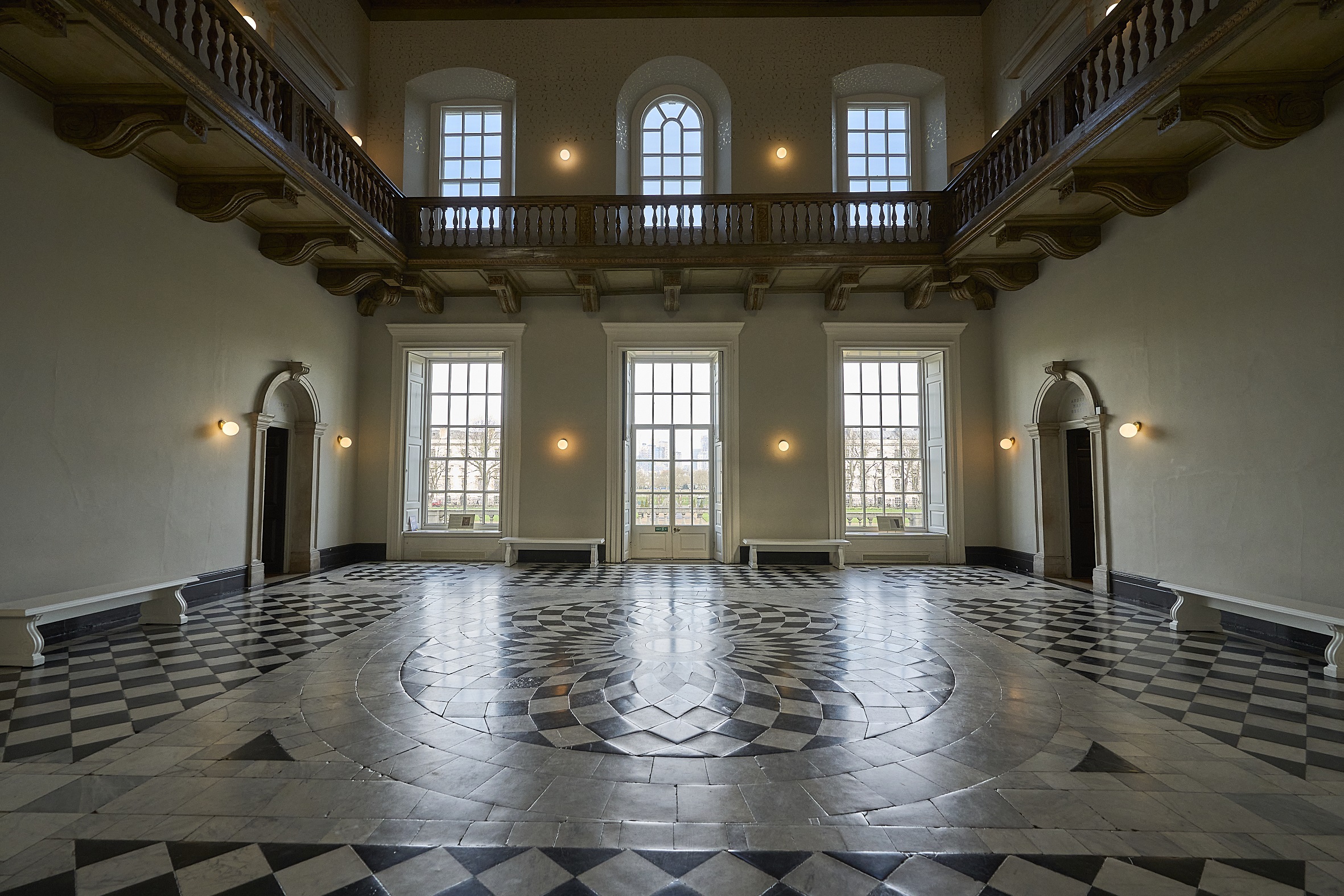
The Queen's House is an excellent location because that was where the Van de Veldes actually worked, with a studio in the basement. It is also a gorgeous building:



The Van de Veldes were the great Dutch artists that were lured to London with promises of £ 100 per year and went on to document some of the great naval battles between the English and the, er, Dutch, which is some what ironic really.

Indeed, one of the most amazing exhibits was a small drawing of the battle of Solebay in which King James II and Van de Veldes the elder draw their recollections of the positions at 2 pm - as both were present, but on different sides!

The star of the exhibition is the magnificent giant tapestry (top image) which shows the battle in amazing detail. You can see a video of it being hung here after its recent restoration - which is well worth a view, if only to get a sense of scale. It's huge - completely filling one wall all the way to the ceiling.

Van de Veldes the elder often worked in graphite which resists water, and so can be used, as he was wont to do, on the deck of a boat at sea, sometimes in the middle of the battle. The NMM has some of his sketches in its archive - the largest collection of Van de Veldes in the world.

The other benefit of using graphite was it could be used to make a mirror image copy, so template ships could be pasted into larger scenes, and then adjusted accordingly.

There was amazing attention to detail: all the rigging looked right. Ships, wind, sails, anchors, light - all were as they should be. Look at this one, and notice the ship heading into wind having transported the king to his flagship:


Each painting or drawing was just exquisite:

It reminded me a bit of the Turner and the Masters exhibition, back in the day when the Tate was actually interested in art. That looked at how Turner was inspired by greats such as Van de Veldes and had some examples where very similar scenes were painted, deliberately. For Turner said that seeing Van de Veldes the younger had "made me a painter".

A fantastic exhibition in a beautiful building, and what's more its free!

If you're in London and interested in art and the sea, its well worth a trip down to Greenwich.

More information on the NMM web site here.

Wednesday, June 08, 2022

Platinum Jubilee Photos


How was your Platinum Jubilee? I managed to see the flypast and part of the (totally bonkers) pageant. 


Friday, April 01, 2022

Titty's tooth and London's beaver


As with many sailors, I have fond memories of the Swallows and Amazons book series and the 1973 film of the first book. I've posted before about the behind the scenes eBook of the filming by she who was Titty, namely the multi-talented Sophia Neville who reminisced that:

“The film ends with Ronald Fraser playing 'What shall we do with the drunken sailor?' on his accordion. As a twelve-year-old I noted in my diary that he was completely sloshed at the time.”

During the filming, the 13 year old Sophie apparently lost a tooth and recently wondered what happened to it, mentioning the incident on BBC Cumbria.

And listening in was the film's make-up designer, Peter Robb-King, who kept it in a film canister labelled "Important: Titty's tooth". 

As a heart warming end to this story, he was able to return it to Sophie after almost 50 years.

Another heart warming story was the return of beavers back to London. A male and female beaver have recently been released into an enclosure in Forty Hall Farm in Endfield. Apparently they're not just amazing animals, they also help the ecosystem because the dams they make ponds and dams.

Hurrah!

And the April Fool is - these are not April Fools, but real stories!

Saturday, January 01, 2022

Happy New Year 2022


Happy New Year!

Hope you all had a great New Year's eve, celebrating we'd made it through another Covid dominated year. Fingers crossed that in 2022 life does begin to return to normal, in particular with travel opening up again.

There wasn't any foreign travel for me last year and only a few trips out on the water. A look through the blog statistics identified the following posts were the most read:

  1. The America's Cup is boring brilliant!
  2. Paddle Boarding on the Regent's Canal
  3. America's Cup and New Zealand
  4. Buff Solves Hammersmith Bridge Problem
  5. Book Review: The Secret World of Weather by Tristan Gooley

In terms of comments, the following were the top 5:
  1. Fulham Cottage Riverstand Update
  2. What are your 2021 Sailing Fantasies?
  3. Supermoon brings super tides
  4. The America's Cup is boring brilliant!
  5. Buff Solves Hammersmith Bridge Problem
Sounds like I need to post about ol' Buff and the America's Cup in 2022 sometime. 

A lot of the posts were London related, but that was to be expected given the lockdown we had to go through.

There were a total of 45 blog postings, an average of one every 8 days or so. Not quite once a week which was the target. Oh well, was very busy for a lot of the time.

Wednesday, December 29, 2021

PSA: Hogarth and Europe at the Tate Britain


I've just been to the Tate Britain to see the Hogarth and Europe exhibition, and rather than reviewing it thought it might be better to give a Public Service Announcement (PSA) for anyone wondering if they should visit.

1. Ignore the "and Europe" 

I really couldn't see the benefit of connecting Hogarth to what was happening in Europe at the time. It wasn't like the Turner and the Masters exhibition where you could put paintings side by side and show how Turner (or in this case Hogarth) developed his ideas. The connections were vaguer, more on the lines of similar genres, such as social commentary and urban life. 

It was more like the curators were still smarting from Brexit and wanted to show that Hogarth was part of a wider Europe (geddit?) even though Hogarth was as rude about the French as he was about, well, the British. As was to be apparent (see next point), the Tate seems obsessed with politics and issues over art.

Basic rule of thumb: if it's not by Hogarth it's ok to ignore it.

Anyhow, as with all art galleries, less is more. Too many rooms with acres of canvases leads to burn-out. What is best is a couple of well curated rooms with a highly focussed message. 

So that's a double fail for the Tate (see below).

2. Ignore the puerile wall text

The accompanying text seems to have been written by the Woke Committee for Political Correctness and is an example of toxic negativity. One panel was written by this group:


The themes are pretty basic:
  1. Britain in the 18th century was bad, sexist racist colonial etc etc etc
  2. Hogarth was a white male living in Britain in the 18th century and hence suspect, bad etc etc
The consequences are by implication the following:
  1. The Tate is bad for showing the work of Hogarth
  2. You, the viewer of this art, are bad for attending this exhibition
It didn't actually tell you anything you wanted to know. It was so ghastly that even woke-friendly The Guardian called it "a massive own goal for the gallery". The Sunday Times hit the nail on the head when it described it as:

"the collapse here of useful scholarship and its replacement by wokeish drivel. Caption after caption wastes precious explanatory space on à la mode speculations about Hogarth’s intentions that are thunderously unreliable."

For a more general review of what the newspapers thought, check out this article for The Art Newspaper.

3. Fire up Wikipedia

I got to the end and realised I knew almost nothing about Hogarth and each of the art works on display and so opened up Wikipedia and it's entry on Hogarth. It changed the exhibition for me, massively for the better. Having done that, I went back to some the big sequences such as:

  1. The Harlot's Progress
  2. The Rake's Progress
  3. Marriage a-la-mode
  4. Before and After (well, at least, one of those pairs)

On Wikipedia there are good, informative, illuminating descriptions of each of the works and their context. 

Thank you Wikipedia! (and take note the Tate)

4. Enjoy the amazing map of London

At the start of the exhibition there is an amazing, huge map of London of the time and I spent a long time pouring over its details. 

I (and others) spent ages comparing it to modern London, checking out the lack of bridges, the non-existent Regent Street and Buckingham Palace, where London was expanding, the Fleet ditch (still there), the docks, the ships etc etc.

Loved it!

If the curators had any imagination (and not the toxic negativity of a woke committee) they could have marked out where some of Hogarth's pictures had been located so we could have put it in context.

But alas...

5. Go First Thing Midweek

It might be Covid restrictions, but booking the first slot on a midweek morning meant the gallery was amazingly quiet. You really could get up close to each picture and have time to explore the details - once, of course, you'd loaded Wikipedia on your phone.

Wednesday, October 27, 2021

The Wandle from Morden Hall to Carshalton


The second leg of the Wandle Trail walk started at Morden Hall Park. This is a great place to start / end being a National Trust property with cafe, loos and even a bookshop, all near a tram spot.

It was understandably quite busy with families out for the weekend, some even playing in the river, which felt like the right spirit even if there were worries about water quality given the lack of enforcement by the so-called Environment Agency.

But it can't be that bad, to be honest, as the banks of this part of the river were thick with men (and it was just men) with rods, out fishing. And looking into the river, fish were clearly visible:

They seemed quite large! I wonder what they'd taste like?

As with so many places along the Wandle, there was a mill here:

There were other mills along the route, sometimes working, sometimes ruined, and sometimes just their mill-stone left as an abstract sculpture:

The trail passed through more parks, such as Ravensbury. Poulter and Dale Parks. Poulter Park had this nice stone bench dedicated to the memory of Miranda Hill (1st January 1836 to 31st May 1910) "by some of her grateful and affectionate pupils". 

Here you could sit and listen to the wind in the trees and lullaby of the Wandle:

Around Hackbridge the river split into two and I took the east path, though I don't think there was much difference between them. When they joined again, near the Hackbridge Road, I was approach by a woman calling out "Trevor! Trevor!" (or a name like that). I guessed this was her dog's name, which was confirmed when she approached a man walking his dog asking if he'd seen it.

Five minutes later, halfway to Wilderness Island, I was stopped by another woman in a car, who asked me if I'd lost a dog as she'd seen one running down the road.

"No" I said. "But there's a woman on Hackbridge Road who's lost her dog - you might want to go there."

As the car drove away I wondered how this little scene from the suburbs would play itself out, whether Trevor would be reunited with his owner.

I made a diversion onto Wilderness Island which wasn't on the route but really was a bit of a wilderness. Here the Wandle split into two, heading in one direction to Croydon, the other to Carshalton, which was to be my destination for that day.

The final point of this leg of the Wandle is Carshalton Pond which turned out to be rather elegant:


There was another ruined watermill (obviously) and this little waterfall:


I think this was probably my favourite of the three Wandle walks, with the river looking healthy, many parks and things to see. Kudos also to the planners who'd taken the time to make signs identifying pedestrian and cycle priority parts of the path:


Here you could really believe that the Wandle was one of those elegant chalk streams that England is so lucky to have:


Monday, October 25, 2021

The Wandle from the Thames to Morden Hall


The start of my Wandle river walk was where it meets the Thames, as in the photo above. There used to be a half-tide weir here, but it was removed a few years ago (see this post). Just before the Wandle reaches the Thames there is an island in the Wandle called The Spit with this blue sculpture called Sail by Sophie Horton.

Nearby there's a sign pointing up river, and this is where I was headed:

In general the Wandle Trail was quite well sign-posted. Not every bit can be cycled, which is a shame, but mostly its bike friendly. Some bits (such as in King George Park) even had dedicated cycle paths, which is great.

The initial section was quite urban, heading up the Causeway passing one of the Thames Tideway Tunnel sites, then the South Circular road must be crossed twice to get to the Southside shopping centre. When I kayaked down the Wandle a few years ago, the dark tunnel underneath was memorable - particularly when we turned our lights out!

On the other side of that there are the first of the many parks, namely King George Park, with goal posts for football games, children's playgrounds and swarms of dog owners doing their walkies.

The path is forced away from the river at Earlsfield, and then becomes a corridor of green squeezed between industrial parks and terraced houses, connecting parks, in particular Garratt Park and Wandle Park (the first of two of that name I'd encounter).

This section also goes through a tunnel that was part of the world's oldest railway lines, the Surrey Iron Railway, which was a horse-drawn plateway along the Wandle valley, from Croydon to Wandsworth, which was opened in 1802. Parts of the route are still in use for the tram network, which is pretty amazing.

Some of the industrialisation is still visible, such as the Merton Abbey Mills:

As well as the many, many water mills along the Wandle, there were factories, including those of William Morris, the famous Pre-Raphaelite textile designer, poet, artist, novelist, translator and socialist activist.

It was hard to visualise those times, as its so different now, with housing estates, roads, business parks and a huge Sainsbury's supermarket. However away from this bustle in places it felt a lot quieter, maybe even pre-industrialised:

Finally, for this segment of the walk, I arrived at the very pretty Morden Hall Park, manged by the National Trust. There was a wooden walkway through the wetlands and on the far side reached this fetching bridge:


And then Morden Hall itself:


Then it was time to get the tram home.

What tram? you might be asking, if you weren't aware of London's (limited) tram network. Well, for more information, check out this Kraftwerk inspired video:

Saturday, October 23, 2021

London Rivers Week: The Wandle Trail


This week, from October the 23rd to 31st, is London Rivers Week, and to celebrate that I'll be posting a description of a walk I did along the Wandle River during the summer.

The basic route can be seen from this Google Earth plot which I did in three sections, as in the different colours:

There are a number of good resources that describe the walk which is clearly signposted and generally feels like a proper walk. The one I used the most can be found on the Merton Council web site, downloadable as a PDF here. There was also one on the Wandle Valley Park web site and in practice I typically just followed the signs or Google maps.

I did the route in three segments, starting at the Thames and heading upriver, as if trying to discover it's source:

  • Walk 1: the Thames to Morden Hall (9 km)
  • Walk 2: Morden Hall to Calshalton (8.6 km)
  • Walk 3: Calshalton to Croydon (7.5 km)

Of course you can do it the other way round. There are train / tube / tram stops all along the way so this route could be described as:

  • Walk 1: Wandsworth Town train station to Phipps Bridge tram stop
  • Walk 2: Phipps Bridge tram stop to Carshalton train station
  • Walk 3: Carshalton train station to East Croydon train station

The Wandle was part of the industrialisation of London, and all along its length there were signs of this, most notably the number of mills, both working and ruined, and also in place names. Apparently at its peak there were 90 mills along its length. Inevitably it ended up as an open sewer.

Fortunately, that time has long gone, and the river has recovered and now seems in good health, with fish in its waters and birds in the air above. Having said that, the water quality was apparently not great in 2019 according to Wikipedia.

What was surprising was how many parks I encountered that I'd never heard of before.

Sunday, September 26, 2021

The Illuminated River Tour


Over the last few years some of the bridges of London have been lit up as part of the Illuminated River installation.

Designed by New York based artist Leo Villareal, LED lights have been installed in 9 bridges of central London from London Bridge to Lambeth, together with controlling software. It is said to be the longest public artwork in the world.

On Friday, as part of the Totally Thames Festival, there was a special Thames Clipper tour of the river with commentary from project director Chris Waite and I went along.

It was a lovely evening, warm with clear skies, and we left from Tower Pier heading up river to Lambeth Bridge and the back down again. We learnt a lot about the project, and there was a lot more details to it than you might expect, from the engineering and abseiling required to install the equipment to the environmental angles, whereby lights could not point into the water to avoid confusing the fish.

The best bit was we could take photos from the front of the Thames Clipper boat and we're not usually allowed there, plus the moon was rising over the City:

Must admit I did spend rather a long time admiring the view and not listening too closely, though I did catch a few phrases that sounded interesting such as "secret chamber within the Boudica statue" and "no one knew where the light controllers were, not even those in MI6".

The colours and pace of movement of the lights were carefully chosen. For example, the photo at the top shows Westminster and Lambeth bridges which are green and purple to reflect the colours of the benches in Westminster itself. Pedestrian bridges typically have faster moving changes than other bridges.

We went back down to Tower Bridge and then returned to Tower Pier.

I stopped to have a chat with the project director while others disembarked. We were then all a bit surprised when the Thames Clipper boat without warning let loose its lines and headed out into the river.

But all was well as we ended up getting a short ferry ride over to City Pier, which was great for me as meant I could get an earlier train home.

The good thing about this art work is its available to all, for free. Just walk along the Thames path on either side in the evening after dark and admire the bridges.

But I do recommend seeing them from one of the Thames Clipper which has by far the best view.

Sunday, September 12, 2021

Classic Boat Festival at St Katharine Dock


I was really busy the weekend of the Classic Boat Festival at St Katharine Dock (including the trip to the Greenwich Pumping Station) but managed to drop in late Sunday evening. It's actually one of my favourite times as it's a lot quieter, the light is amazing and the water still enough for reflections.

I had a quick burger then wandered around camera in hand:


Wednesday, September 08, 2021

Visiting the Greenwich Pumping Station


Last weekend was Open House London 2021 when all sorts of interesting places that are usually private and hidden away were accessible. 

Some treat it as a race, like bagging a Monro, ticking off building after building, but I tend to select one or two of interest and then leave it at that. But which was it to be this year?

For me it was another of that essential but to be honest rather smelly part of London's infrastructure, namely the sewage system. Previously I'd visited various the glorious Crossness and Abbey Mills pumping stations - and actually gone down the sewers to see Bazalgette's brickwork.

This year I manage to add the Greenwich Pumping Station, another designed by Bazelgette and completed in 1864. The purpose was to raise sewage from the lower-level sewers and then raise up to the upper-level sewers (how do they come up with these names) so the waste could continue its way down to Crossness in the estuary solely using gravity.

We could look down through gratings to see the upper level sewers and the room had a definite flavour all of its own:

The site is still being used, though the old steam engines have been replaced by maritime diesel engines, allegedly from a battleship, though no one really seemed sure. Unfortunately the building that hosted them counts as critical infrastructure so no photos were allowed.

Here instead is the old water level indicator:

The site is also busy with Thames Tideway Tunnel work, in particular they are still drilling out one of the side tunnels. It is 45m down, significantly below the lower level at 15m.

At the site are four Grade II listed buildings including this which was once the coal shed:

It's a lovely space that you could imagine being used for a market at weekends, with amazing art and delicious street-food. At the other end of the coal-shed (just visible at the far end of this photo) is Deptford Creek:

This explains this pumping station's siting, for the creek allowed ready supply by water of the coal needed to keep the steam engines going.

A fascinating tour, another to tick off on the exploration of "London under" and Bazalgette's great sewage system. 

I wonder where I'll manage to go next?


Thanks to Thames Water for opening up the site for Open House London 2021.

Monday, September 06, 2021

An Above and Beyond tour of the Lea Valley

The band / DJs Above and Beyond made this warm-up set for their Drumshed (below) gig later that night ( which I didn't go to). 

You might recognise some of the locations from my Lea Valley walk over the summer as this video was shot on the Lee Navigation heading north from the Olympic park.


Sunday, August 29, 2021

The Jubilee Greenway


On the recent Greenway walk (very boring) there was a sign that it was part of the wider Jubilee Greenway. When I got home I checked it out and worked out which bits I'd walked.

On the map above the bits I'd done are marked in red and the bit in orange was the only segment not completed. So you can guess what I did next.

In total there were the following sections:

It's mostly either through parks or along canals or rivers, so definitely worth adding the Jubilee Greenway to your list of London walks.

Friday, August 13, 2021

Paddle Boarding on the Regent's Canal


I've been wanting to try paddle boarding for some time but as cool as it appeared (with the likes of Obama doing it aged 60), it also looked all too easy to go tumbling into the water. Learning to keep one's balance seemed key, and that would be easier on calm flat water compared to waves from the sea or wash from passing boats.

So having my first lesson on a canal seemed like the ideal solution. Any not just any canal, this was the Regent's Canal here in London. 

I signed up with Paddle Boarding London at their base in the Pirate Castle (that's really what it's called, check it out here) in trendy Camden. Here were given life jackets and a paddle and shown how to move from sitting to standing and back down again. 

Soon we were out and after five minutes of paddling sitting down, were encouraged to stand up. And remarkably I did and managed to go for the rest of the 90 minute session without falling in (unlike one other, who returned soaked after a dunking).

A lot of the paddle strokes were familiar to anyone who's done some kayaking or canoeing. There was some passing traffic in narrow-boats and self-hire electric launches (from GoBoat Paddington), but they typically slowed down and gave a friendly hello.

Must admit I was very, very slow. I might try again to see if the balance improves and I can get a bit of speed up. Afterwards, on my home, I dropped in on my brother for a cup of tea, and it turned out that he and one of my nephews were also very slow.

A fun afternoon!


Wednesday, August 11, 2021

Tower Bridge lift for Pelican of London


 If you go to the Tower Bridge web site, you can get a list of the times the bridge is raised to let a boat through. Often it is just the "usual suspects" i.e. tour boat regulars on the Thames. But sometimes there are the odd tall ship, like this one that arrived yesterday, the Pelican of London:

Almost as exciting as the bridge opening was it closing, as recently it got jammed in the open position.

Then it was time to go home - by Thames Clipper with its great views:


It was really busy, and at some piers waiting passengers were disappointed as the boat had reached capacity. Space opened up after Westminster: