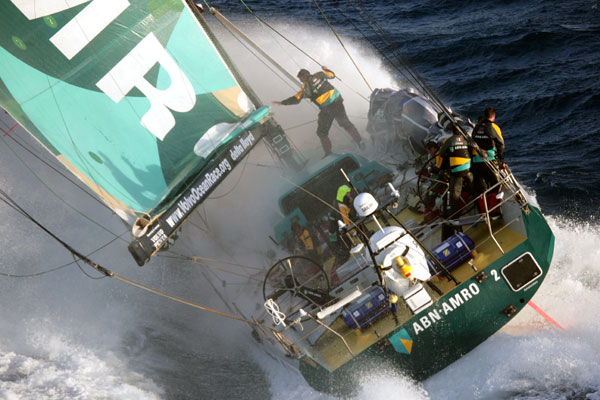
Wednesday, September 27, 2006

Sailing a Volvo 60 with Emma

I’m in love. Or is it lust? Maybe just old fashioned desire. Anyhow I’ve been blown away by her lines and moves.

But enough about what it’s like sailing a Volvo 60 – you probably want to know something about Emma Richards. Sorry – Emma Sanderson, must get used to saying that.

Firstly, how did I wrangle it? The answer is it was one of the prizes of a charity auction – a day’s sailing with Emma Richards Sanderson. So as well as helping children in developing countries, as well as getting good karma for a year, I got a top day out.

It was simply fantastic – one of those 9/10 days. Alas it couldn’t be a 10/10 as I had a bad hair day. Now I know sailors are meant to be tough no nonsense and you can’t have any sense of vanity when having to rough it in a watch system for days on end with no shower or change of clothes all week.

But really – look at the picture below. That’s me on the wheel and for some reason my hair started corkscrewing in random directions like a crazy scientist whose latest invention has just gone bang.
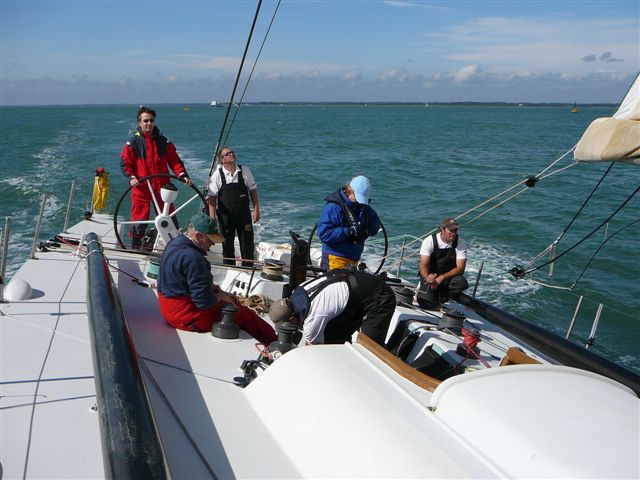
Of course Emma was very nice about it. But then she is – nice that is. You could imagine Pindar insisting on this contract terms for interviews:

“the party of the first part, namely Emma Sanderson, shall always be described by the party of the second part, namely the writer, as sailing’s girl next door.”


However they wouldn’t need to, as she just is.

But this girl next door has sailed single handed around the world on an Open 60 with more sail area than this Volvo 60 and less mass – hence a greater power to weight ratio and without a crew or watch system (info point: on News International they used a rolling watch to keep the maximum hands on deck).

Here she is with the trimaran TietoEnator in the distance (making us the 2nd rather than 1st fastest boat on the water that day).

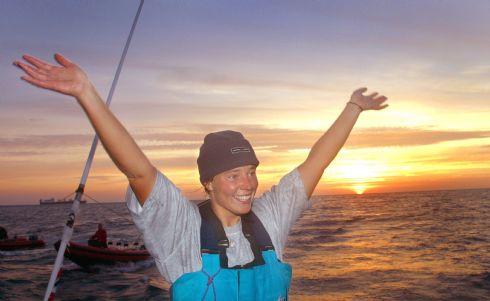
I asked her for helming tips as no less an authority as Tracy Edwards has praised her abilities. She told me how to avoid roll when sailing downwind with spinnaker up – steer under the sail. I knew that but pretended I didn’t.

She also explained why she got rid of the loo when racing in the Around Alone (now the Five Oceans). Apparently she was sitting there thinking (as one does) and imagined the weight of the pipes and the weight of the water in it, and working out that for every kilo of mass the boat must push out of its way many tonnes of water each day. And as she was racing it had to go and it was back to bucket and chuck-it.

This being a corporate charter boat there was of course more comforts. As you will see in the photo below the heads have a rather elegant loo paper roll.
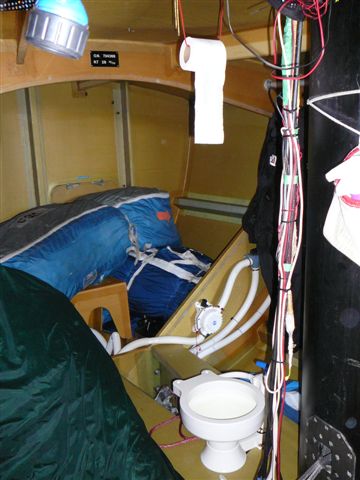
The heads also is well positioned to allow someone to prepare one meal while saying goodbye to the previous.

Such an arrangement might be useful when sailing single handed or indeed in the highly competitive Volvo, but I was rather relieved to discover that lunch was sandwiches prepared on shore.

I mustn’t forget the rest of the crew – skipper was Loz Marriott who was in charge of the Pindar entry in the last Global Challenge, and he was joined by Spike and Ollie. Spike had crewed on Loz’s boat so there were three circumnavigators on board (and yes he got his name from his work with spinnakers – not, as I suggested, anything to do with Buffy the Vampire Slayer – a suggestion which must have lost me some of what little sailing cred I have).

It felt like there was a fourth – namely the presence of Emma’s other half Mike “Moose” Sanderson. The Sanderson’s are moving to NZ and during the day Emma was on the phone a couple of times to Mike making arrangements and there was a lot of talking about estate agents and packing boxes.

She also described life as part of the ABN1 team, and how Mike wins because on board he is a perfectionist. “He couldn’t do this” she said, meaning the gentle cruise where sails are not trimmed right.

I wonder if that really means I can do something Mike Sanderson can’t – something of a feat in sailing circles. But I doubt that.

What else did we talk of? Property, running, Porches, the Mid Sea race (which she is doing on Black Betty), Robin Knox-Johnston’s battle to be in time for the start of the 5 Oceans, New Zealand, time zones, living without sleep (the adrenalin keeps you going till crashing out when reach land), rounding Cape Horn – twice, watching albatrosses, solo vs. crewed, sailing the southern ocean, how long it takes to tack a Volvo 60, Mike’s ideas for the new Open 60 they are planning (which possibly could include a Vendee Globe) and his being courted for the next Volvo.

It was a perfect day for a sail. 15 – 20 knots of wind from the south, blue sky, gentle sea as we sailed from Gunwharf Quay out of Portsmouth Harbour, round the forts and then east past Cowes on up the Solent till between Yarmouth and Hurst Castle. All on board knew the waters well so could go from buoy to cardinal all the way without need for compass or GPS. However a difference from cruising those waters in a “normal” yacht was Pindar’s greater draught meant we had to be careful to follow the main channels.

We guests (three of us) did all the things a crew does on any boat: get in the fenders, coil the mooring lines, hoist the main on the coffee grinders (ok that bit might be different), trim the main sheet, then hoist and trim the jib. Of course our favourite bit was driving and we took it in turns at the wheel.

She is a dream to steer – light and responsive. I was lucky enough to take us through a tack and she turns effortlessly. In a few moments she was going over 10 knots, though we never powered up fully so the maximum was about 12.9 knots.

There were some differences with “normal” yachts. Some we didn’t explore – such as the water ballast system. Some we did – such as the way the main sail locks into position so that the strain is off the main halyard, reducing pressure on the mast. But overall it didn’t feel too unfamiliar.

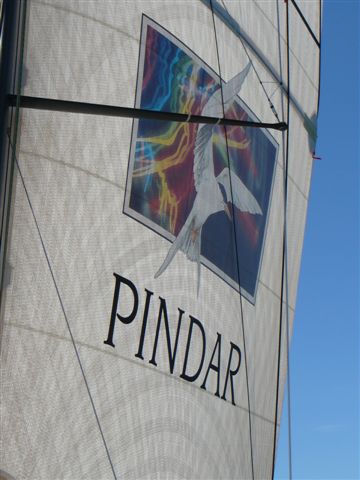
But Pindar isn’t a normal yacht – she was News International and raced in the last but one Volvo. So this boat had been round the world and battled its way across the southern oceans and round both of the Capes. The name was still there, engraved on the companion way.
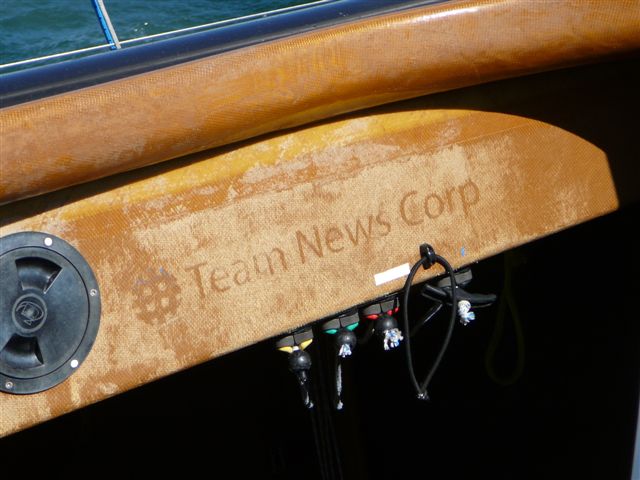
All too soon it was time to head in for a beer and signing of log book (by Loz) and Emma’s book (well, by Emma).

It was a great, great, day.

If you want to get a feel of sailing Pindar, then just watch the video below.

I’d not just like but love to do it again – or even better on a Volvo 70 like Black Betty.

Better get saving for the next charity auction.


Sunday, September 24, 2006

Lisbon to Gibraltar - 9: Saying farewell

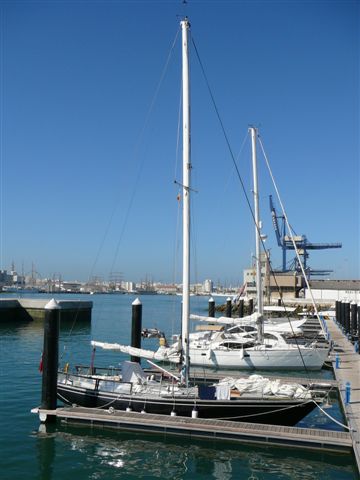
As the yachts left to go racing we finally found ourselves a free berth in Gibraltar's Marina Bay where we could leave Selene for others to take her on towards Malta.

It was, we all agreed, a great cruise, and Selene a beauty to sail. There was just time for to have lunch in one of Gibraltar's many Brits home from home dinner (uncharacteristically and regretfully there was no all day breakfast) before a taxi was called to the airport and home.

We left Selene tucked up and took our rucksacks and tans back to London.

I would remember that night sailing down the coast of Portugal, hitting 10 knots as passed Cape St Vincent. And we would all remember Lisbon, Cadiz, and the wonderful sea food we found in the most unlikely of marina cafes.

Later Selene would have other crews which would deliver her to Malta in time for the Swan Regatta where Mark would skipper her to a respectable 11th.

Where next year? Who can say. But for me and Ian there was another sail to come - the day with Emma Sanderson on Pindar. As they say on the Moon - watch this space!

Lisbon to Gibraltar - 8: Through the Straits

While not quite the same as rounding Cape Horn, we were all looking forward to sailing through the Straits of Gibraltar. Its one of those landmark journeys that can only be done on water, Africa to the right, Europe to the left, the Med dead ahead.

And sometimes dead ahead is the wind, with the famous Levante wind blowing hard from the East, threatening a finally of endless tacking to windward. I'd have rather that than what we discovered - which was a dead calm.

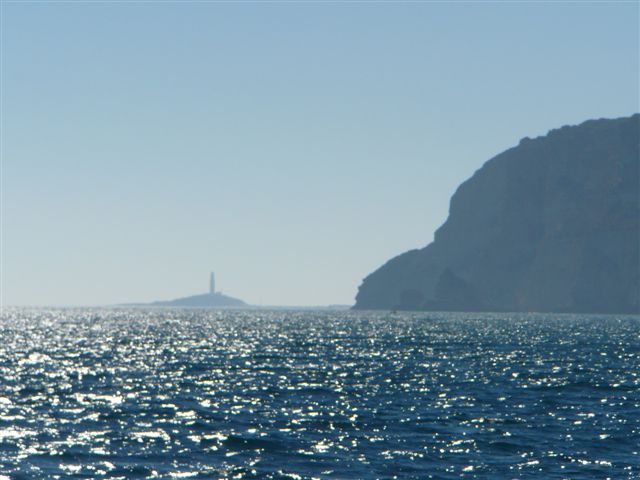
So it was a couple of hot slow days motoring along, made worse by the failure of not one but two autohelms. The coast slowly changed, from the built up strip of beaches and villas to the wilds around Cape Trafalgar (below).

We stopped over before reaching the Straits at Barbate, which we all liked, though it must be admitted we never got to see the town itself. The pilot book warned to keep a good lookout for the tunny nets and boy was that right with mile after mile of nets heading out to sea.

But the tuna those nets caught was unforgettable - melt in the mouth fresh washed down by flaming B52s - as was the sunset on Barbate beach, where the waves played around this sorry wreck of an inflatable (below).

The next day was more of the same as Africa appeared out of the haze that would swallow up and disgorge a never ending flow of tankers.

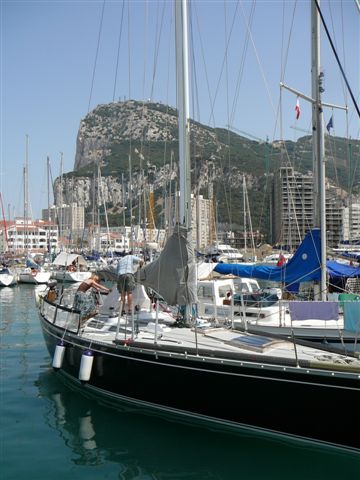
At the rock itself we saw a yacht race have that very familiar floating experience.

As Gibraltar's marinas were full (with racers) we had to push on to Solo Grande which was just awful - as fake as a film set with none of the glamour. But it had rock star boats and a to-die-for view of the Rock.

Thursday, September 21, 2006

Lisbon to Gibraltar - 7: Cadiz

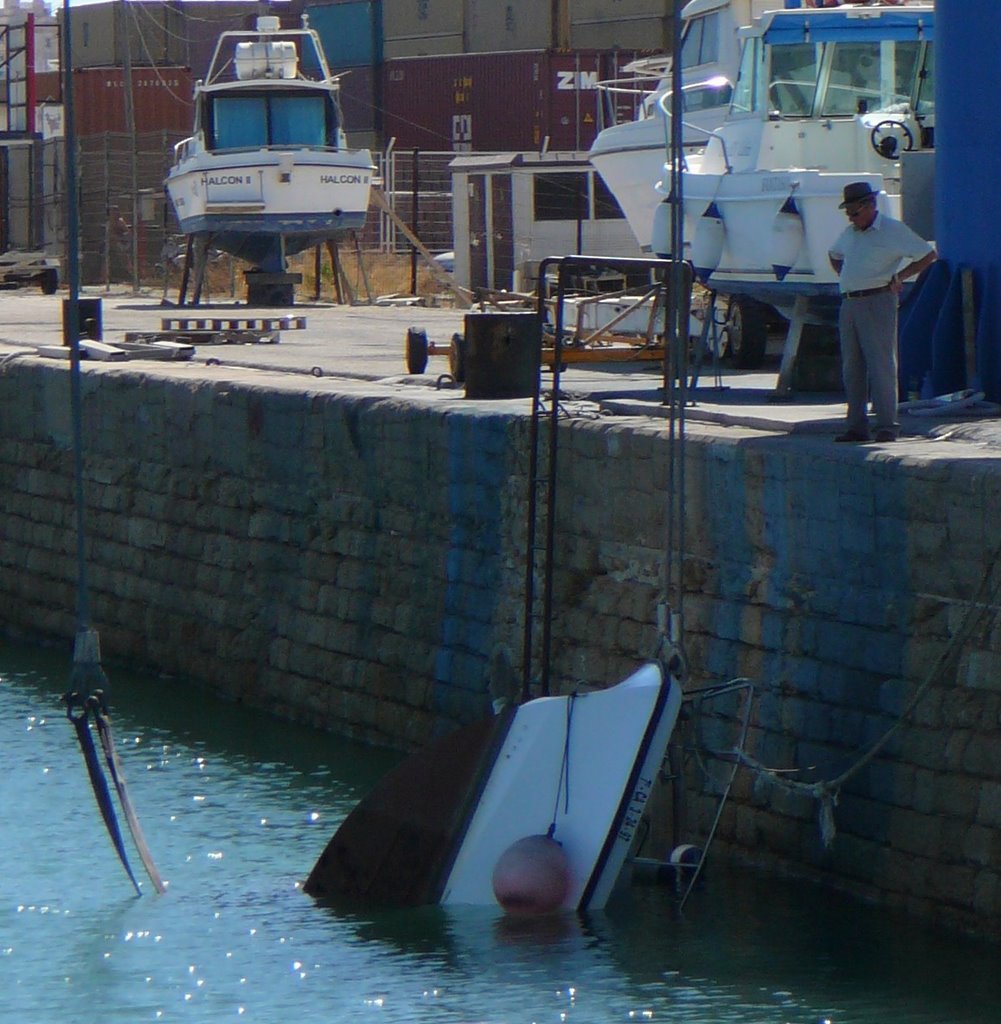
Not everyone likes Puerto America, gateway to Cadiz. Obviously the owner of this boat can't have been that pleased with their facilities. The pilot book was a bit dismissive, describing the marina as being a long way from town and lacking in facilities.

Certainly first impressions weren't encouraging - squeezed between a bustling container port and the sort of half built concrete tower block beloved by J G Ballard - with facilities a couple of portacabins and a large car park.

But we really liked it, mostly because of one of those portacabins turned out to serve some of the best sea food of the entire trip. Cuttle fish, baby squid, clams, and garlic prawns would emerge from some back galley, obviously hours fresh from being caught.

And the so called long walk was along the sea walls of Cadiz, with views like this:

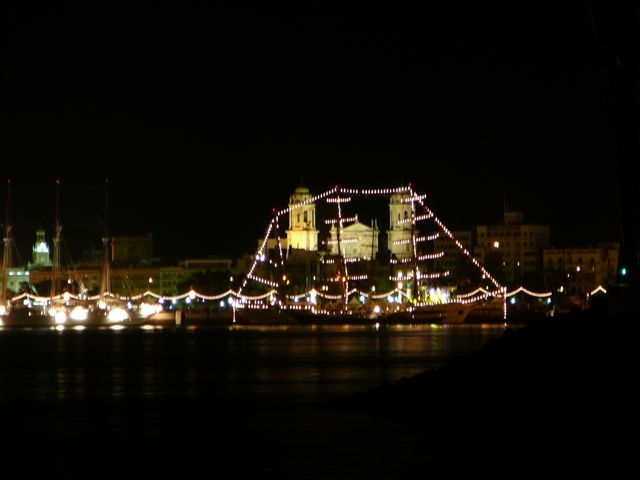
When we got to town it was in carnival mode, with the crews of the tall ships celebrating the end of their 50th anniversary sail by parading though the streets, singing, shouting, blowing horns, and mobbing an unlucky policeman.

Cadiz itself is an ancient beauty - claimed to be Europe's oldest city going back over 3,000 years to - again - the Phoenicians. Of course it's suffered a bit - including being burnt to the ground by us Brits as Sir Francis Drake singed the beard of Spain.

At its heart is crumbling old Cathedral, which even has netting to catch the plaster work falling down from above.

We wandered street after street, each more enticing than the last, till we found the old quarter where the only difficulty was choosing which sea food restaurant.

On the way back as the moon rose we stopped for a thick treacly sherry in an old flamenco bar and decided we'd had a pretty good day.

So what ever the guide book says drop in on Puerto America and visit Cadiz. Just be careful if your boat needs a lift.

Sunday, September 17, 2006

Lisbon to Gibraltar - 6: The route


The Google map above shows the route taken. The timing was:
Sunday am - leave Lisbon
Monday am - arrive Albufeira
Tuesday am - leave Albufeira
Wednesday am - arrive Chipiona
Thursday - Chipiona to Cadiz
Friday - Cadiz to Barbate
Saturday - Barbate to Solo Grande
Sunday - Solo Grande to Gibraltar

We didn't like either Albufeira or Solo Grande - tourist traps. More on the others tomorrow.

Friday, September 15, 2006

Lisbon to Gibraltar - 5: Sunset sailing photos

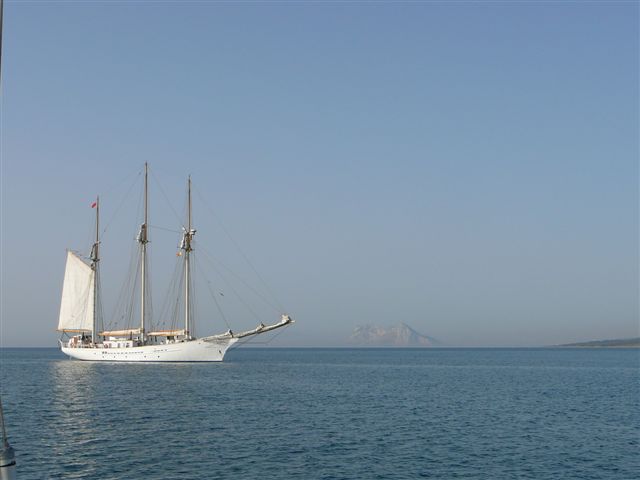
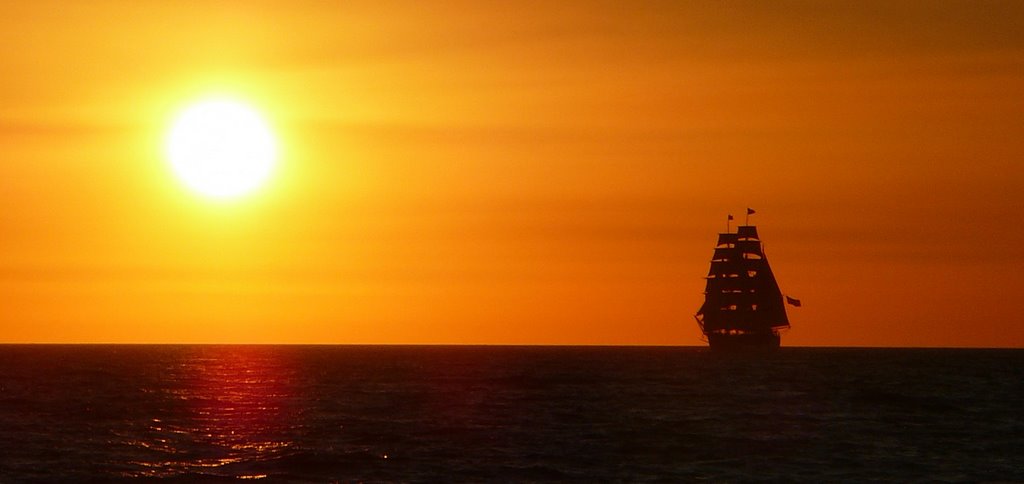
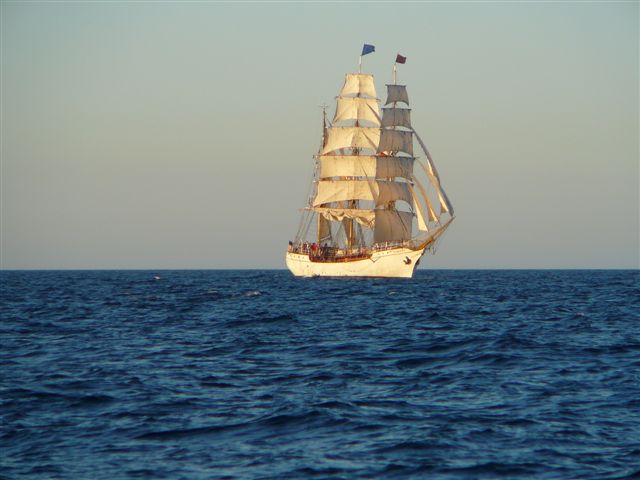
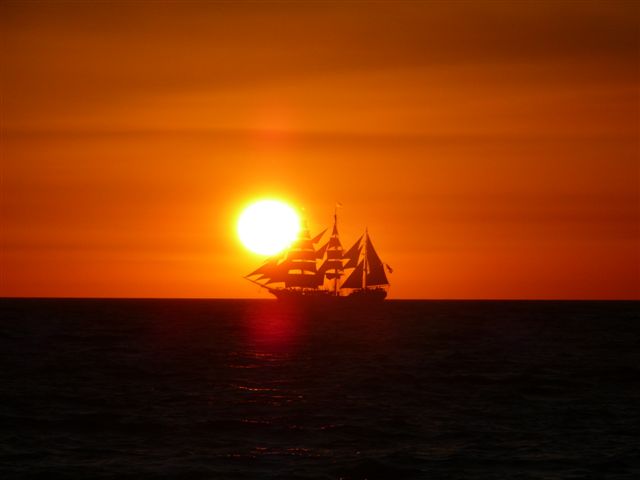
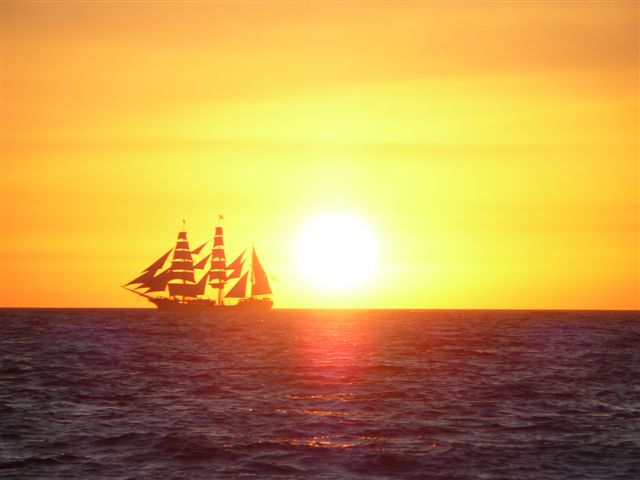
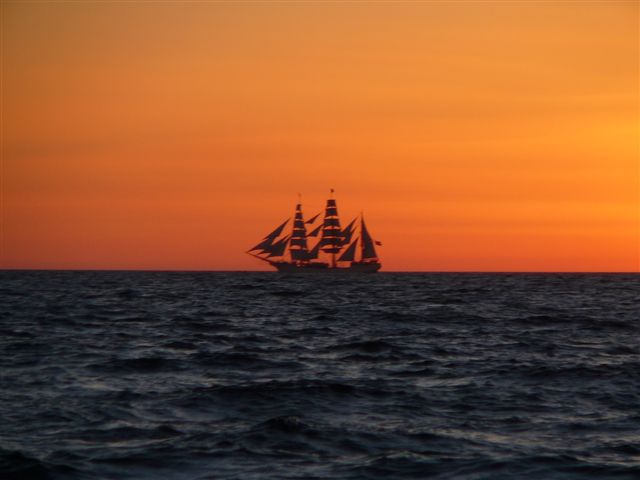
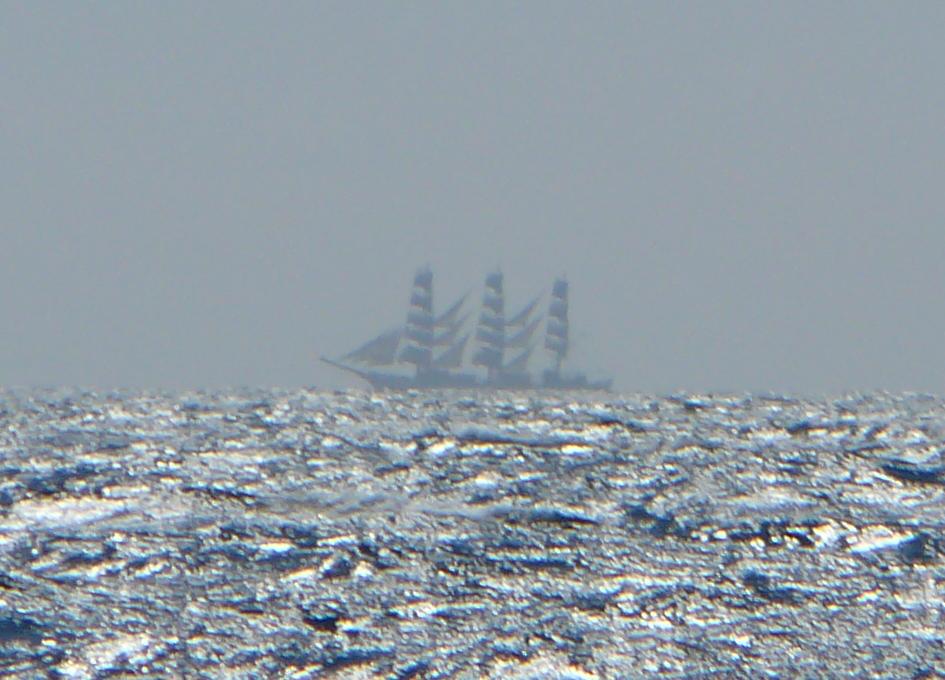
While sailing along the Algarve heading for Cadiz we met another of the tall ships and she sailed directly across the setting sun. It was absolutely magical!

Does anyone recognise which one it is? And are there any photography wizards out there with suggestions about tweaks that can be done to these in Paintshop?


Thursday, September 14, 2006

Lisbon to Gibraltar - 4: Sailing Histories

We left Cascais on the 23rd July, heading down the coast of Portugal, heading due south. It was the same day as the tall ships set off from Lisbon to Cadiz for the next leg of their 50th anniversary. Looking around at the classic two and three masters on the horizon we could have been sailing a hundred or more years ago. It felt like sailing into history.

There were other types of histories involved - including the personal. Angelika, Ian and I had last sailed two years ago on a cross-channel cruise around the channel islands, so we were getting re-familiarising with each of our little onboard quirks. Angelika, we remembered, has endless energy and will try every sail combination and we remembered to let her do it - as she enjoys it and we usually learn something from the experience.

And the conditions brought back memories for me: we were sailing under a bright hot sun, with steady 15 - 20 knots of wind nearly directly behind and a steady stream of Atlantic rollers coming in from the starboard quarter. We had that for day after day on the ARC and back on the helm it felt natural to be feeling the power of the wave as it pushes the bow of the boat of course again and again.

Later that night as my arms ached from the weight on the wheel I looked up at the stars and imagined all the other boats and their sailors through the centuries that had sailed those waters. Not just the tall ships and their ancestors, the racing clippers like the Cutty Sark, but the navy of Nelson and explorers like da Gama.

And I imaged further back, the boats of the Phoenicians, sailing in the dawn of history their primitive boats to the edge of the known world. In those days there were no charts or maps, let alone Lonely Planet guides. The stories of the mariners from the ancient world must have sounded no different from the legends of the gods and giants, mixed together where reality and myth become one, where the Straits of Gibraltar became the Pillars of Hercules.

But one thing would connect all of those journeys - the sailors on the ships. For some things will be the same in the 21st Century AD as the 12th BC - such as the camaradarie of being on watch, the stories shared, and the relief at the end to go below to rest.

And with that thought after a long long watch I went below to my bunk to entertain the new watch with my snores and wonder: who was the loudest - Nelson, da Gama or Hercules?

Wednesday, September 13, 2006

Lisbon to Gibraltar - 3: Selene and crew

There were four of us on Selene. Angelika, one of the core crew, her boyfriend Dave, ex sailing instructor Ian, and me.

Selene herself is a Nautor Swan 44, a venerable old lady launched in 1973. Heavy long in keel she excels to windward and in strong winds. She is a beauty with lines that gets as many admiring glances as a classic car. Unfortunately we tended to hide those lines with drying washing and a bizare and unsightly blow up bimini.

Our first job was to re-fit the mainsail after its emergency repair in Cascais from tears that came on the crossing of Biscay. While the main was ok the jib was almost too frayed to be usable without a lot of TLC. We also had a full set of cruising sails, some of them originals from Selenes infancy.

While the photo above shows the standard sloop rig, Selene can also be configured as a cutter and with time spare on the run down the coast we tried rigging a stay sail. It seemed to add to the balance, though there wasn't much of a speed increase.

Inside there is lots of wood and struts, not this bare empty space of modern racers.


Many thanks to Mark for letting us sail this lovely old yacht.

Tuesday, September 12, 2006

Lisbon to Gibraltar - 2: Lisbon

A few words about Lisbon before describing the voyage south.

Lisbon is one of Europe's oldest and most beautiful cities, built on seven hills neighbouring the river Tagus as it flows into the Atlantic. Its been occupied for millennia, a harbour and trading post for the Phoenicians as far back as 1200 BC as they sailed through the Pillars of Hercules to trade with the early Brits for Cornish tin.

If you're sailing down the Portuguese coast or spending some time racing at Cascais you must leave several days to explore the city. Above you can see the stunning view from the castle over the river, with a replica of Golden Gate Bridge and a replica of Rio's Cristo statue, both slightly less than full scale.

We only had a few hours so were unable to fit in all that there is to see - the many old quarters like Alfama and Belem, the Cathedral, trams rattling up hills, old squares, fine restaurants, museums, parks and bars.

Our day in Lisbon ended with a visit to the temple of port namely the Solar do Vinho do Porto where what we drank was as old as we were.

Lisbon of course has a noble sailing tradition, as it wsa from here that Vasco da Gama sailed on his great voyages of discovery round Cape of Good Hope to India. And we got a taste of that tradition as our visit coincided with that of 50th Anniversary the Tall Ships.

More on them later, for they followed us all the way to Cadiz.

Sunday, September 10, 2006

Lisbon to Gibraltar - 1: Cascais

We started at Cascais, which should have been brilliant. Yes, as the pilot book says it is a "fashionable and rather elegant seaside resort". Yes, the eating out is mouth watering, with sea food fresh and charcoal grilled. Yes, Lisbon is a short train journey away. And yes, the wind is pretty much a sure bet, north or north-west 15 - 20 knots for weeks on end.

But, and it's a big but, its a noisy marina. The visitor berths are surrounded by bars where pounding sound systems echo around the austere sea walls till early in the morning. And it was the most expensive we found on our cruise.

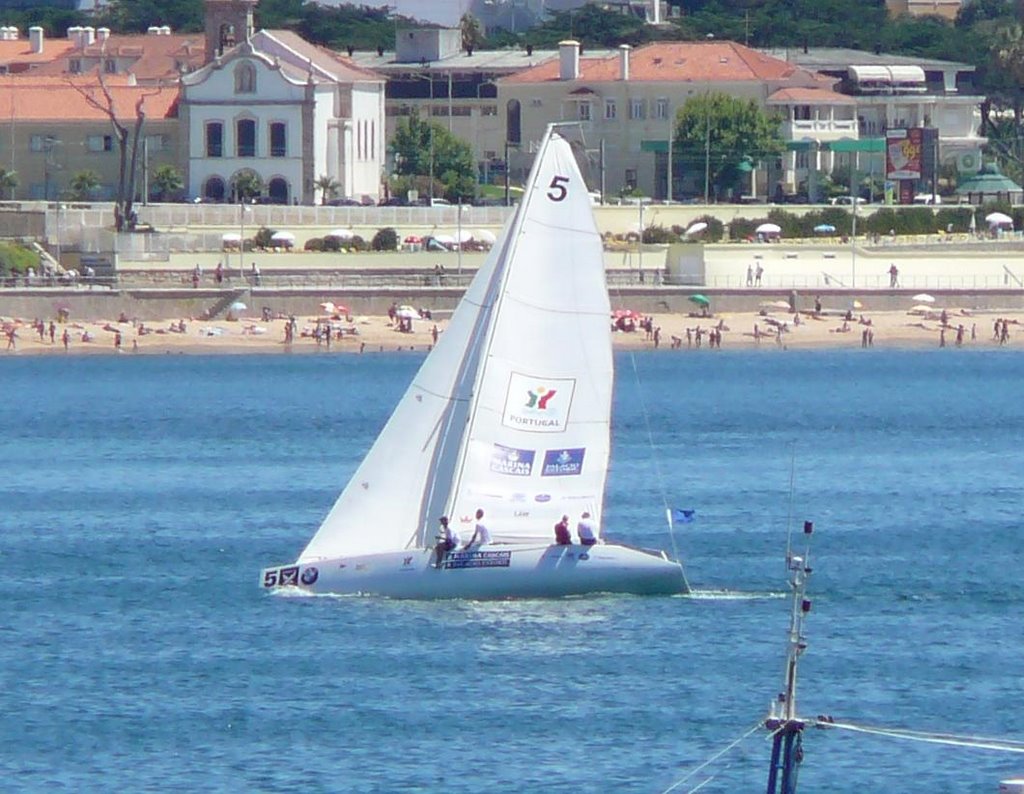
However it was chosen to be the host of the first of the World Match racing tour, where Chris Dickson of BMW Oracle Racing won the final with a 3-2 win over Magnus Holmberg in Victory Challenge (above, coming in second once too many times).

It's a good stop-over for a day or two, if you're heading off to the Med or Canaries. But if you want to spend a few days exploring Lisbon and the surrounding countryside- or like us leave a boat there for a few days to swap crews - it would be better to go up the river to the city marinas.

Questions for Emma

My sail with round the world yachtswoman Emma Richards is coming up in 10 days, and we’ll be sailing on the Volvo 60 Pindar – ex News International in the last but one Volvo.

So if anyone has any questions they want to put to her about her “Around Alone” race or indeed her hubby Mike Sanderson’s victory on the latest Volvo in Black Betty aka ABN AMRO 1 let me know.


Picture from http://www.emmarichards.com

Short sail long memories

So there have been no posts since June. Yes I’ve been off sailing and been back over a month and ok there’s the slight distraction of trying to move house, but the real reason is its hard work posting several times a week.

Part of the problem is having something interesting to write about. Working full time and living in central London there are only limited opportunities to sail. In the dark winter days one can wile away the hours playing navigator using the Volvo Ocean Race boats and a number of weather forecasting sites. I can’t see any point in just reproducing VOR press releases but have tried to create added-value by posting my own comments especially predictions on where the fleet will go and how the yachts will fare.

Not everyone has the same sailing interests. I have no interest in Laser racing like Tillerman – not because there’s anything wrong with that (its sounds brilliant) but I’m more into offshore yacht cruising / racing. But that’s not something that’s easy to do unless you have time and money.

But I can post the some of the experiences of our delivery from Lisbon to Gibraltar, and soon there’ll be that long promised sail with Emma Richards. Meanwhile to encourage Tillerman aim
for Laser gold here’s proof you can be any age and race professionally.

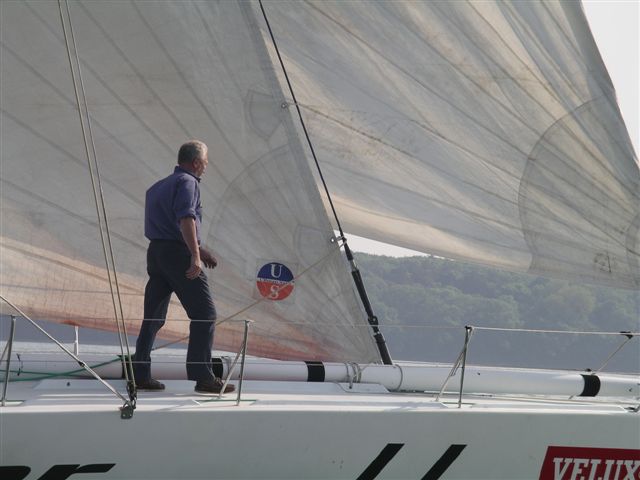
The picture above is Robin Knox-Johnston on his boat Grey Power, preparing for the Velux Five Oceans. The first man to sail around the world single handed non-stop is off racing again at the ripe old age of 67.

If you want to find out more about this incredible man, read either his gripping autobiography “A world of my own” or the story of the first Golden Globe in “A voyage for madmen”.

What I really like about “A world of my own” are the human touches, such as frequent mentions in his log of drinking the odd bottle of beer or dram of whisky. I just flicked through at random and the sentence “I think I’ll have a nip of Grant’s” jumped off the page. But from what I read of British sailors in the 17th and 18th Centuries, that’s an old, old British sailing tradition. Excuse me, just need to get a re-fill....

Ah, thats better!

Robin Knox-Johnston was born in Putney, London. Which co-incidently is just where Captain JP is trying to move to. Fingers crossed for both of us!

Thursday, June 22, 2006

Summer Holiday

With the end of the Volvo Ocean Race Captain JP is going to take a summer break. Over the next month there are five family birthdays, three parties, a friends visits, and a friends birthday. There isn't a free weekend till mid August.

At the end of July is there a break, when with three others I'm crewing the delivery of Selene (IRC 2 if you check on the RORC web site) doing the Lisbon to Gibralter leg.

That should be a lot of fun so will report back - but not till August.

Have fun and see you then.

Monday, June 19, 2006

Final Scores


ABN AMRO ONE - 9/10


For the last half of the race there has been little doubt as to the overall winner. With a crack team, able manager as skipper and Black Betty's magic ABN1 has shown how the VO70 class should be built and sailed. The routing has been only near perfect - a couple of times (legs 4 and 7 spring to mind) they have made sudden lurches to the south, going from first to last between two scheds. But with the boat speed to rely upon in both cases they were back in pole position in a few days or even hours.

ABN1 has shown what the next Volvo should be all about and proved the many critics of the VO70 wrong. It is not the class that is wrong, but the steep learning curve. Maybe the smartest thing Mike Sanderson did all the way round was to throttle back, to avoid the breakages that cursed so many other teams.

Ok, with Moose getting married during the Portsmouth stop-over maybe the second smartest thing. Hopefully the end of the Volvo will mean Emma will finally get in touch with Captain JP.


ABN AMRO TWO - 7/10

What can be said that hasn't been said before? This team has known triumph and tragedy on its way around the world. So lets remember the good things - the world speed record of 563 miles in 24 hours, the way they pushed hard their big brother ABN2, and the great seamanship shown in recovering Hans and rescuing the crew of Movistar. Kids no more, the men on ABN2 did good.

Brasil - 6 / 10

Its great to see more nations getting involved in the Volvo, especially from young dynamic countries like Brazil with links to the race via the stop-overs in wild and wonderful Rio. There's less to say about them than other boats - though that is a credit to their professionalism rather than a criticism. They gave a solid mid-pack performance than can be built on in future races, and after their dismasting on Leg 2 a great nick-name - "Brasilia, queen of the desert".

Brunel - 4 / 10

This was always an odd entry. It changed its name a couple of times, lost its points, stopped racing, started again, and so was only a part time member of the Volvo fleet. It was also an odd design - on the dock side at Portsmouth it looked like it didn't fit in with the sleek Farrs let alone the powerful ABN twins. But with a reduced fleet it was good they were there towards the end after Movistar sank, even if they did miss the mark coming into Rotterdam (oops!).


Ericsson - 5 / 10

So what went wrong? With the experience of Neal McDonald and a boat from the same team that built Pirates this team should have been a contender. But from the first in-port race it was downhill all the way. For a while the underlying failures were masked by keel breakages, but by leg 4 it was clear there was a major speed problem, and worse, a major morale problem. Maybe nice guy Neil wasn't the right guy to sort out physical confrontations involving winch handles. Or maybe there was nothing anyone could do - the boat was just slow. I can't see any major tactical errors - the boat was usually around the leaders pack. But when ever there was a drag race Ericsson began to lag behind.

I hear that Ericsson is seriously thinking about a team for the next Volvo: that would be great, but there's a post mortem to do to learn the lessons from this one.

Movistar - 8 / 10

These guys should be on the podium at at Gothenburg. They had a great team, experienced skipper, fast boat, and lots of preparation time. They were the only boat to consistently push hard at ABN1 for the lead, pipping them at the Wellington post. But they were let down by a shore crew that never fixed the boat, let them sail into Southern oceans and Atlantic storms in a yacht that wasn't safe, that nearly sank off Cape Horn and finally was abandoned in the Western Approaches. Kudos for saving the boat the first time, and more kudos for just afterwards letting the cameras in for a frank exchange of views, and hope its better luck next time.

Pirates 8 / 10

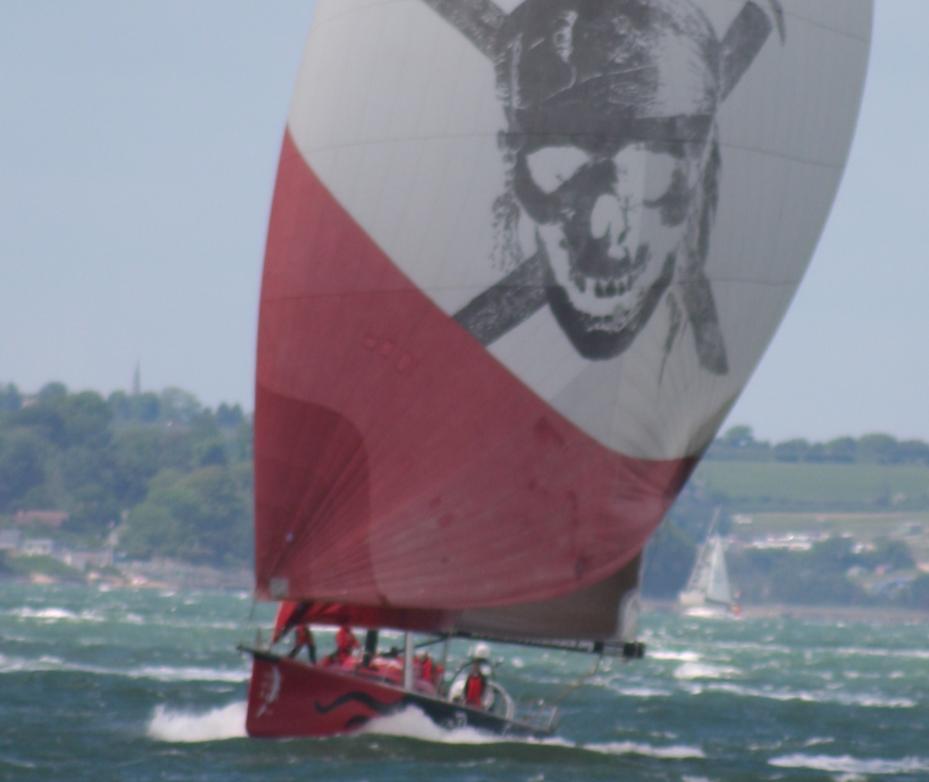
Who can not have enjoyed watching Pirates of the Caribbean sail around the world. With a character like Paul Cayard on board, the scull and cross-bones on the sails, and a major sponsor behind them this was always going to be a boat to watch. After the disastrous first night of the first leg they pulled themselves together and by Rio were well in the grove, finally picking up their first leg win and overall second place by the finish. But if Movistar were still afloat would they be third not second?


Edit: gave Ericsson an extra point as they were better than Brunel.

Photos from:
- http://team.abnamro.com/
- http://www.ericssonracingteam.com/
- http://www.blackpearlracing.com/

Saturday, June 17, 2006

Volvo on TV

The poor coverage in the UK of this Volvo has not helped Britain and Portsmouth's bid to remain involved in future races.

The company with the TV rights -
ITV - has given the Volvo totally piss-poor support. Not only have they chosen to broadcast it at 4am on its lowest priority ITV4 channel, it feels it can re-arrange the schedules bumping the Volvo at will.

Two recent recordings I tried to make both failed due to last minute re-schedules that failed to make the EPG so all I had to watch over the weekend was yet more football. Consequently I missed all the TV coverage of the Volvo while in Portsmouth - ironic really given it was the only UK port of this race.


I hope that future rights go to a broadcaster that treats it better. The only thing worse than what ITV has done would for it to go to a subscription company like Sky, which would basically lock out the majority of the UK's population who don't or won't subscribe.


Given the rate of technology movement, why doesn't the Volvo itself stream broadcast quality feeds from their web site? 2 Mbps broadband is common now and we can envisage 8 Mbps being widely available for the next race, easily enough for DTV quality.


The objective of the organisers is publicity for the sponsors and that can not be helped by TV rights to companies like ITV with so little interest in promoting it.

The Next Volvo

As predicted by the pretty Volvo girl (and reported here) the next Volvo is only 2 years off, with a 3 gap between starts. And as predicted again the VO70 design is here to stay. Yes it is extreme and yes for some sailors too extreme.

But there are many many others can not turn down the offer for a chance to race on the world's fastest yachts, to surf at 30-40 knots, to be part the premier offshore yacht race.

And these boat speeds means more of the planet is open to race organisers, more markets for the all important sponsors.

I hope that won't mean an Ellen MacArthur style tour of the far East. And if the race's roots in Portsmouth are forgotten or overlooked that would be very sad.

But the vision of ten Black Betties sailing around the world - and soon - can only be welcomed.

Black Betty's Boo Boo

As the last leg of the Volvo Ocean Race comes to a close there is no doubt that Mike Sanderson's ABN1 has dominated this race. Its performance has been clearly superiour both in boat speed and her crew's sailing abilities.

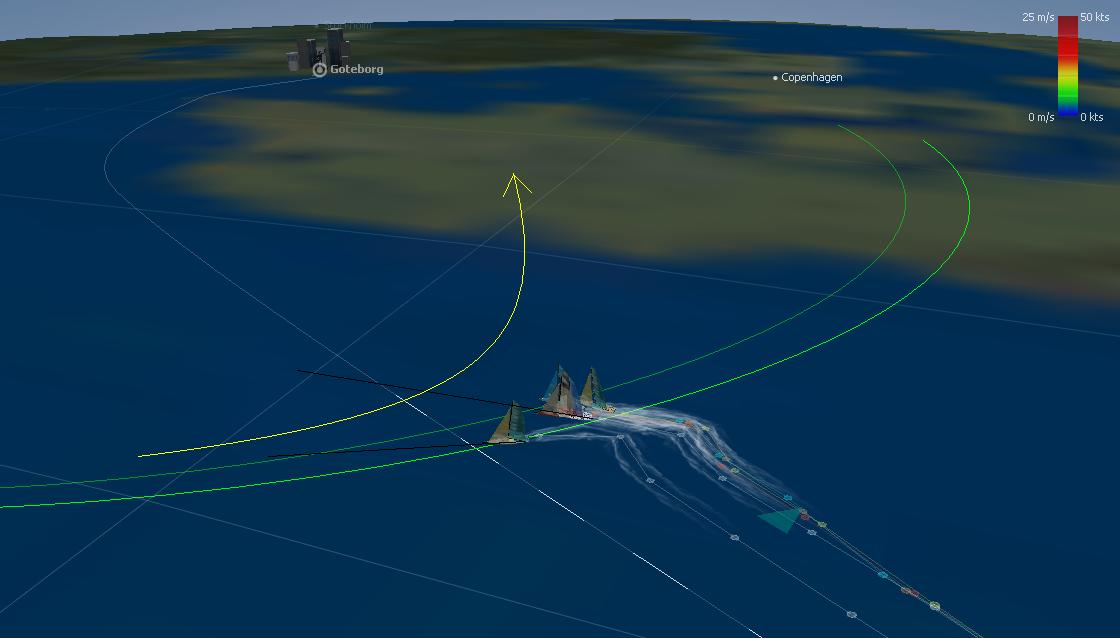
It's therefore interesting to see a rare tactical mistake off Denmark. As the fleet pushes through the light airs around the centre of a high they encountered a severe wind shift between the right and left hand sides of the course. In the figure above the wind direction - shown as a yellow arrow - can be seen to change through a right angle.

Consequently while at this snap-shot on 08:08 Friday 16th all boats are on starboard tack the angle they are making - black lines - is very different even when sailing close together.

Clearly the boats to the right can make a much better vector and those to the left are severely punished, with ABN1 in particular going from first to last in a few hours.

It just shows the importance of tactical decisions and the influence of getting the forecasts right.


Graphic from Virtual Spectator

Thursday, June 08, 2006

Gates are closed

Tidal gates are not something you expect from the Volvo Ocean Race. It's that word "Ocean" that implies you'll be far offshore where there are prevailing currents but not tricky currents with springs and neaps to worry about.

But just like an inshore race such as the Round the Island or Fastnet, tidal gates have split the Volvo pack into two. Nothing to do with tactics and all to do with timing, with ABN1, Brasil and Ericsson making a clean get away from the northern tip of Scotland, leaving ABN2, Brunel, and Pirates enviously watching from behind.

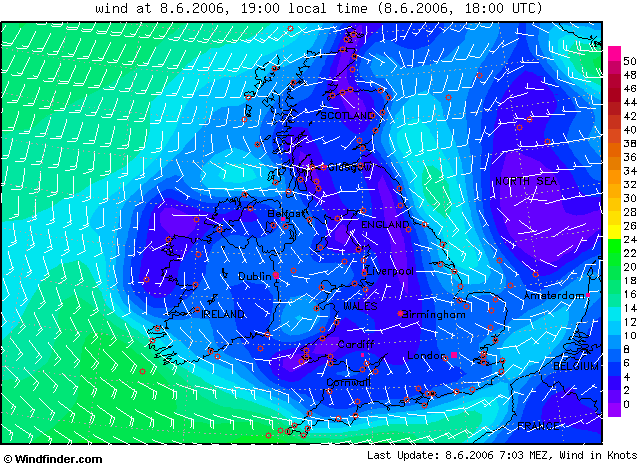
At least the wind will fill in which should be enough to get them there by close of play Saturday for the in-port race revised times on Sunday. The forecast below shows there could be nearly 20 knots of wind along the East coast of England Saturday morning.

But then the weather's always changing around Britain.


Forecast from www.windfinder.com

Dragging Race

What’s a slow drag race? The Volvo fleet might have turned the corner up by the currently mild mannered Cape Wrath, but there is a long way to go and no signs of the longed for big winds.

It’s always been the problem with the Round Britain Race for me – there are few over-taking lanes, and few big tactical decisions. Most of the ones I’ve followed (never having done one) the winners have been those with the right sails and the best trimmers.

This leg of the Volvo Ocean Race is looking like it will be no different. There has been talk of a radical eastern track down the North Sea. You can sort of see the logic in this forecast for this evening.The centre of the high is the middle of the North Sea, so there are southerlies by the British coastline and northerlies by the Norwegian. In theory that would mean a nice downwind run on the right hand side of the course.

However not only is the distance much greater but there's a patch of bad wind between the fleets and the far side. So its a big risk, and I’d guess the boats would rather be tacking upwind on the left hand side and getting the increased apparent wind than risking the far side of the course.

Either way, better keep tightening those belts chaps, it’s a long way yet till the bars of Rotterdam.


Figures from Virtual Spectator and Windfinder.com

Tuesday, June 06, 2006

Drifting - 3: VORs across the Celtic Sea

This leg of the Volvo Ocean Race is not going to plan. They never seem to do so, and never in the same way.

The last leg suffered from too much wind, too strong - all the time too strong. This leg has gone to the other extreme with slow drifting conditions, boat speeds often below 10 knots.

It reminds me a bit of last year's Fastnet when we all drifted aimlessly across the Celtic Sea, entertained by pod after pod of wonderful dolphins (above), going ooh and aah when we should have been trimming.

The decisions the Volvo fleet have taken to avoid tides in the channel seem similar too - stand off Portland Bill then duck in close to the land by the Lizard.

But at least we got the wind nicely around the rock - as you can see here:


We were late getting in and on arrival at Plymouth had nearly no food or drink left onboard but for water. Again the Volvo boats have a similar problem with rationing being enforced.

But at least one thing on this leg is as expected: ABN1 has taken the lead. The fat boat's got agile in light winds thanks to souped-up sails.

What could one do to get a chance to sail on her I wonder?


All pictures (c) Captain JP

Drifting - 2: Round the Island

As the sun rose glowing fresh above the mist of the Hamble river we were forced out of snug sleeping bags at 05:00 to head out to the unfeasibly early start of the Round the Island Race.

Our class start was 07:00 with first gun at 06:50, but with plenty of time to spare we could see the Open 60 head off after their start, followed by the multi-hulls with the Volvo 40s taking the lead with impressive speed.

The early starters favoured the southern or island end of the line, but as the tide built the preference moved north to the middle. We were a bit too far north for our start for my liking, and our timing wasn't brilliant, but at least we had the tide with us almost all of the way round.

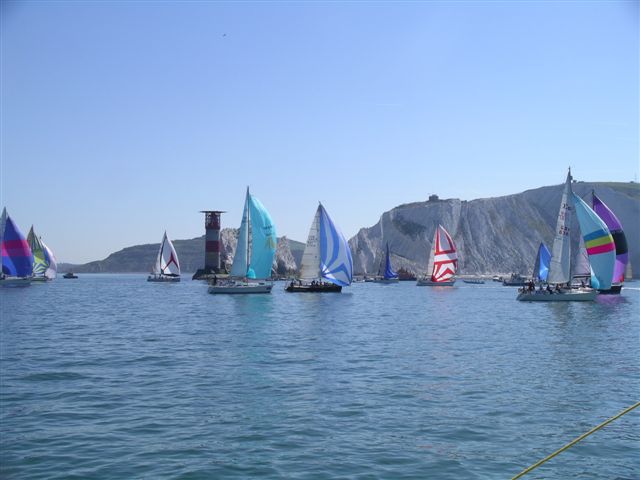
Which was just as well as we certainly didn't have wind all the way round. There were big wind holes at three corners of the Isle of Wight, namely the Needles (below), St. Catherine's point, and just after the Bembridge buoy (race course can be found here).

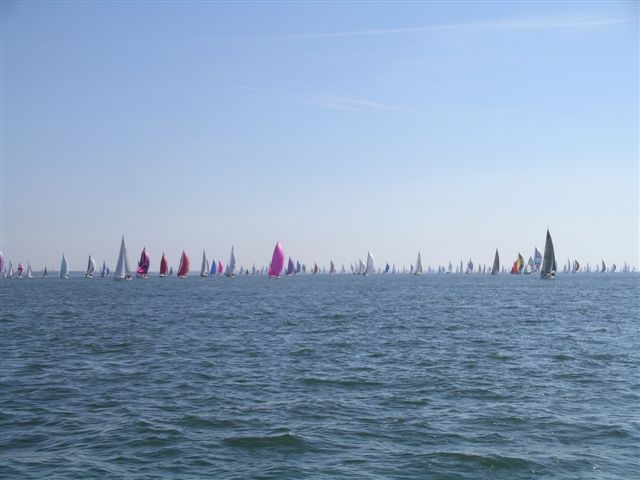
But its hard to complain when it was so sunny and we were out with over 1,500 other boats - from Open 60s to little dinghies. With around 12,000 sailors it is the UK's third biggest participant sporting event.

It was a day when sun cream and water was passed around time and time again.

The most annoying wind hole was after Bembridge when we should have gone hard in-shore following the examples of Brazil and Pirates. Instead we sat there wondering how those boats could be moving while we were drifting between a buoy and a lobster pot. I comforted myself with remembering that Mike Sanderson and ABN1 were in the same position the previous day.

And at least we got round, unlike half the fleet: stuck by the Needles wind hole when the tide turned they had no chance.

Ands whats more we got a mooring in Cowes without any rafting out, were in the beer tent by 18:30 and having a spicy Indian by 19:30. Though by 01:00 in the early hours it was feeling like a very very long day.

My favourite bit? Helming at the end towards and over the line, battling boats crossing on opposing tacks.

My least favourite bit? A toss up between that ******* who forced us to crash gybe when on starboard and he was on port, and letting our rivals get passed us half a mile from the line.

Next time we'll do better. Yup, there's definitely going to be a next time.


All pictures (c) Captain JP

Drifting - 1: Volvo Restart

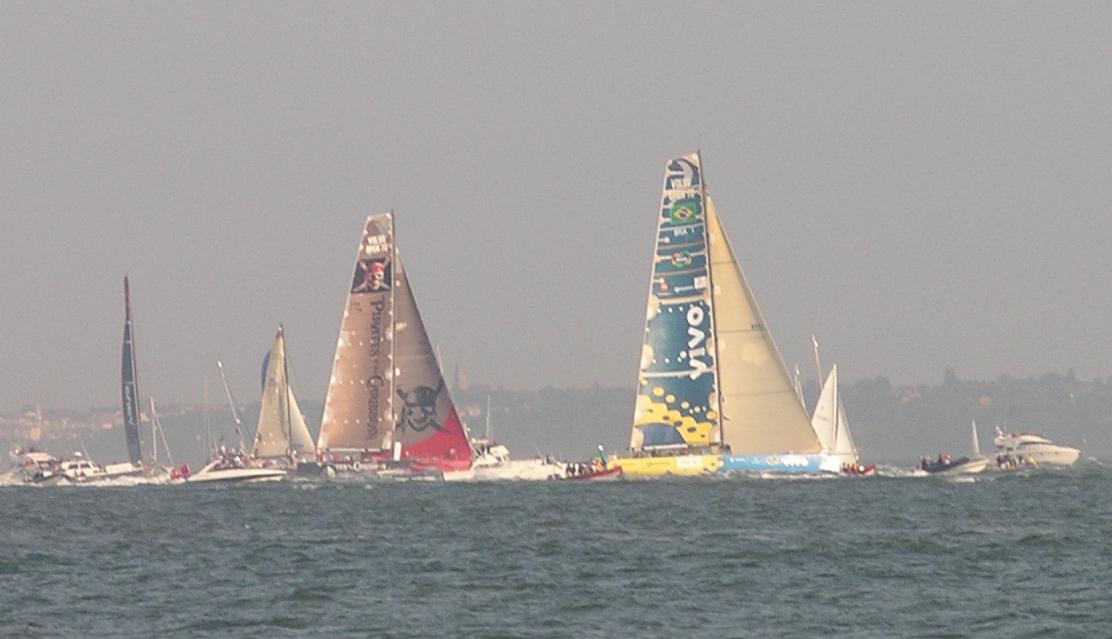
It was a slow restart to what is turning out to be a very very slow leg on the Volvo Ocean Race. We were positioned off Cowes at the northern end of the exclusion zone, our engine ticking over at exactly the speed of the tide so we could just hang by the Volvo Race boat. Unfortunately all the boats went close to the Island so all we saw were these far off shots.

What was interesting was the leading boats, Brazil and Pirates, took the island side in their hunt for wind, and found it, unlike ABN1 that fell into a hole and sat there watching the others take off.

It was all very different from the conditions for the in-port race, which as you will remember were like this......

We also passed close by the reconditioned Open 60 Grey Power on which Sir Robin Knox-Johnston - currently 68 - will compete in the Velux Seven Oceans later this year. That will be quite an achievement, even for the first man to sail around the world non-stop single handed.

Pictures (c) Captain JP

Wednesday, May 31, 2006

Post race Portsmouth

It was surreal to be staying down on Gunwharf Quay. At the hotel I was staying in were also many crew including most of Brazil, as well as others such as Sir Chay Blythe.

Wandering around you'd come across Paul Cayard and his fellow Pirates deep in discussion.
Then there'd be every third person with a team jacket. Some crew, some shore team, some PR, some friends and family and some just fans. So I talked to a Pirate crewman, two Ericsson employees with stories of a wild gleam in Neal McDonald's eye and heard sad tales from the dad of a Movistar shore team.

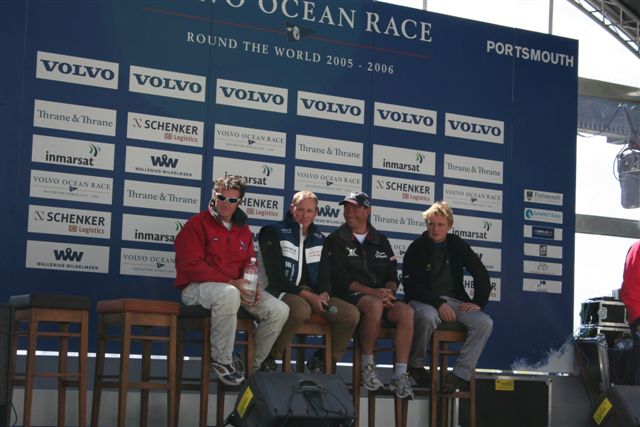
During the day there was the question and answer session with crew from Brunel, Ericsson, Pirates and Brunel (the ABN teams were recovering from a party the previous night).

There was a lot of discussion about the future of the Volvo. The overwelming response from the sailors was support for the VO70 class. These boats might be extreme, but thats just fine by them. But they'd like more crew per boat to help do those frequent sail changes.

Should the Volvo be every 2, 3 or 4 years? The pretty Volvo girl I talked felt that three years would be a good compromise, sticking to the VO70. We deamt of a future with ten Black Betties storming round the world.....

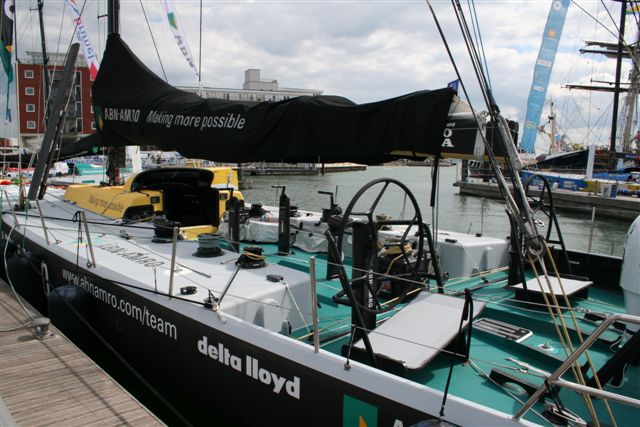
Up close from the quay side she looked light years ahead of the others. Its not just her beamyness - its that the the widest point is at the stern, unlike the others that are broadest near their middle. The cockpit seen here is also very clean - a wide open platform to work in.
ABN1 is the boat all want to sail. Including Dee Cafari, guest of Mike Sanderson in the picture below. And no, I didn't recognise her.


All pictures (c) Captain JP