Friday, November 04, 2011

Season of mists on the Thames

Its the season where you seem to get all sorts of weather in quick succession.

One day you need coat and umbrella, the next the skies are blue and the talk is of Indian summers. Its also seems to be the time of year when mists roll down the Thames along with the tide.

Its rather poetic, as the bridges at Putney dramatically rise from the clouds (above). Lighters are unmasked, glimpsed briefly and then the curtain is drawn across again:
Wraiths, columns of air and suspended microscopic droplets of water, stalk down river.
Then the sun bursts through, evaporating these apparitions and imaginations, and it is time to get back to work.

Thursday, November 03, 2011

Single handed sailing

I was going to follow up yesterday's post with a health and safety report into Slocum's voyage around the world, but it seemed a bit too easy.

You can just imagine it: "no up to date charts, not even a single GPS or EPIRB, no radar reflector, log burning fire risk, no life raft or grab bags bla bla bla."

But there does seem an important issue here - can single handed sailing be sufficiently safe that it can be encouraged through organised races?

I dunno......I mean, one person can't be on watch all the time, and the stats show it is a lot more dangerous than crewed races such as the Volvo starting this weekend.

Double handed seems to be a better solution. No more "around alone" but "sail with a mate" - unless of course you're lucky enough to "meet and fall in love".

After all even Slocum got married - not just once but twice.

Wednesday, November 02, 2011

The Cockleshell Heroes Health and Safety Report

Last night the BBC had a TV program about Operation Frankton, the operation that was turned into the film Cockleshell Heroes. I had only heard a little about this WW2 raid by on Bordeaux by canoe and so found it very interesting indeed. 

However in addition I was lucky enough to be sent anonymously the following Health and Safety Report:

Diversity Objectives

The first question about this raid comes from the selection of the commandos, and whether there was a proactive inclusivity policy? Given that all marines were white males, I think not!

Time Management

The unit set off from a submarine in the English Channel in the evening of the 7th December 1942. Over the next few days it was clear that the marines were forced the exceed the mandatory working hours limits laid done in EU Directive 2003/88/EC. Furthermore the anti-social hours were counter to good home/work balance and there were no child minding facilities.

Equipment

The unit were in paddling low profile kayaks, painted a dark colour, at night, in a busy shipping lane up the Loire river with a significant amount of traffic (Nazi patrol boats), and yet they didn't have a single high visibility jacket between them! Why?

Stress Management

At the entrance to the river were a number of tidal races with overhangs resulting large waves with steep sides. In the confusion and conditions several boats were lost, either to the elements or ending up in enemy hands. Only 2 of the 6 boats made it through.

In such situations it would be understandable, as an act of respect and sensitivity to those lost, to return immediately for intensive counselling at the Happy Bean Bag Therapy Centre. That they continued is indicative of a retrograde phallocentric management style rather than modern inclusive whole-person holistic decision making.

Consumables

The remaining commandos then encountered some local French fishermen and their families who provided them with fresh bread and half a bottle of red wine. At no point did they enquire as to whether they used approved baking processes or what the bread's use-by date was. As to the consumption of alcohol while carrying high explosives, well words fail me!

Health and Well-being

After leaving the fishermen, the remaining two kayaks paddled on up the river, covering 25 miles in one stretch. And yet none of the team was a qualified physio-therapist and the constant repetitive motion was simply asking for RSI!

Ear-muffs

On reaching Bordeaux the two kayaks split up and laid their limpet mines against the sides of ships trading with the enemy. In the resulting explosions, yes, they did destroy 5 or 6 ships, but did no one consider the noise and provide them with ear protection? That is was ISO 4869 is for people!!

International Impact Analysis

At this point they ran away - and not just back to home as they should. The remaining four (well two, as the other team were captured) made their way through France, into Spain and thus to a Crown Dependency, Gibraltar. Did they have no idea of the amount of paper work that would generate? Had they no consideration for others??

Conclusions

Officially the two survivors, Major Hasler and Marine Bill Sparks, were welcomed back with a DSO and DSM respectively.

But if Health and Safety had had their way they would have been awarded an F-.

Monday, October 31, 2011

A frightful anniversary

Today I share something with Alex and Taru.

No, I do not have a glamorous life sailing around the world, enjoying stunningly beautiful blue water, but like them today is an anniversary.

For me it is blogging, for 6 years ago today the first post went live. If I were 6 now I would be out there banging on doors demanding free chocolate, for today is Halloween!!

Being a little bit older I'll be connecting some appropriately spooky dots, and going back to the painter John Martin. As well as a career in art and a side line in designing London's sewage system he had time to raise not just 6 of his own children but also take under his wing a young woman called Jane Webb.

Jane Webb went on to write The Mummy (above) and the ever connected John Martin could also claim to know William Goldwin whose daughter wrote Frankenstein. It might not have been a coincidence then that one of Martin's own daughters married an Egyptologist.

Indeed there sometimes seems no limit to the connections John Martin made. He shared lodgings with the future King of Belgium (who became godfather to one of Martin's children) and at his dinner parties you could meet Dickens, Michael Faraday, Turner and John Tenniel, the illustrator of Lewis Carroll's books.

One amazing story has him on the footplate of a steam train with none other than Isambard Kingdom Brunel thundering along at 90 mph as they proved conclusively that a train could go faster than a horse.

What a great life!

Sunday, October 30, 2011

Frozen Planet, Epic Viewing

This weekend many of us in the northern hemisphere got an extra hour and I spent it watching the BBC's new series, Frozen Planet, about life at the highest of high latitudes, the poles.

It was an hour of saying "wow" and the occasional "effing wow".

Landscapes that make the Lord of the Rings look wimpy, waterfalls dropping a mile through the ice sheet, explosive birth of icebergs out of glaciers, a polar bear hunting for a mate, wolves taking down a bison, whales blasting through bait balls, sea lions surfing under a wave trying (and failing) to catch a penguin, humpbacks leaping from the water, killer whales deliberately making waves to crack ice or knock seal prey into the water then using bubbles as a smoke screen, underwater wood lice the size of dinner plates, ice caves around the volcano Erebus, rock formations carved from 200 mph winds, the Mars like dry valleys ..... the spectacles continued non-stop.

It was narrated by the national living treasure that is David Attenborough (who is a dot somewhere in the picture above).

For those in the UK I hope you are watching. For those outside prepare to be amazed.

Friday, October 28, 2011

Film: Tacita Dean at the Tate Modern

One of the joys of London is being able to pop into the Tate Modern's cavernous Turbine Hall to discover the latest installation. And that's exactly what I did last weekend.

What I found was Tacita Dean's tribute to 35mm film called, er, FILM. Unlike in the cinema where the screen is much wider than it is tall here it is on end, reaching almost to the hall's roof.

In the 11 minute loop she demonstrates the range of techniques and textures than can be created by old fashioned analogue methods, using filters and cut-outs. And the loop itself is physical - a single loop of celluloid.

One of the main images is of the far end to the Turbine Hall itself, while others include fountains, streams, waves approaching a beach and mushrooms. Children love it, rushing up to the screen, trying to catch falling images, like the bubble above.

I enjoyed it, though I wouldn't rave as some reviewers have. I'm rather prosaically in favour of new tech, despite the odd hiccup.

Its really nice, lying there on that endless expense of poured concrete, watching silhouetted children and waiting for those mushrooms to come round yet again. I can totally recommend you go and see it.

However I couldn't help but think, again and again, why make life so difficult? It must have taken ages to do all of that the old fashioned way, cutting ribbons of film and gluing frames together again.

Just, like, load it up to MovieMaker dude. (or Final Cut Pro if you've got a Mac).

Maybe that work is the point. It was a bit like those Sunflowers Seeds of Ai Weiwei, in which each of the uncountable millions was created by hand (though it was a shame you couldn't walk on them as was intended).

But at the end of the day 35mm film is - or rather was - for me a tool that could be used to tell a story, and its that mix of character and plot that interests me.

Something, indeed, like Casablanca.

Play it, Sam, play "As time goes by"

Sigh. Now that was true magic.

Wednesday, October 26, 2011

John Martin, Charles Dickens, Sir Francis Walsingham and Tracy Edwards

John Martin had a Dickensian quality about him. Indeed he was a friend of Charles Dickens and it is not impossible that one of the latter's characters was based upon Martin.

But I'm not thinking one of the artists in Dickens - though there's no reason why not - but rather the inventor Daniel Doyce from Little Dorrit.

For there was another side to Martin than those epic biblical canvases, namely the entrepreneur and inventor who was literally decades ahead of his time. Twenty years before Bazalgette he was proposing a sewage system for London, with architectural plans uncannily like the eventual designs. 

He even proposed using the embankment of the Thames not just for tunnels but also for a railway network, proposing a loop around London not dissimilar to the Circle line.

As part of the exhibition on John Martin at the Tate was his plan for London showing new stations - such as one at Battersea, something that is still being talked about, a hundred and eighty years later.

Indeed the sewage system of London is still a topic of much debate. As has been posted here before, there is ongong controversy about plans for a "super sewer" that will follow the course of the Thames from Hammersmith to Docklands. It is waiting, however, on decisions about where the access tunnels should be located.

One of the hottest debates is about whether one should be at Barn Elms. This is where, many, many years ago, Queen Elizabeth's spy master Sir Francis Walsingham used to live in the days of the Armada.

Now it is a pleasant green space where there are rowing, sailing and canoe clubs, and having their activities disturbed for seven years by diggers is proving to be rather unpopular.

Indeed non other than round the world sailor Tracy Edwards has added her voice to the campaign to stop the shaft, saying "This is the busiest stretch of the river for water sports, and is used by everyone from complete novices to Olympic athletes to train and enjoy one of the most beautiful spots in London"

Quite right too.

But please, do hurry up. I do really feel that after all this waiting it is time to finally finish what John Martin first worked on back in 1828.

Tuesday, October 25, 2011

Tate Britain: Apocalypse (last weekend)

Last weekend the world almost ended - or at least according to Harold Camping. It's hard to keep up, the world seemed to have been about to end soooo many times this year.

It seemed right, therefore, to go to the Tate Britain to see the exhibition Apocalypse of work by artist John Martin (as in the example above)

You certainly got value for money for his canvases were super sized and if you like the colour red, well you'll really like them. Epic scale, some with hundreds of people dwarfed by landscapes that seem to go on forever. Almost always there were snow capped mountains looming high above pastoral scenes, that, like Narnia, looked suspiciously like an English country estate.

The subject was usually biblical or classical era - think fall of Babylon or Pompeii - and the results were popular, drawing in the crowds like the summer blockbuster. The pictures went on tour, some going as far as Australia.

The art establishment was sniffy. "But is it art?" they would ask, as so many have before and after. Indeed when the Tate Britain was flooded and a John Martin got damaged the curators basically shrugged their shoulders. It was just a John Martin, after all.

It must be admitted they are not break-through material. It's not like Turner where you go wow, that's something new and different. It gets repetitive and the execution feels more like manufacturing than creation.

But it is good entertainment - pictures you like you haven't seen before, and you won't forget John Martin's name afterwards.

If, of course, there is an afterwards........

Sunday, October 23, 2011

Frankenstein and Putney

In these times of ours, though concerning the exact year there is no need to be precise, a boat of dirty and disreputable appearance, with two figures in it, floated on the Thames, between Southwark bridge which is of iron, and London Bridge which is of stone, as an autumn evening was closing in.

What's this? you are probably thinking. Has JP finally lost it? This quote is from Dickens not Shelley and those two bridges are down river in central London, not leafy Putney - where is this post going?

Hold on, we'll get to that. But lets focus on that image from Our Mutual Friend of the waterman on the Thames one autumnal evening, about to recover a body from the cold waters of the Thames, for that is what this tale is all about.

If you had been standing on old Putney Bridge in November 1795 you would have witnessed a very sad scene. A lady, her heart broken as she realised her beloved would never be hers, decided to kill herself. She went out in the pouring rain until her clothes were heavy with water then threw herself off that bridge, determined to end her sorry lot.

Fortunately two watermen spotted this attempt and were able to rescue her, and in time she recovered and was able to love again. Indeed she married and had two children, both daughters.

The eldest was Mary Wollstonecraft Godwin who later married the poet Shelley, It while she was on holiday by Lake Geneva with her husband and Lord Byron that she wrote that great novel, Frankenstein.

If it wasn't for those two unknown watermen who picked her mother Mary Wollstonecraft, also a writer, from the muddy, dark, cold waters of the Thames Frankenstein would never had been written and we would not have the monster in the photo above.

So you could say that in a way the monster came from that river: a disturbing thought as I peer out at the dark, listening to the wind howling in the trees.

Friday, October 21, 2011

The Armada and Putney

So how could Putney be linked to the Spanish Armada?

There must, of course, be so many ways. It's a bit like saying what's the connection between Putney and WW2: you wouldn't know where to start.

However there was one in particular worth mentioning, Queen Elizabeth's spy chief lived there. Sir Francis Walsingham controlled a network of spies across the continent, feeding the English with vital information as to the status of preparations.

He would retire to peace to his manor house at Barn Elm's just upriver from Putney, where now you will find two canoe clubs, one sailing club and a rowing club. There he'd plot, plan and scheme how England would defend itself.

And there he entertained his Queen and their court in May 1589, the year after the Armada. And no doubt they toasted their victory in fine wines, though maybe not Chateauneuf-du-Pape.

Thursday, October 20, 2011

Book Review: The Defeat of the Spanish Armada


The defeat of the Spanish Armada is one of those classic stories of English history, one that mixes a bucket of truth with more than a tumbler of myth. But it wasn't one I knew much about so I found this book in a second hand stall it felt like an easy £1 to spend.

And good value that turned out to be. This is the classic written by American historian Garrett Mattingly which won the Pulitzer prize back in 1960 and a cracking read it turned out to be, one that I was looking forward to picking up again, to find out "what happened next".

It follows the story from the execution of Mary Stuart to the aftermath and consequences of the defeat of the greatest power of the day by those upstart English (not Brits or Limeys yet). The excitement builds as the Armada prepares and then sets sails, and you can image the thrill of getting to a chapter with the great title and subtitle of "First Blood: The Eddystone to Start Point, July 31st, 1588".

Mattingly is clearly a professional historian, taking a balanced view from both sides, in particular treating the Spanish admiral Medina Sidonia with great respect, noting how it was his decisions saved many ships in his fleet from destruction.

But there is also strong respect for the English leaders, for Drake, Hawkins, Howard, Frobisher and of course Gloriana herself, Queen Elizabeth.

A few minor quibles: the style is showing its age (purple and formalistic), there was (for me) too much detail on the situation in France and finally he freely interchanges alternative names for the key players, so you have to concentrate to keep up.

But that shouldn't stop you buying and then reading what is certainly a classic, if not the classic, telling of the Spanish Armada.

My copy had further signs that I was on to a good thing: stuck within were a Heffers bookmark (Tillerman will understand) and the label from a bottle of Chateauneuf-du-Pape.

A glass of highly quaffable wine in one hand and this book in the other: I suspect the previous owner must have had an entertaining evening's read.

Monday, October 17, 2011

Book Review: Ultimate Sailing Adventures

I got this book over the weekend, tempted, as the nights are getting longer, by the pictures and stories of sailing adventures. It has something for everyone, ranging from the canals of France to exploring the Northwest passage.

The ones I've done are:
- Round the Island Race
- Sydney Harbour
- Land's End
- Sail up the Thames
- Fastnet
- Sushi at sea
- Charter in Greece
- Cowes Week
- Race around Portland Bill
- Oysters in Cornwall
- East Coast sailing (ok, in a dinghy)
- Wander in a Wayfarer (ok, have sailed a Wayfarer)
- Cross the English Channel

Some of the others to be honest I can't see myself ever doing - the likes of competing in the Volvo or Vendee Globe, but there are plenty of ideas for future sails.

One thing I wasn't sure about was it has this concept of difficulty.

Now I can see that sailing a Wayfarer could be anything from "simple" to "extreme" depending upon where you sail it. But how is it that both rounding Land's End and Portland Bill are described as "tricky" but the Fastnet, which involves both, is only described as "moderate" - the same as Charter in Greece? I mean - seriously?

Sailing in the ARC or in a classics regatta weren't on the list so maybe there needs to be a list of 200 sailing adventures?

What sailing adventures would be on your list?

Saturday, October 15, 2011

Printed vs. iPad Yachting World

Every now and then I buy Yachting World and this week feeling like reading about Alex and Taru's (though really I think its Taru and Alex's) guide the Caribbean decided to get the latest copy.

But what format to choose? The paper version you might expect to be the more expensive. After all it requires glossy paper, a printer, distribution, shops space, sales assistant plus of course some will be damaged, other unsold etc etc - all very analogue and old tech.

It's also not locked into a single e-magazine format (Vinio) being totally portable, shareable - you can even give your copy to someone else to read.

The web 2.0 iPad version on the other hand has zero additional cost, zero distribution cost, zero storage cost, zero sales cost and its rights are locked to a device, so surely - surely - would cost less.

As you might have guessed by now that wasn't the case with the glossy paper version costing £ 4.50 while the Vinio version cost £ 5.49 - which is 22% more.

Now this would be a surprise if I didn't know about Apple's policy to take 30% of everything sold on their devices.

Given that iCloud isn't working for me this is all turning out to be not a good week for me and my less than magically iThings.


Updated: maybe I'm just showing my age at using an old technology that doesn't work as a baby expects:

Friday, October 14, 2011

Apple's iCloud doesn't "just work"

A technology tale for Friday.

A few years ago I tried Apple's magical MobileMe to synchronise my calendar between iPhone, iPad and PC, but whatever I did it duplicated entries. Thinking I must be doing something wrong I contacted Apple support, but after three hours of messaging with their "expert" the only difference was now the entries were triplicated.

It appears that I was not alone as even Steve Jobs said MobileMe wasn't that great - but he also said that things would be different with iCloud.

So it was with hope in my heart that on Wednesday I started the update to iOS 5. Well that took 6 hours - from 6pm to midnight - just for the iPad. Eventually I got both the iThings up to date, downloaded the iCloud control panel for Windows and was able to tick all the boxes and upgrade my MobileMe to the iCloud.

Hurrah!

Then following the instructions carefully I uploaded my calendar from my iPhone to the iCloud servers sitting somewhere in South Carolina. Logging into the web site, yes there they all were.

Right, thinks I lets give this a whirl and create a new event on the iPhone and watch it appear on the iCloud web site as if by magic.

Nothing happened. Oh yes, I forgot to switch on push/fetch, so turned that on and had a look on the web and what did I see but - duplicate entries appear. One by one the events over the last few weeks were being replicated like an out of control virus.

Noooooooooo!!!!!

So I switch off push/fetch, delete the iCloud calendar and spend a very boring time deleting duplicate entries on the iPhone.

Huh.

What to do next? Should I contact Apple tech support - given they failed this task last time? Should I switch to a Samsung while I can before Apple's legal department bans them here too?

Apple's iCloud - for me it just doesn't work.

Thursday, October 13, 2011

MTB 102

Over on the Bursledon Blog there's some interesting pictures of the high speed launch HSL 102.

Last month I saw another historic looking craft also with the number 102, as can be seen above. Having done a quick Google I can see it is a historic craft too, one that served in WW2.

The 100 + a bit number indicates a prototype, in this case built by Vosper Ltd, and MTB stands for motor torpedo boat (check out the tubes on the foredeck).

She was the fastest wartime British naval vessel in service at 48 knots, though here keeping to the 6 knot speed limit as part of the ADLS Vets Cruise on Thames.

More information from Wikipedia here or the trust web site here.

Monday, October 10, 2011

JP slacker shock

G'day all! Buff Staysail here! Buff by name and Buff by nature!

Well I've always said that JP was a bit of slacker and now I've got the evidence to prove it. This photo was found on the interweb thing and it clearly shows Aeolus, the boat that JP claimed to be crewing as foredecker.

But what is this we see? Two boots, clearly raised and at rest, the owner lying back relaxing - in a race!!!

If I'm shaking my head it is more in sorrow than disbelief.

This is Buff Staysail, disappointed but not surprised, signing off.

Sunday, October 09, 2011

The Mousehole

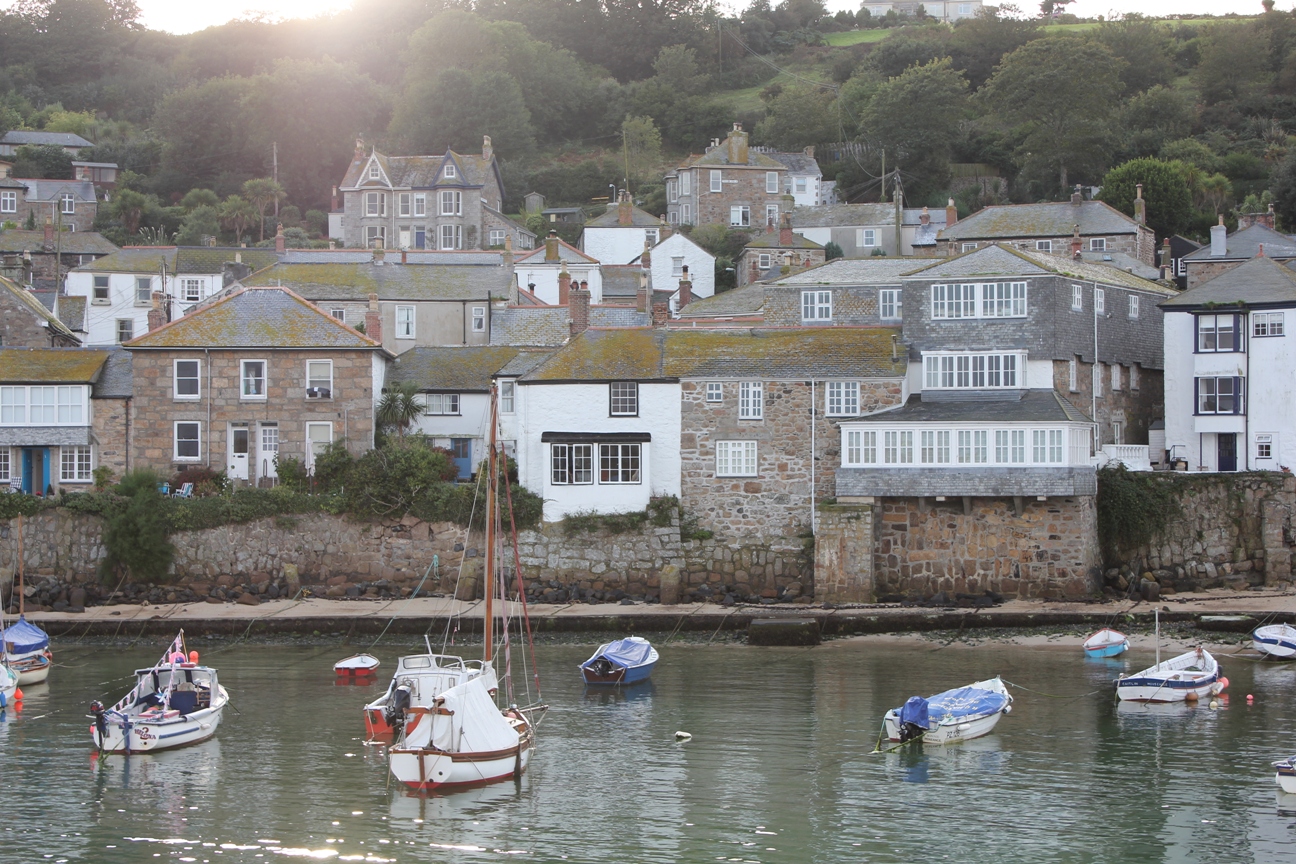
One of the walks on the All roads... TV show ended up at the little port of Mousehole (above). This is an incredibly picturesque little village around a nearly semi-circular harbour and I stayed there just recently for the wedding of one of the crew members of Aeolus, the classic yacht I sailed in Fowey earlier this year.

I won't try to explain how to pronounce its name as every time I tried I was told I got it wrong - but will go as far as to say it is not a combination of the words "mouse" and "hole".

One of its claims to fame was it was destroyed by the Spanish in the years after the Armada, which coincidentally I am reading about at the moment. But if it is a more recent construction (by which I mean post 1595!) it is still very pretty:
For those rowers out there, yes it has a rowing club too:
Well worth a visit if you find yourself at the far end of Cornwall.

Thursday, October 06, 2011

All roads

Last night there was a program on the BBC called All Roads Lead Home in which three presenters used techniques of natural navigation to make their way around Cornwall.

The natural navigation bits were good.

There was a description of how to use trees as direction finders given their shape is often influenced by prevailing winds (SW in the UK), as in the pic above which was described as the Trump hairstyle.

Another influence on trees was the N/S variation in growth, the so-called tick effect as in the following graphic:

A high spot was the dung compass, in which the sun will dry the N/S sides at different rates as in the following helpful graphic:

There was more about lichens (complicated) and using the orientation of churches (simpler) but rather a lot of the three presenters just chatting. It felt a bit like 3 men doing something boaty without the boats, and while there was Sue Perkins, she didn't once mention soggy bottoms or tarts, let alone say "on your marks, get set, bake".

To be honest I'd recommend anyone interested in learning about natural navigation that the best way would be to buy and read the book.

If you want an update on unnatural natural navigation there's a list of top tips at the BBC. Number 1 tip, about satellite dishes, is a favourite of mine, though I say they are SSE rather than SE, but there you go.

Tuesday, October 04, 2011

Watch this

The last couple of weeks have been manic and so instead of blogging have been mostly working. This evening things slacked off enough to give me time to watch the final of the TV institution that is the Great British Bake Off (GBBO).

But it has just finished, with Jo crowned queen baker (and well done her) so I was just wondering what I should watch next when up came this trailer for a program that included one of the presenters of the GBBO, namely Sue Perkins, and a certain face that seemed rather familiar (above).

Yup, the Natural Navigator is back with a TV show on prime-time BBC called "All roads lead home" and I for one shall be watching.

Friday, September 30, 2011

Being here

Yesterday evening was standing on Silver Street Bridge, Cambridge looking at the Cam and with it came a flood of memories and conflicting emotions.

It was nice to visit but it was all too brief and I had to be indoors working rather than wandering those timeless backs. It was a shame I didn't have time to see old friends who live there and go punting but nice to remember back to those student days. However that nostalgia brings with it a sense of time passing, that you can never return to when you were young.

I consoled myself with a Fitzbillies Chelsea Bun and it was every bit as sweet and sticky as they were all those years ago, then with a sigh returned to my emails.

Wednesday, September 28, 2011

Shark tows kayak

I like kayaking, don't get me wrong. It's just you have to keep paddling, like, all the time. So big thumbs up to Devon vet Rupert Kirkwood who has found an alternative - get a tow from a shark!

Ok, it was unplanned and he's yet to work out how to direct it, but the idea is definitely worth further study. As reported at the BBC here, he went out in his sea kayak to go fishing, caught himself a tope shark and then it towed him half a mile or so.

So what's it like being dragged out to sea by a shark in a little plastic kayak? "Fun" of course, though he did admit its nose "came to within inches of my sensitive parts."

Hmmm..... further research definitely required into the safety implications of this form of propulsion.

Sunday, September 25, 2011

World Rivers Day: the lost Fleet

For World Rivers Day here's a picture of one of London's lost river, the River Fleet, which gave its name to Fleet Street and hence Britain's press that used to be based there.

According to The Lost Rivers of London by Nicholas Barton Lord Nelson used to stay with his uncle in Kentish Town that was on the banks of the river "in order to keep an eye on the Fleet".

In earlier days it was even grander: Wren and Hooke created an elegant canal, as seen in the picture above.

Indeed the further back you go back the wider the river seems to have been. In Roman times it was big enough for major ships and possibly had a tidal mill.

Now it is just a drain, part of London's sewage system. Eric Newby described how "at the lowest level the Fleet itself raced riverwards at a good ten knots, too strong to stand up on a dry day, down a tunnel more than fourteen feet high". When it rains its like a torrent of water and sewage that overflows into the Thames at Blackfriars.

Eric Newby also describes a conversation with one of those that work down there that say the strangest thing they found in those underground tunnels was an iron bedstead!

An inglorious end for a river with a rich history.

Friday, September 23, 2011

World Rivers Day and time passing

Today is the autumn equinox when days and nights are the same length. For the next six months those of us in the northern hemisphere will have longer nights than days.

Time rushes on, 24 hours every day - unless you're waiting for World River's Day (which of course you are so you can blog about it).

As you can see from the screen capture below they are using a special extra long day:

Thursday, September 22, 2011

Justice and injustice

Over at Rowing for Pleasure Chris has pointed out an injustice in the Great River Race that hurt the chances of boat 14, Kingfisher (above).

They rowed so fast they got to the Richmond half-tide lock early - or at least before the PLA was prepared to open the gates and let them continue up river. That delay of 4.5 minutes was likely critical in them losing several places and was unjust.

Justice is not an abstract concept. For example for those doing jury service it is absolutely real and concrete, a life changed by the choice between guilty or not guilty.

And justice is almost always topical, and one particular injustice is in the headlines at the moment. It was for that reason that I added a number to the picture above to make 194 rather than 14.

For an explanation as why 194, follow this link.

Wednesday, September 21, 2011

Monday, September 19, 2011

Flemish Coil Google Piracy Shock!

Aha me-hearties, 'tis talk like a pirate day, so it be.

'pon my eyes, what dastardly deed to I see upon yon Google? Aye, 'tis the terror of the seas, Tillerman of the brig Laser, who has captured O'Docker's pride and joy.

What it be, you ask? Ah-ha heave-to and not be putting on t'gallants when there's a gale blowing.

Cast your spyglass on yonder Google images search for flemish coils. Ah, me hearties, we don't do them on a pirate ship, but I digress. 'tis the 2nd highest flemish coil of all and it be O'Docker's picture, aye, that it be. But it be a link to Captain Tillerman's web page!!

'tis piracy! Tillerman has high-jacked O'Docker's picture for his own blog!!

Ah-ha, 'tis enough of yon talk of blogs and Google. Where be the wenches and the grog? Me knows not but must go now or will be forced to walk the plank!

Beware the blogger pirates!!

Saturday, September 17, 2011

A very wet Great River Race

Today was the Great River Race, and it was definitely a day for umbrellas, and as can be seen from the photo above.

The GRR involves around 300 rowing boats of all types and sizes racing up the Thames from Docklands to Richmond, a total of 21 miles. Even with the tide with them, that is one long row, and if it rains a very wet row:

A big Huzzah! Hurrah! to Chris and all the Langstone Cutters on Gladys seen here pulling well through Putney:

Looking forward to hearing how well they did.

Friday, September 16, 2011

Evening on the river

Its is one of my favourite times of year to go for an evening paddle.

You get that transition from day to sunset, dusk, twilight and finally night, and the waters go from brown to mirrored sky blue to black. While you need lights the water and air is warm enough for shorts and a t-shirt.

But the nights are drawing in and how many more evenings like this will we have?

Wednesday, September 14, 2011

Picture quiz

We haven't had a picture puzzle for a bit so here's one for you while Tillerman is away.

This lovely classic yacht should be known to at least some of you, so:
1) Who owned her?
2) What is her name?
3) For what voyage is she famous?

Bonus point for naming the kitten.

Tuesday, September 13, 2011

Cartwheeling in Plymouth

This week the America's Cup World Series has returned to blighty with lots of boats pranging themselves. Sometimes nose first, other occasions sideways and once apparently a full cartwheel, but always wet and probably painful.

But you probably knew that, so on to the blog bit.

Firstly a public service announcement: I'm not going. Partially its a long way to go to see one race - even if it would be in the "natural amphitheatre" of Plymouth Sound (ha! - take that San Fran) - but mostly because I've arranged to visit my godson for his birthday instead. But thanks to the interweb I can watch the races on YouTube, which brings me to:

I know there was a certain amount of.... hmmm.... how shall I put it....oh yes -  pure Buff Staysail about this blog's reaction to the AC TV show. However if you look at the America's Cup YouTube channel the video from the last week with the most views is called The Plymouth Capsize Club and yup I couldn't stop myself watching it too.

Seems like a lot of people like a sailing sugar-rush

Monday, September 12, 2011

Swimmer survives the Thames

Yup, comedian David Williams successfully made it 140 miles down the Thames despite the yucky water and in the process raised one million pounds for charity.

And a side benefit has been to highlight why London really really needs that super-sewer - for example Mayor Boris in today's Telegraph.

Until its built I'd be reluctant to swim in a week in which the Bubbler has been out.

Sunday, September 11, 2011

On the Thames barge Lady Daphne

Today as part of the Thames Festival I went on a trip down to Greenwich on the Thames barge Lady Daphne.

Ok it was just a potter as guest while motoring but how could it not be fun to be on a real Thames Barge on a sunny day going through Tower Bridge (above) as they raised the bridge for us.

Lady Daphne was sprightly for her 88 years, turning nimbly in the busy Pool of London even with the river in full flood. There was the odd shower on the way down to Greenwich (below) as can be guessed from the grey sky:
But the sun was back out in time for our return to The Tower:

You can charter the Lady Daphne for a party but the Thames Festival is the only chance to go on her as an individual.

I would have liked to have seen her under sail but then you can't have everything. If we had even a short sail I'd have wanted to race her and then win and then next thing you know you're building 70 foot carbon fibre wing-sail boats and hiring lawyers with experience in the America's Cup.

Apparently she does race (I asked) and last year did "not bad" (see post on classics for translation) but this year was less successful.

A lovely boat it was a pleasure to sail on her and its great to see her back where she belongs: on the Thames in the Pool of London.

Saturday, September 10, 2011

Thames Water advises against Thames water

The water company for London, Thames Water, is advising comedian David Williams to cut short his swim along the length of the river.

He is approaching the tidal Thames which has recently received 500,000 cubic metres of raw sewage thanks to heavy rain overflowing a system designed for Victorian England.

Hmmm.... not sure I'm really selling the capital as a great eco-friendly city. Honestly, London is one of the - if not the - greenest city around and the Thames is thriving.

However I must admit that at times of overflow the Thames only is kept oxygenated due to repeated injections by a fleet of Bubblers (above). Come on - just build that super-sewer already!

See more here on a highly scientific experiment to discover how clean Thames water really is.

Thursday, September 08, 2011

Comedian finds Thames water no joke

Comedian David Williams is attempting to swim 140 miles down the River Thames from Lechlade in Gloucestershire to Big Ben in London to raise money for charity.

It is not going well, with the actor from Little Britain (to be honest not one of my favourite shows) suffering from "severe vomiting and diarrhoea". Apparently he swallowed something while swimming that disagreed within him.

Oh dear, not exactly the five star water quality we hope for, and this is before he gets to the tidal Thames (as above, at Putney) which receives millions of tons of sewage a year.

Someone should warn him that a pair of Thames Bubblers have been patrolling the waters today doing their fzzzzzzz!!!! routine as they squirt oxygen into the water.

But its for a good cause: David Williams has raised £ 350,000 for sports aid so far and has just reached Berkshire.

Tuesday, September 06, 2011

Oh do keep up

I'm being squeezed time-wise at the moment between work, family chores and the second re-write of that novel so struggling a bit on the blogging front.

However I liked Tillerman's idea to post the best of September and coming up this month we have the Thames Festival then the Great River Race on the 17th,  Talk Like a Pirate Day on the 19th followed on the 25th by World Rivers Day.

That's saying nothing about a writing challenge or a directing challenge which will probably drop off the to do list (sorry).

But not tonight.... its been a very wet and blustery day and the nights are getting noticeably longer.

Monday, September 05, 2011

The Bonnie Boat

No, not Bonnie's boat, and actually in Gaelic it should be Bàta Brèagha.

This eye catching yacht has been covered with 60,000 mirrors as part of an art project called the Bonnie Boat which will be held on the island of Skye on the 10th September. The boat is called the Celeste and is inspired by the 1960s pirate station Radio Caroline.

The event program can be found here and the artist's web site here. Its one of those that uses the word "space" a lot.

The program ends with a call to "book your ticket for the ceilidh" - very tempting but alas not possible as I have family chores that day.

So I will not be following in the wake of Prince Charlie:

Speed, bonnie boat, like a bird on the wing,
Onward! the sailors cry;
Carry the lad that's born to be King
Over the sea to Skye.