This is the Putney River Bus, taking commuters into London on one of the rare sunny days this so-called spring. It will soon be a rare sight itself.
For there is a new operator taking over this route west, Thames Clipper, with their fleet of modern cats:
There will of course be benefits, with more frequent services and faster journey times.
But there will be less character, less history.
The Henley (at the top) dates back to 1896 and another of the vessels I've traveled on was one of the little ships that rescued our army at Dunkirk.
They will no doubt remain on the river for other events, sharing these famous waters with the modern upstarts, old and new together as so often happens in this great city:
Monday, March 25, 2013
Sunday, March 24, 2013
Brad Pitt and Noam Chomski go sailing!
Hi guys!
Sassi's got a story to warm your cockles even on this snowy Sunday - Brad Pitt has bought a yacht! And it's the sort that even JP would approve, something called a "schooner", a classic sailing boat 75 feet long.
Can't you just imagine it? The turquoise blue of the water off Cannes, and under a glowing sun along sails Brad, Jolie and their lovely children with perfect smiles, tans and haircuts!! I'm feeling warm all over already!
So why no photo of the world's most beautiful couple you ask?
Well of course it's all JP's fault. He found out that some old geezer called Noam Chomski (???) "loves sailing" and used to own a fleet of boats.
Then he found this picture of Noam Chomsky sailing with another bloke not on Sassi's radar, namely Norman Finkelstein and insisted that I put it up.
I found their books on JP's shelves and had a flick through and what a yawn!
Forget that: if Sassi goes nautical what she wants is Ocean's Eleven, Ocean's Twelve and Ocean's Thirteen!!
Luv ya!
Sassi xxx
Sassi's got a story to warm your cockles even on this snowy Sunday - Brad Pitt has bought a yacht! And it's the sort that even JP would approve, something called a "schooner", a classic sailing boat 75 feet long.
Can't you just imagine it? The turquoise blue of the water off Cannes, and under a glowing sun along sails Brad, Jolie and their lovely children with perfect smiles, tans and haircuts!! I'm feeling warm all over already!
So why no photo of the world's most beautiful couple you ask?
Well of course it's all JP's fault. He found out that some old geezer called Noam Chomski (???) "loves sailing" and used to own a fleet of boats.
Then he found this picture of Noam Chomsky sailing with another bloke not on Sassi's radar, namely Norman Finkelstein and insisted that I put it up.
I found their books on JP's shelves and had a flick through and what a yawn!
Forget that: if Sassi goes nautical what she wants is Ocean's Eleven, Ocean's Twelve and Ocean's Thirteen!!
Luv ya!
Sassi xxx
Saturday, March 23, 2013
Too cold for Pooh Sticks
Its been a cold and chilly week, ending up with a day of sleet and snow.
Brrr!
It's not helped that I've had a yucky cold which meant that had to pull out of last weekend's planned sailing photography course.
Its not the only thing to be the victim of the extended winter we're having (sorry O'Docker).
The Head of the River Race (HORR) was due to be held today and it was cancelled.
But it gets worse, nay, tragic, sadder even than me having to work this weekend.
I'm afraid to say that this year's World Pooh Stick Championship has been cancelled.
Come on spring!
Brrr!
It's not helped that I've had a yucky cold which meant that had to pull out of last weekend's planned sailing photography course.
Its not the only thing to be the victim of the extended winter we're having (sorry O'Docker).
The Head of the River Race (HORR) was due to be held today and it was cancelled.
But it gets worse, nay, tragic, sadder even than me having to work this weekend.
I'm afraid to say that this year's World Pooh Stick Championship has been cancelled.
Come on spring!
Friday, March 15, 2013
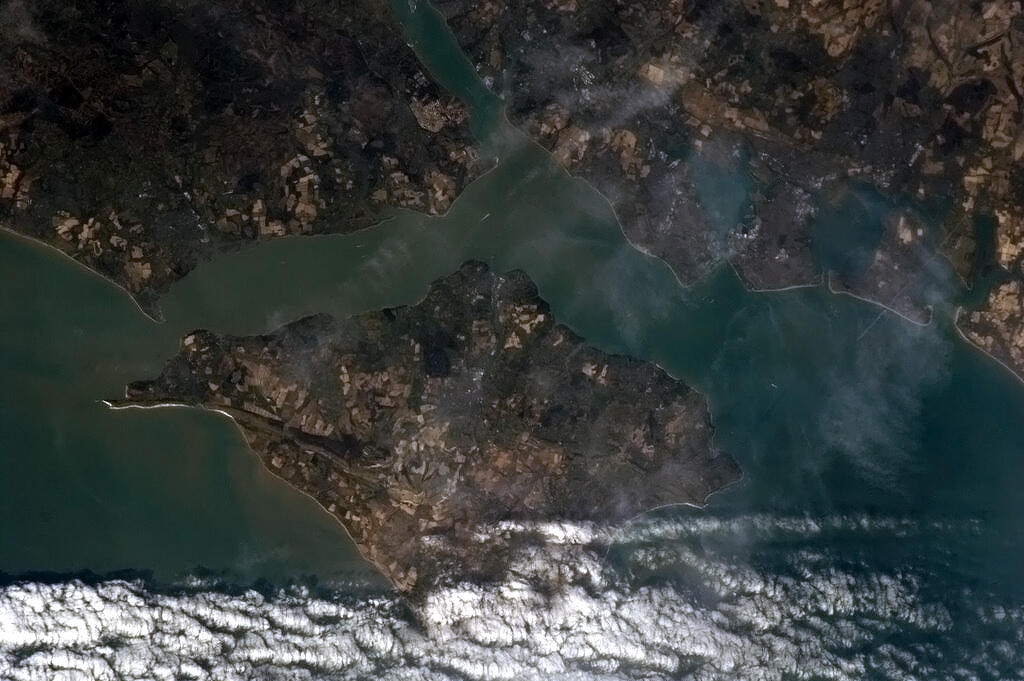
The Solent from SPAAAACE
This photo of the Isle of Wight and the Solent was taken by Chris Hadfield, the man with the coolest job title both on and off the planet, namely Commander of the Space Station.
I think that one's not going to get on this would-be space cadet's CV, but will settle for the chance to get out on these waters and hopefully soon.
Thursday, March 14, 2013
Sassi ROCKS!!!
Hi guys!
OMG!! I am, like, soooo good at this blogging biz!! Natch or wot??!!
All it takes is a whoosh of Sassi magic and ol' JP's blog is a CELEB AUTHORITY!!! (official!!)
Yes, that's right, no more Cry me a river!!
Watch out London 'cos Sassi's out to get plastered!!
Luv ya!
Sassi xxx
OMG!! I am, like, soooo good at this blogging biz!! Natch or wot??!!
All it takes is a whoosh of Sassi magic and ol' JP's blog is a CELEB AUTHORITY!!! (official!!)
Yes, that's right, no more Cry me a river!!
Watch out London 'cos Sassi's out to get plastered!!
Luv ya!
Sassi xxx
Wednesday, March 13, 2013
Tuesday, March 12, 2013
Matt Rutherford: single handed around the Americas
Red Dot on the Ocean - Trailer from TheSailingChannelTV on Vimeo.
Nearly a year ago Matt Rutherford sailed into the Chesapeake Bay to complete an epic single handed sail around the Americas.
The 23,000 mile voyage took him just around a year, in which he sailed through the North West passage and then South to the legendary Cape Horn.
I've only just heard about the story and seen the clip above of a film being made about it but would like to know more.
Luckily Matt is coming over to the UK to give a talk to the Ocean Cruising Club, and hopefully I'll be able to trek over to Docklands to hear about it first hand.
Monday, March 11, 2013
Sailing and committment
I have spent time recently wondering if I should buy rather than borrow or beg my place afloat. I see those other bloggers that have boats and ask whether I too should have something that was mine alone, to sail when and where I wished.
I can't help but be impressed at their dedication, out in all weathers to get that rolling gybe just right, or fixing that dodgy electrical system.
That takes commitment - a decision, that yes, this is the one for me, something I find hard to do.
Yes there are reasons. London is known for many things - concerts, galleries, architecture, history, restaurants, pubs and clubs, to name but a few - but marinas are not on the list.
But is that an explanation or an excuse? Is it a coincidence that the likes of Tillerman, who shows not just commitment but dedication to the art and science of the Laser, is accompanied to warmer climes with a Mrs T?
Is there character information to be gleamed from a sailor's choices - are those more likely be joined with a life partner also likely to identify and remain true to their choice of vessel?
Saturday, March 09, 2013
WEHORR 2013 plus another type of rowing
Putney Embankment was packed today for the Women's Eight's Head of River Race or WEHORR.
I couldn't of course send Buff due to the restraining order after the "pull fit girl" incident and Sassi, who would have been ideal, went drinking with her twitter chums last night and has only just surfaced.
But fortunately I was passing by on my Saturday run, though I had to slow down quite a bit due to the mass of rowers and their boats:
I wonder if Anna from Something about Rowing was there? Probably not, as her last blog post was about how she has become a bike racer instead .
While the WEHORR was running the river was closed, with a police boat standing guard. So it was good planning by this more traditional rowing boat that passed by earlier in the morning:
I couldn't of course send Buff due to the restraining order after the "pull fit girl" incident and Sassi, who would have been ideal, went drinking with her twitter chums last night and has only just surfaced.
But fortunately I was passing by on my Saturday run, though I had to slow down quite a bit due to the mass of rowers and their boats:
I wonder if Anna from Something about Rowing was there? Probably not, as her last blog post was about how she has become a bike racer instead .
While the WEHORR was running the river was closed, with a police boat standing guard. So it was good planning by this more traditional rowing boat that passed by earlier in the morning:
I wonder if Chris from Rowing for Pleasure can identify them?
Walking Wounded
Another walking song for Bonnie, also from EBTG, this time the title track from the brilliant Walking Wounded.
Not much actual walking in the video though.
BTW sorry had to set back on captchas - got bored of clearing out all the spam
Friday, March 08, 2013
Five fathoms
To add to Bonnie's songs of walking posts, here's Everything but the Girl walking the streets of London:
I walk the city late at night
Does everyone here do the same?
...
There's a river in my head
Updated: I was wondering about the title of this song and my guess its a Tempest reference:
Full fathom five thy father lies;
Of his bones are coral made;
Those are pearls that were his eyes;
Nothing of him that doth fade,
But doth suffer a sea-change
Into something rich and strange
Thursday, March 07, 2013
Bronze Age boat completed
The replica Bronze Age boat has been finished and launch, and yes, it steers just fine.
However according to this BBC news video it needed a little bit of bailing, though according to the "experimental archaeologist" (what a great job title) that's to be expected.
Doesn't look like the fastest of vessels but certainly solid enough - once the holes are caulked.
Image from: Independent
However according to this BBC news video it needed a little bit of bailing, though according to the "experimental archaeologist" (what a great job title) that's to be expected.
Doesn't look like the fastest of vessels but certainly solid enough - once the holes are caulked.
Image from: Independent
Wednesday, March 06, 2013
Steve Reich's Radio Rewrite
I really enjoyed the Steve Reich concert yesterday, though it must be admitted it wasn't as amazing as the epically brilliant Drumming I saw two years ago.
The first piece was Clapping Music with one of the performers Steve Reich himself. There's a beautiful simplicity about this work, that must reflect millions of spontaneous creations from tribes sitting in a circle around fires on the plains of Africa. Half the audience seemed to struggling not to join in.
Then there was Electric Counterpoint, which is basically a single player on guitar accompanied by pre-recorded tracks of the same musician, which would make it ideal for a busker on the tube. I love its energy and drive, so this was my favourite.
The final piece of the first half was 2 x 5, which relates to the number of musicians rather than length. There was a certain mwah about it for me, and I wasn't surprised when the applause petered out.
After the interval was the world premiere of Radio Rewrite (above). It was based upon extracts, chords and variations on a theme from Radiohead's songs from the album Kid A, namely Everything in its right place and Jigsaw Falling into Place.
A key idea was that music has historically borrowed from contemporary dance and traditional music and its only relatively recently that the two genres have diverged. Reich is no stranger to cross-over, though most of the traffic has been from him to pop and in particular dance, that heavily borrows the minimalist ethos.
In a way there is precedent in Reich's work, in that the likes of Different Trains was based upon borrowed themes, in that case spoken phrases, reminiscences of the trains of America and Europe before, during and after the Second World War.
Its a different direction to the purer minimalism, with theme development, modification, variation and structure. These more traditional compositions sometimes seemed strained - maybe that's what was wrong with 2 x 5, but here the one initial hearing gave hints of layers and complexity that would reward re-listening.
The final piece was Double Sextet, which is more typically repetitive of some of Reich's earlier works, though actually relatively recent. While good stuff I personally didn't enjoy it as much as the Electric Counerpoint, which it must be admitted I know a lot better, but it got the most applause.
Afterwards there was a brief talk with Reich, who said that he felt that he and Glass were like cleaners, trying to fix the hole that the atonalist dug classical music into. He also admitted that he vigorous deletes material for self criticism, in moderation, is key for an artist.
A very enjoyable evening, and it was noticeable how much younger the audience was than most classical concerts. Given that both Reich events were quickly sold out I think there's two messages for those trying to get the next generation into the concert halls.
The first piece was Clapping Music with one of the performers Steve Reich himself. There's a beautiful simplicity about this work, that must reflect millions of spontaneous creations from tribes sitting in a circle around fires on the plains of Africa. Half the audience seemed to struggling not to join in.
Then there was Electric Counterpoint, which is basically a single player on guitar accompanied by pre-recorded tracks of the same musician, which would make it ideal for a busker on the tube. I love its energy and drive, so this was my favourite.
The final piece of the first half was 2 x 5, which relates to the number of musicians rather than length. There was a certain mwah about it for me, and I wasn't surprised when the applause petered out.
After the interval was the world premiere of Radio Rewrite (above). It was based upon extracts, chords and variations on a theme from Radiohead's songs from the album Kid A, namely Everything in its right place and Jigsaw Falling into Place.
A key idea was that music has historically borrowed from contemporary dance and traditional music and its only relatively recently that the two genres have diverged. Reich is no stranger to cross-over, though most of the traffic has been from him to pop and in particular dance, that heavily borrows the minimalist ethos.
In a way there is precedent in Reich's work, in that the likes of Different Trains was based upon borrowed themes, in that case spoken phrases, reminiscences of the trains of America and Europe before, during and after the Second World War.
Its a different direction to the purer minimalism, with theme development, modification, variation and structure. These more traditional compositions sometimes seemed strained - maybe that's what was wrong with 2 x 5, but here the one initial hearing gave hints of layers and complexity that would reward re-listening.
The final piece was Double Sextet, which is more typically repetitive of some of Reich's earlier works, though actually relatively recent. While good stuff I personally didn't enjoy it as much as the Electric Counerpoint, which it must be admitted I know a lot better, but it got the most applause.
Afterwards there was a brief talk with Reich, who said that he felt that he and Glass were like cleaners, trying to fix the hole that the atonalist dug classical music into. He also admitted that he vigorous deletes material for self criticism, in moderation, is key for an artist.
A very enjoyable evening, and it was noticeable how much younger the audience was than most classical concerts. Given that both Reich events were quickly sold out I think there's two messages for those trying to get the next generation into the concert halls.
Tuesday, March 05, 2013
World Premiere Quiz
JP's just been to a concert that included a world premiere and jolly good it was too.
As there were five pieces, here's a five part quiz:
1) Who clapped?
2) What makes the 2nd piece of music ideal for busking?
3) How long is 2 x 5?
4) Which kid did this one come from?
5) Despite the iPhone being a terrible camera, can you guess who is the man in the cap?
Bonus question: why was the method JP used to get home appropriate?
A clue to explain this obscurity here
As there were five pieces, here's a five part quiz:
1) Who clapped?
2) What makes the 2nd piece of music ideal for busking?
3) How long is 2 x 5?
4) Which kid did this one come from?
5) Despite the iPhone being a terrible camera, can you guess who is the man in the cap?
Bonus question: why was the method JP used to get home appropriate?
A clue to explain this obscurity here
Monday, March 04, 2013
Back to work
Raising children is hard and takes time.
As often happens even with the most uber of power couples, it really helps if one half of the partnership can take a breather from work to focus on the family. But there comes a time when the kids have grown a bit when its time to pick up the career again.
And so it is with billionaire Kirsty Bertarelli - yes, wife of the AC winner Bertarelli.
One of my favourite sailing trivia question has been what is the connection between the America's Cup and the girl group the All Saints, the answer being that Mrs Bertarelli wrote the group's song Black Coffee about Mr Bertarelli (as posted previously).
As this article puts it:
Now Kirsty has returned to the studio to record an album called "Love is" which includes a duet with Ronan Keating.
So what is the boating angle you might be wondering? Well according to this article she said that:
What boat is that, you ask? Well only the biggest motor yacht built in the UK, namely the 314ft long, six-deck, £100m Vava II:
So there's another benefit of boating: it helps you get creative.
What have you created onboard your vessel?
As often happens even with the most uber of power couples, it really helps if one half of the partnership can take a breather from work to focus on the family. But there comes a time when the kids have grown a bit when its time to pick up the career again.
And so it is with billionaire Kirsty Bertarelli - yes, wife of the AC winner Bertarelli.
One of my favourite sailing trivia question has been what is the connection between the America's Cup and the girl group the All Saints, the answer being that Mrs Bertarelli wrote the group's song Black Coffee about Mr Bertarelli (as posted previously).
As this article puts it:
When the Appleton sisters sing, "I wouldn't want to be anywhere else," what the lyrics actually mean is "other than on a yacht with Ernesto Bertarelli".
So what is the boating angle you might be wondering? Well according to this article she said that:
“I write a lot on the boat although I don’t have a recording studio on it"
What boat is that, you ask? Well only the biggest motor yacht built in the UK, namely the 314ft long, six-deck, £100m Vava II:
So there's another benefit of boating: it helps you get creative.
What have you created onboard your vessel?
Sunday, March 03, 2013
The Tapestry of Life
After all that philosophy of sailing lark, can we work out what is the meaning of life?
I'm not sure we can fully know "the answer" which surely isn't as simple as 42. For one thing Godel's Incompleteness Theorems puts limits on what finite beings like us can be absolutely sure of being true. And we clearly only know about only a minutely tiny part of this huge universe, both in time and space.
My take on it starts with the idea in physics that space-time is one, a four (or more) dimensional structure. We only experience "the present" because that is what we are designed to do: in practice our past and future exist within the same space-time, with different temporal coordinates. Quantum mechanics does complicate the picture, but again the standard Copenhagen interpretation is that there is an "observation" within which potential alternatives collapse into a single reality, which then has a space-time locality.
So if the whole of space time is a single construct then even when we are gone our actions are still "there", fixed events that continue to exist even though they become the past for some observers.
It's a bit like walking along, looking at the Bayeux Tapestry (above). Once we have walked beyond the scene above it is still "there" even though we can't see it. Our "present" has moved on to another part of the story making this scene "the past".
Similarly our actions remain in space-time for ever, even though our part might have finished. We are like the threads of a giant tapestry which have a definite start and end, components of a bigger picture.
But if these threads are in a way eternal, in that space-time once woven is fixed for ever, we had better make sure our parts of the big picture are good, are right.
As to what is right and good, well that is for you to decide.
Image from: Wikipedia. Don't you just love the detail, such as the way the anchor man has tied up his tunic to stop it getting wet
I'm not sure we can fully know "the answer" which surely isn't as simple as 42. For one thing Godel's Incompleteness Theorems puts limits on what finite beings like us can be absolutely sure of being true. And we clearly only know about only a minutely tiny part of this huge universe, both in time and space.
My take on it starts with the idea in physics that space-time is one, a four (or more) dimensional structure. We only experience "the present" because that is what we are designed to do: in practice our past and future exist within the same space-time, with different temporal coordinates. Quantum mechanics does complicate the picture, but again the standard Copenhagen interpretation is that there is an "observation" within which potential alternatives collapse into a single reality, which then has a space-time locality.
So if the whole of space time is a single construct then even when we are gone our actions are still "there", fixed events that continue to exist even though they become the past for some observers.
It's a bit like walking along, looking at the Bayeux Tapestry (above). Once we have walked beyond the scene above it is still "there" even though we can't see it. Our "present" has moved on to another part of the story making this scene "the past".
Similarly our actions remain in space-time for ever, even though our part might have finished. We are like the threads of a giant tapestry which have a definite start and end, components of a bigger picture.
But if these threads are in a way eternal, in that space-time once woven is fixed for ever, we had better make sure our parts of the big picture are good, are right.
As to what is right and good, well that is for you to decide.
Image from: Wikipedia. Don't you just love the detail, such as the way the anchor man has tied up his tunic to stop it getting wet
Friday, March 01, 2013
How to make a Bronze Age boat
This amazing time lapse shows the construction of a replica of a Bronze Age boat by a joint team from the National Maritime Museum in Falmouth and the University of Exeter.
It is based upon the Dover Boat, said to be the world's oldest known sea going vessel, which has been dated to approximately 3,550 years old.
It had no sail but instead had to be rowed: given its stupendous weight that must have been a lot of hard work.
Thursday, February 28, 2013
OMG! Justin! On the Thames!!
Hi Guys!
OMG! This is my type of boating! Justin Timberlake - right here on the Thames!! And I missed it - Cry me a river (gettit??!!)
Along with his stunna of a wife - and talented too! - Jessica Biel (sooo not jealous, honest!) they took an EXCLUSIVE tour of the sights of London.
Wrapped up warm in fashionable grey and black hoodies with matching coats they took in Big Ben, St Pauls, the Wheel, the Tower and Tower Bridge all from the luxury of this Sunseeker speed boat.
I'm loving it!!
Sassi xxx
Image from: here
OMG! This is my type of boating! Justin Timberlake - right here on the Thames!! And I missed it - Cry me a river (gettit??!!)
Along with his stunna of a wife - and talented too! - Jessica Biel (sooo not jealous, honest!) they took an EXCLUSIVE tour of the sights of London.
Wrapped up warm in fashionable grey and black hoodies with matching coats they took in Big Ben, St Pauls, the Wheel, the Tower and Tower Bridge all from the luxury of this Sunseeker speed boat.
I'm loving it!!
Sassi xxx
Image from: here
Wednesday, February 27, 2013
Where do blog posts come from
London is not a good place for cars.
Like many others I commute by tube and train but while the network is pretty widespread you still have get to and from stations, and for me that means walking.
Most days it feels too long, the commute to and fro eating up precious time. After O'Docker's post I fired up Google Earth and used their polygon tool to measure the distances and over a month it adds up to about 100 miles on foot.
But you get to see the city, if only a small part. You see the seasons change, buildings come - and go, faces from around the world, hear languages you can only guess at, lovers, fights, foxes, runners, police constables, and shoppers. You have time to see the small things and imagine what life would have been like hundreds of years ago.
Dickens too walked the streets, endlessly, obsessively. Maybe that's where some of his books came from.
For me its also a good proving ground for blog posts, bubbling from the subconscious up to where the words can be polished into sentences.
Like this one.
Like many others I commute by tube and train but while the network is pretty widespread you still have get to and from stations, and for me that means walking.
Most days it feels too long, the commute to and fro eating up precious time. After O'Docker's post I fired up Google Earth and used their polygon tool to measure the distances and over a month it adds up to about 100 miles on foot.
But you get to see the city, if only a small part. You see the seasons change, buildings come - and go, faces from around the world, hear languages you can only guess at, lovers, fights, foxes, runners, police constables, and shoppers. You have time to see the small things and imagine what life would have been like hundreds of years ago.
Dickens too walked the streets, endlessly, obsessively. Maybe that's where some of his books came from.
For me its also a good proving ground for blog posts, bubbling from the subconscious up to where the words can be polished into sentences.
Like this one.
Monday, February 25, 2013
Book Review: Sailing - philosophy for everyone
As you might have gathered from recent posts I found this book really interesting.
It wasn't a quick read; more one to take small bites, chew carefully and digest slowly before continuing. I didn't by any means agree with anything: one of the last chapters on "The necessity of sailing" seemed to imply that it was sailing that caused both philosophy and religion which led to me writing "No!" and "No!" in the margin.
There were many angles to this book. On the one hand it was using the sailing experience to illustrate the main schools of philosophic thought, while on the other addressing the sailing experience itself.
But what is meant by the sailing experience? That led to various attempts at classication, and of the various types of sailor.
There were many a personal experience as to what sailing meant to the authors, from offshore racing, to sailing the replica HMS Bounty, to wind surfers, to Etchells regattas, to the Chicago to Mackinac Island race.
At the end it didn't change my philosophy but rather enrich the ideas around it, and I expect it would do the same for you.
It wasn't a quick read; more one to take small bites, chew carefully and digest slowly before continuing. I didn't by any means agree with anything: one of the last chapters on "The necessity of sailing" seemed to imply that it was sailing that caused both philosophy and religion which led to me writing "No!" and "No!" in the margin.
There were many angles to this book. On the one hand it was using the sailing experience to illustrate the main schools of philosophic thought, while on the other addressing the sailing experience itself.
But what is meant by the sailing experience? That led to various attempts at classication, and of the various types of sailor.
There were many a personal experience as to what sailing meant to the authors, from offshore racing, to sailing the replica HMS Bounty, to wind surfers, to Etchells regattas, to the Chicago to Mackinac Island race.
At the end it didn't change my philosophy but rather enrich the ideas around it, and I expect it would do the same for you.
Sunday, February 24, 2013
Sitemeter vs Blogger Stats Diverge
Tillerman has recently posted that more and more spam comments are getting through the Blogger filter, and I've been seeing exactly the same thing.
Another thing I've been observing is an increasing difference between the statistics from Sitemeter and those generated by Blogger itself.
I'd imagine part of the effect is due to increased use of RSS feeds etc but also I wonder if its because Google, as Blogger's owner, is doing searches "internally" without rendering the page in a way that Sitemeter can detect.
Of course there's more to life that the number of your blog hits.... which is probably just as well!
Another thing I've been observing is an increasing difference between the statistics from Sitemeter and those generated by Blogger itself.
I'd imagine part of the effect is due to increased use of RSS feeds etc but also I wonder if its because Google, as Blogger's owner, is doing searches "internally" without rendering the page in a way that Sitemeter can detect.
Of course there's more to life that the number of your blog hits.... which is probably just as well!
Saturday, February 23, 2013
A bit nippy
It's been a bit nippy in London recently.
You're probably shaking your head at that.
"It doesn't get really cold in London" you might say. "Have you ever had to dig your way through snow to get out of your house, or break the ice around your boat?"
"Anyway" you might continue "you sailed to the Arctic Circle in an unheated yacht: surely you don't mind this?"
It's true; temperatures never go more than a few degrees below zero, though in the Wandsworth Museum today I did see an aged photo of ice around Old Putney Bridge, so in theory it can get a bit Arctic here.
Also I've just discovered that I've actually had no heating in the living room for over 6 months as the switch-that-should-always-be-on was in fact off (which explains the surprisingly low heating bills).
Anyhow despite that stuff-and-nonsense-put-another-jumper-on attitude even I was rather impressed to see these kayakers (top) out on the Thames one cold night.
I'd say hats off, but it might be more appropriate to say woolly hats on!
You're probably shaking your head at that.
"It doesn't get really cold in London" you might say. "Have you ever had to dig your way through snow to get out of your house, or break the ice around your boat?"
"Anyway" you might continue "you sailed to the Arctic Circle in an unheated yacht: surely you don't mind this?"
It's true; temperatures never go more than a few degrees below zero, though in the Wandsworth Museum today I did see an aged photo of ice around Old Putney Bridge, so in theory it can get a bit Arctic here.
Also I've just discovered that I've actually had no heating in the living room for over 6 months as the switch-that-should-always-be-on was in fact off (which explains the surprisingly low heating bills).
Anyhow despite that stuff-and-nonsense-put-another-jumper-on attitude even I was rather impressed to see these kayakers (top) out on the Thames one cold night.
I'd say hats off, but it might be more appropriate to say woolly hats on!
Friday, February 22, 2013
Dinghies on the Thames
Last Sunday was cold but no one seemed to mind as the sun was bright, giving a crisp refreshing feel, tempting all outside and these dinghies onto the Thames.
Thursday, February 21, 2013
The perils of a sailor
I'm on to the chapter about sailing: is it virtuous? (look up Aristotle and eudaimonia) which brought into mind a story earlier in the book.
One of the authors was sailing from Barcelona to Alicante, and things were not going well. A gale sprung up, the crew was drunk, the electronics failed and it was a very dark night.
So when he saw some the red lights of what he assumed must be the port of Vinaroz he was all too ready to call up the habourmaster, but there was no answer on the VHF.
Again and again he'd send out the call while the depth was getting shallower and shallower.
All of a sudden there was a break in the clouds, revealing cliffs towering above him, and he realised it wasn't the port he had seen but the red light of a bordello!
Turning from the rocks he had indeed learnt a lesson about virtue and sailing.
One of the authors was sailing from Barcelona to Alicante, and things were not going well. A gale sprung up, the crew was drunk, the electronics failed and it was a very dark night.
So when he saw some the red lights of what he assumed must be the port of Vinaroz he was all too ready to call up the habourmaster, but there was no answer on the VHF.
Again and again he'd send out the call while the depth was getting shallower and shallower.
All of a sudden there was a break in the clouds, revealing cliffs towering above him, and he realised it wasn't the port he had seen but the red light of a bordello!
Turning from the rocks he had indeed learnt a lesson about virtue and sailing.
Tuesday, February 19, 2013
Stoics and Sailors
Of the various elements to sailing philosophy I've encountered so far the one that seemed most appropriate were the stoics.
Before I'd read the chapter I was a bit unclear about what stoicism meant, having a foggy idea it meant to grin and bear whatever misfortunes fate has for us. I was, as so often is the case, wrong.
One of the key views of the stoic is that they are self-sufficient, or as Polonius put it in Hamlet:
No evil can happen to a good man because only what harms the soul is evil, such as vices, not mere circumstances.
The poet William Earnest Henley put it in different words but similar ideals:
In a way it is like a single handed sailor: you are in control of your world, and responsible for the decisions of your life. If you choose not to reef when you should have, and know you should have, you are responsible.
The stoic also envisages the worst outcome not as an act of despair but of hope: so even if the wind does rise to a full storm I will be alive, if uncomfortable, because I am prepared. I have thought this through and knowing it was possible ensured the boat was strong and has drogue that can be deployed.
Having done all that can be done, then the soul can be comforted by that fact, to be more at peace with its fate.
As Epictetus notes, accepting what is necessary with inner calm is the true secret to freedom and contentment in this storm-tossed world.
The only bit I didn't feel comfortable with was the argument that you should accept misfortune as all part of God's great plan - as Marcus Aurelius put it:
I recognized that quote as it was one of the things that Jeeves taught Bertie Wooster, who had this reply to the Roman Emperor:
I'm not sure I'd go that far, but the idea of a great PLAN which we are all enacting is an assumption for which I am not sure is consistent with either free will or quantum mechanics.
But stoicism does seem to contain many a true idea, along with the processists, and there are several chapters still yet to go in this fascinating book.
Before I'd read the chapter I was a bit unclear about what stoicism meant, having a foggy idea it meant to grin and bear whatever misfortunes fate has for us. I was, as so often is the case, wrong.
One of the key views of the stoic is that they are self-sufficient, or as Polonius put it in Hamlet:
This above all: to thine own self be true
No evil can happen to a good man because only what harms the soul is evil, such as vices, not mere circumstances.
The poet William Earnest Henley put it in different words but similar ideals:
I am the master of my fate:
I am the captain of my soul
In a way it is like a single handed sailor: you are in control of your world, and responsible for the decisions of your life. If you choose not to reef when you should have, and know you should have, you are responsible.
The stoic also envisages the worst outcome not as an act of despair but of hope: so even if the wind does rise to a full storm I will be alive, if uncomfortable, because I am prepared. I have thought this through and knowing it was possible ensured the boat was strong and has drogue that can be deployed.
Having done all that can be done, then the soul can be comforted by that fact, to be more at peace with its fate.
As Epictetus notes, accepting what is necessary with inner calm is the true secret to freedom and contentment in this storm-tossed world.
The only bit I didn't feel comfortable with was the argument that you should accept misfortune as all part of God's great plan - as Marcus Aurelius put it:
Does anything befall you? It is good. It is part of the destiny of the universe ordained for you from the beginning. All that befalls you is part of the great web
I recognized that quote as it was one of the things that Jeeves taught Bertie Wooster, who had this reply to the Roman Emperor:
Well, you can tell him from me he's an ass
I'm not sure I'd go that far, but the idea of a great PLAN which we are all enacting is an assumption for which I am not sure is consistent with either free will or quantum mechanics.
But stoicism does seem to contain many a true idea, along with the processists, and there are several chapters still yet to go in this fascinating book.
Monday, February 18, 2013
Sailing philosophy and types of sailor
The last post discussed the alternative views of the substantialists vs. the processists, as a way of leading back to those types of sailors.
One of the articles in the Sailing: Philosophy for Everyone, classified sailors in one of three types, those that were motivated by 1) socialising 2) competition or 3) the sea itself.
Actually it didn't quite say that, as I changed the first, for the author described sailors of the first kind as those who are interesting in social iconography.
It wasn't, to be honest, the prettiest of pictures, of people that value possessions and status: fancy boats, smart watches, exclusive yacht clubs.
This was part of an argument that these, more mundane, first type of sailor are more substantialists while the sailor of the third kind is the purer and closer to the processist ideal.
The author, you might not be surprised to learn, classed himself as a sailor of the third kind.
I think that is wrong, for there are elements of the processist in sailors of both the 1st and 2nd class, who can also be open to the spiritual side of sailing. Ellen MacArthur was unyieldingly competitive, but also able to appreciate this greater experience, as she responded to dawn at sea:
No blinkered fighting machine there.
Sailors with their eyes open can see process in all three types.
Take the social sailor: the individual within a family group might (alas) depart us, but there remains families and friends, and new circles form as new generations grow. There might be faces missing from the yacht club bar but there are new joiners to fill empty stools.
The same is true of the racing sailor: individuals thrive and can dominate a class, but, like Ben Ainslie, at some point they say enough and move on, but the class continues. Similarly a class itself can wither and fade away but new ones take its place.
All three types of sailor have elements of the eternal in them: it is how we relate and experience it that matters.
One of the articles in the Sailing: Philosophy for Everyone, classified sailors in one of three types, those that were motivated by 1) socialising 2) competition or 3) the sea itself.
Actually it didn't quite say that, as I changed the first, for the author described sailors of the first kind as those who are interesting in social iconography.
It wasn't, to be honest, the prettiest of pictures, of people that value possessions and status: fancy boats, smart watches, exclusive yacht clubs.
This was part of an argument that these, more mundane, first type of sailor are more substantialists while the sailor of the third kind is the purer and closer to the processist ideal.
The author, you might not be surprised to learn, classed himself as a sailor of the third kind.
I think that is wrong, for there are elements of the processist in sailors of both the 1st and 2nd class, who can also be open to the spiritual side of sailing. Ellen MacArthur was unyieldingly competitive, but also able to appreciate this greater experience, as she responded to dawn at sea:
..as I stood in the cockpit I watched in wonder... my eyes began to fill with tears as I marveled at this intense beauty.
No blinkered fighting machine there.
Sailors with their eyes open can see process in all three types.
Take the social sailor: the individual within a family group might (alas) depart us, but there remains families and friends, and new circles form as new generations grow. There might be faces missing from the yacht club bar but there are new joiners to fill empty stools.
The same is true of the racing sailor: individuals thrive and can dominate a class, but, like Ben Ainslie, at some point they say enough and move on, but the class continues. Similarly a class itself can wither and fade away but new ones take its place.
All three types of sailor have elements of the eternal in them: it is how we relate and experience it that matters.
Sunday, February 17, 2013
Waves & Boats; Substantialists vs. Processists
One of the philosophical battles for the ancient Greeks was between the substantialists and the processists.
The substantialists such as Democritus there are fundamental things that persist in time, things like you and me, atoms and boats. A boat is a thing apart from its surroundings, identifiable, nameable.
On the other hand there were processists such as Heraclitus who countered that in a deep sense there are no things, that everything is like a wave: it comes and goes and in its vanishing its water remains but is changed.
They would argue that a ship is not a thing, just a temporary combination of materials, and use a classic thought experiment in their defence:
The process argument has no difficulty here: the ship, for the time it exists, has function, then the materials that comprise it are changed: identity is never complete, but transitory and incomplete.
But what about consciousness? Isn't that pretty separate and whole? Maybe a processist would argue that like a crest of a wave we exist for a moment before being absorbed into the greater sea, but that isn't the point.
So what is the point?
Updated: see the following post
The substantialists such as Democritus there are fundamental things that persist in time, things like you and me, atoms and boats. A boat is a thing apart from its surroundings, identifiable, nameable.
On the other hand there were processists such as Heraclitus who countered that in a deep sense there are no things, that everything is like a wave: it comes and goes and in its vanishing its water remains but is changed.
They would argue that a ship is not a thing, just a temporary combination of materials, and use a classic thought experiment in their defence:
If you took a ship and one by one replaced each of its components would it be the same ship? If you used the replaced components to build a ship from scratch, which would be the "real" ship?
The process argument has no difficulty here: the ship, for the time it exists, has function, then the materials that comprise it are changed: identity is never complete, but transitory and incomplete.
But what about consciousness? Isn't that pretty separate and whole? Maybe a processist would argue that like a crest of a wave we exist for a moment before being absorbed into the greater sea, but that isn't the point.
So what is the point?
Updated: see the following post
Saturday, February 16, 2013
Two quotes
We have all experienced times when, instead of being buffeted by anonymous forces, we do feel control of our actions, masters of our own fate. On the rare occasions that it happens, we feel a sense of exhilaration, a deep dense of enjoyment that is long cherished and that becomes a landmark in memory for what life should be like. This is what we mean by optimal experience. It is what the sailor holding the tight course feels when the wind whips through her hair, when the boat lunges through the waves like a colt - sails, hull, wind, and sea humming a harmony that vibrates in the sailor's veins.
Mihaly Csikszentmihalyi
[He] has always been distinguished for his application in mathematics. He is fairly well acquainted with history and geography... This boy would make an excellent sailor.
Which boy was this?
Mihaly Csikszentmihalyi
[He] has always been distinguished for his application in mathematics. He is fairly well acquainted with history and geography... This boy would make an excellent sailor.
Which boy was this?
Thursday, February 14, 2013
Dolphins under Tower Bridge
David Wynne's sculpture 'Girl with a Dolphin' (above) has graced the waterfront by Tower Bridge for nearly 30 years, but earlier this week there were real dolphins nearby.
Apparently three dolphins wanted a taste of the big city and so, like many an old salt before them, they headed under Tower Bridge for the Pool of London.
Having seen the sights, eaten some fish, posed for some photos, they felt they had "done" London (dudes, you missed Billingsgate Fish Market!) and headed back out to sea.
More on this story at the soaraway Sun.
Apparently three dolphins wanted a taste of the big city and so, like many an old salt before them, they headed under Tower Bridge for the Pool of London.
Having seen the sights, eaten some fish, posed for some photos, they felt they had "done" London (dudes, you missed Billingsgate Fish Market!) and headed back out to sea.
More on this story at the soaraway Sun.
Wednesday, February 13, 2013
Review: Expedition to the End of the World
Last night I caught on iPlayer the BBC4 documentary Expedition to the End of the World and there was lots to like, but also to puzzle over.
The scenery and photography were amazing, and I felt a deep urge to go there immediately and see this astonishing landscape before global warming kicks in, heating the land by a predicted 8 degrees Celsius.
The lovely old vessel turns out to be the Activ of London, built of oak in 1951 and specially strengthened against ice for Arctic sailing.
It wasn't clear where they sailed to, and for me that was amiss: knowledge of where gives images a sense of place.
The Greenland Today website (which I am sure I will be revisiting many times) gave some clues, describing the vessel's anchored off Ittoqqortoormiit.
That is meant to be a reasonable sized settlement, and there was conflicting messages about whether they were going to land untouched or well known to the locals. An archaeologist went hunting for clues, and found shards of rock, flaked by unknown hands to make a blade to skin animals.
And the crew of scientists and artists found animals too. Sometimes they'd reflect philosophically about what a skull meant, while other times they'd drive a knife into a fish's heart so it could be dissected.
Meanwhile the ship's marine biologist (below, with a cracker of a t-shirt) discovered a new species, something very small and wiggling on the bottom of the sea:
At times it felt like the film was to head in one direction or another, but then held back. A microlight on an inflatable was launched and flew round the boat, but there were no clips from the air of the ship - maybe it was too shaky, or maybe we'd see too much about the landscape.
Similarly the boat was seen crashing into the ice floes towards the end, but never escaping, though it must have:
There was gentle rivalry between the artists, "spiders don't write poems", and the scientists, drilling for cores, their minds heading back to the dawn of life and on to the changes to come: "there will be trees, here".
Production values were good, and it wasn't preachy, aiming to balance the tragic with the comic.
It was a bit dream like, unhurried, unsure of where it was heading, but keeping an eye out.
A bit like us all on this ball of rock spinning in the void.
Images from: BBC iPlayer
Tuesday, February 12, 2013
What type of sailor are you?
I'm still reading Sailing - Philosophy for everyone, and finding it really interesting. It's not the sort of book you fly through with ease, rather one that calls for a pencil to be to hand to underline key words or paragraphs then pause to stare out of the window, thinking.
It's a contribution of essays by various writers and each addresses the topic from their own angle. One starting point is to observe that not all sailors are the same, and by classification you can learn about differences and commonalities, both avenues for investigation.
Two dimensions were highlighted, what I call motivation and character.
MOTIVATION
I'm sure the same general principles apply for kayakers and rowers, so this could be a what type of boater are you.
It's a contribution of essays by various writers and each addresses the topic from their own angle. One starting point is to observe that not all sailors are the same, and by classification you can learn about differences and commonalities, both avenues for investigation.
Two dimensions were highlighted, what I call motivation and character.
MOTIVATION
-
1. Social sailors: those whose primary interest is taking friends and family out on the water; often found in sailing club bars
2. Competitive sailors: those whose primary interesting is optimisation, gaining the most from sail, hull, wind and tactics
3. Sailing to sail: those who sail to be out on the ocean in the company only of waves, testing their metal against the elements
- a. Rookie: we all are one at first, literally learning to ropes
b. Team mate: one of the crew, doing their job reliably without drama, mucking in when required
c. Superman: able to winch on further when all others have leant back, feeling there is "enough" tension on the line
d. Yogi: tends to wear shorts and sandals in winter as it helps them feel the wind shifts better
e. Minister: reassures crew when the level of heel gets alarming, bringing refreshing hot drinks to the cold helm
f. Salt: impassive, aware of all the sails and their trim, able to tweak any line to lie a little better
g. Skipper: controlling, demanding, in charge, responsible
h. Student: forever learning, experimenting and discovering
I'm sure the same general principles apply for kayakers and rowers, so this could be a what type of boater are you.
Monday, February 11, 2013
Mystery snow digger saves Expedition to the end of the World!
This blog can EXCLUSIVELY reveal that a MYSTERY man in RED has come to the rescue of this ice bound schooner trapped in the fjords of NE Greenland.
The sailing vessel was part of an expedition to try to sail to the END OF THE WORLD as described in this blog post.
Who is this "Man with shovel" and where will he appear next?
The sailing vessel was part of an expedition to try to sail to the END OF THE WORLD as described in this blog post.
Who is this "Man with shovel" and where will he appear next?
Expedition to the End of the World
Inspired by all things Arctic after last year's sail, and having a hankering to return to those northern waters to see some ice, my eye was naturally drawn to the documentary on BBC4 this evening called "Expedition to the End of the World".
It describes the voyage of an old three masted schooner to North East Greenland, sometimes called the forbidden coast given the warnings in the old Admiralty pilots about avoiding this shore.
Onboard are scientists and artists, out to explore the melting glaciers and remote fjords of this wonderful part of the world.
You can watch a trailer on Vimeo here.
Image from: here
It describes the voyage of an old three masted schooner to North East Greenland, sometimes called the forbidden coast given the warnings in the old Admiralty pilots about avoiding this shore.
Onboard are scientists and artists, out to explore the melting glaciers and remote fjords of this wonderful part of the world.
You can watch a trailer on Vimeo here.
Image from: here
Light show on the Wandle River
Unlike the exhibition at the Hayward Gallery's Light Show, this display, also involving light, water and colour, but created by fuel pollution, I did not like.
Sunday, February 10, 2013
Light Show at the Hayward Gallery
Yesterday I went to the Light Show exhibition at the Hayward Gallery and it lived up to its billing as London's first must see show of 2013.
It consists of 20 something installations that explore light and how we see it, and its both entertaining, informative and thought provoking.
Some are pure fun - such as Leo Villareal's Cylinder II that dominates the entrance. Consisting of 19,600 LED on metallic strips that fall to just above the floor, strips arranged into a cylinder, the lights swarm and fall like synchronised stars, its hypnotic motion is meant to never repeat (a bold claim), making it appear alive.
Then there's Anthony McCall's You and I, Horizontal (above) which is, like several of the exhibits, in a room of its own shielded from strong lights by a cloth door. A projector at one end inscribes lines in the air, curving lines that move and change, collapsing and opening again. With a mist generator these lines become three dimensional, curved planes forming tunnels with walls made of swirling gases. Magical and fun.
Another room has a zen like square, floating in white. Another contains just a single light bulb, it's light tuned to precisely that of the moon.
You become more aware of light and colour, such as in the set of three rooms, flooded with blue, red and green respectively. Standing facing the wall the colours saturate and visually change, appropriate given it's name of Chromosaturation:
There are warnings about strobe lights and they most definitely mean it for the last room containing Olafur Eliasson's Model for a timeless garden (video top). It is simple to describe: a raised bed contains a series of water features while above there are strong strobes. The effect is to repeatedly freeze the drops into crystal shapes hanging in the air, like a stop motion video made of glass.
As with so much here the result is magical and yet reminds one how the images we see in our heads are the result of image processing neurons that would normally "fail" to see these structures, something the camera could capture with a fast exposure.
Two top tips: firstly, don't expect to turn up and get in but rather book in advance from their web site. Secondly the last booking of the day has one particular strength: toward the end the crowds thin and make their way home or to the book shop, leaving the gallery quiet. I managed to spend a whole 5 minutes alone in the You and I, Horizontal installation, flying through science fiction landscapes.
A great exhibition, highly recommended.
Exhibition site: here
Reviews and images: here and here
Images and video: yes, there were signs saying no photography but I saw several people go round with DSLRs quite openly. If anyone does object to these pics and videos just email me and I'll take them down.
Thursday, February 07, 2013
London from SPAAACE
This very cool photo was taken by astronaut Chris Hadfield on the International Space Station who said:
And somewhere in that sprawl is JP HQ.
From London on the Thames to the sea to the world, so much of history came from this brightly-lit city
And somewhere in that sprawl is JP HQ.
Wednesday, February 06, 2013
The DARK SIDE of sailing
I've just finished the chapter of the book "Sailing Philosophy for Everyone" called Buddha's Boat, and there were points where it sort of lost me, such as:
Ok, there is the whole groove thing, sailors do identify with their boat and use we rather than I, and there is something transcendental about being out on the wide endless oceans, but then it goes on about the ki, which is apparently:
I don't think the author means the Higgs field; no, what is being described here is THE FORCE!
As we all know there are two sides to THE FORCE: as well as the good there is the path that leads to the DARK SIDE.
So if there is a ki of sailing, is there a DARK SIDE to sailing, and what behaviour would reveal a SITH LORD of sailing?
Confess all or expose all!
Image: here
Listening to the whispers of his boat and the "shhh" of wind on her original face, she sails to nirvana.
Ok, there is the whole groove thing, sailors do identify with their boat and use we rather than I, and there is something transcendental about being out on the wide endless oceans, but then it goes on about the ki, which is apparently:
an energy matrix or field running through all things and connecting them somehow....
I don't think the author means the Higgs field; no, what is being described here is THE FORCE!
As we all know there are two sides to THE FORCE: as well as the good there is the path that leads to the DARK SIDE.
So if there is a ki of sailing, is there a DARK SIDE to sailing, and what behaviour would reveal a SITH LORD of sailing?
- Is it the domineering captain, swearing and cursing their crew as they make ever greater demands?
- Is it the devious racer that takes down competitors by invented stories in the protest room of marks touched?
- Is it the jealous type that deliberately scratches your beloved yacht's new paint work?
Confess all or expose all!
Image: here
Tuesday, February 05, 2013
Sailing from the Arctic Circle - video
In the post on Mingming's voyages up to the Arctic Circle I embedded one of the videos Roger took. It brought back many memories as we had seen very similar views - and videoed them too.
So I unearthed the clips, uploaded one of them to YouTube and you can watch it above. But I should warn you it is really boring.
It is a bit like Waiting for Godot, but without all the drama and excitement of that play.
Unfortunately, as posted earlier, whenever we saw something interesting like dolphins or whales we were mostly too busy going "ooh!" and they were too busy disappearing again back under the waves.
So this video was just meant to capture the mood on three watches, all good ones, alone in the cockpit (or, towards the end, on the foredeck) admiring the scenes:
1) Sailing WSW towards Icelands NW coastline
2) Motoring up Iceland's NW fjords towards uncharted waters
3) Sailing S towards Reykjavik past the peak of Snaefellsjokull
Monday, February 04, 2013
The long lasting ship's biscuit
Four months ago, inspired by the Great British Bake Off (otherwise known as the GBBO) I tried my hand at making the classic ship's biscuit. It is fair to say it wasn't a great success, the creation having the strength and taste of mahogany.
I put some aside to test their endurance and as can be seen by the photo above they seem to be surviving just fine. Having just tried one I was actually pleasantly surprised, as my sample wasn't as inedible as I remember - indeed I have to confess to scoffed it all without even a glug of rum to dunk it in.
They seem to have softened with age - or is it me?
I have three remaining and have returned them in their tin back to the cupboard to be re-opened at some future date.
I put some aside to test their endurance and as can be seen by the photo above they seem to be surviving just fine. Having just tried one I was actually pleasantly surprised, as my sample wasn't as inedible as I remember - indeed I have to confess to scoffed it all without even a glug of rum to dunk it in.
They seem to have softened with age - or is it me?
I have three remaining and have returned them in their tin back to the cupboard to be re-opened at some future date.
Sunday, February 03, 2013
Twitter survives Vendee Globe
It's been a fun to follow the Vendee Globe and congrats to Alex Thompson on battling to his first VG podium position. I recently found myself browsing for Hugo Boss jumpers so clearly it's been good value for his sponsors in the battle for eyeball time in this nu-medialand of viral campaigns and Twitter feeds.
But there's also been an example of how not to use these new tools, in the form of the Vendee Globe's Twitter feed which IMHO has failed in two ways:
1) There are WAY too many tweets! Every interview is broken up into 20 or so lines, flooding our feeds. Key message for campaigners in the future: less is more.
2) There is a mix of French and English which works if you are bi-lingual but for those of us who are not (the majority of the world's population) this is simply annoying. Key message: focus your content to your audience.
Hopefully as the VG is winds down so will its tweeting and we won't be distracted from the important business of watching cats on vine.
Image from: the BBC.
But there's also been an example of how not to use these new tools, in the form of the Vendee Globe's Twitter feed which IMHO has failed in two ways:
1) There are WAY too many tweets! Every interview is broken up into 20 or so lines, flooding our feeds. Key message for campaigners in the future: less is more.
2) There is a mix of French and English which works if you are bi-lingual but for those of us who are not (the majority of the world's population) this is simply annoying. Key message: focus your content to your audience.
Hopefully as the VG is winds down so will its tweeting and we won't be distracted from the important business of watching cats on vine.
Image from: the BBC.
Friday, February 01, 2013
The star clock: deriving 41.5
Yesterday's post was about the sky clock you could use to work out the time by looking at the sky and knowing the month, and it was the equation (terms explained in previous post):
LocalTime = 41.5 - 2 * (SkyTime + Month)
Tillerman asked the question why is the constant 41.5?
Good question - but I'm not an astronomer, and haven't done these calculations before, but then that is what Wikipedia is for so here goes.
Firstly lets rearrange the equation so the constant which we'll call K (we maths types like short variables) is on one side:
K = LT + 2 * (ST + M)
We want is to derive are all the terms on the right and hence we can calculate K, but how?
So what do we know? Well lets start with the two stars Alpha Ursae Majoris and Beta Ursae Majoris, and Wikipedia gives their right ascension (RA) and declination. These are the astronomical equivalents of longitude and latitude respectively, and the RAs are very similar - which is what you'd expect for something that points at Polaris Its like two points with different latitude but the same longitude: you know that line is going to head up to the poles.
But how to match RA to longitude? Classically you'd use the equinox, when RA = long = 0 and the sun is due south from Greenwich, but that's no longer used as it doesn't include effects such as nutation, so now we need to consider J2000.
J2000 is the time reference used for most celestial mechanics applications and is referenced to 1st January 2000 at midday, 12:00 UT, or JD 2451545.0, and it is this frame that is used to define the RA of these two stars as around 11 hours.
To convert from RA to longitude we need the sidereal time equation:
GMST = 18.697 374 558 + 24.065 709 824 419 08 * D
Here D is Julian Date and everything is in hours, which is great, as that's the units that all the terms in the equation are in.
If we find a date at which the GMST is zero then the RA will be the same as the longitude and the constellations should look similar to the graphic above. I used the iPad app Red Shift with observer at London and time set so that theta should be zero, hence the two stars should be at longitude 11 hours, or in degrees 165E.
In the graphic above the up arrow goes over one's head (standing in London looking north) and then down the longitude = 0 line to the Antarctic. Meanwhile the down arrow is the other side of the Earth, going down the international date line.
The date and time that GMST is around zero around the spring equinox - to be more precise, using the equation above, around 36 seconds after noon on the 21st of March 2013. With our back to front clock the leading lights of the Plough are at a time of 11/2 + 6 = 11.5
The divide by 2 is because the sky clock goes round 12 sky hours to 24 on Earth and the + 6 because the zero line at the top is sky clock 6:
LocalTime = 41.5 - 2 * (SkyTime + Month)
Tillerman asked the question why is the constant 41.5?
Good question - but I'm not an astronomer, and haven't done these calculations before, but then that is what Wikipedia is for so here goes.
Firstly lets rearrange the equation so the constant which we'll call K (we maths types like short variables) is on one side:
K = LT + 2 * (ST + M)
We want is to derive are all the terms on the right and hence we can calculate K, but how?
So what do we know? Well lets start with the two stars Alpha Ursae Majoris and Beta Ursae Majoris, and Wikipedia gives their right ascension (RA) and declination. These are the astronomical equivalents of longitude and latitude respectively, and the RAs are very similar - which is what you'd expect for something that points at Polaris Its like two points with different latitude but the same longitude: you know that line is going to head up to the poles.
But how to match RA to longitude? Classically you'd use the equinox, when RA = long = 0 and the sun is due south from Greenwich, but that's no longer used as it doesn't include effects such as nutation, so now we need to consider J2000.
J2000 is the time reference used for most celestial mechanics applications and is referenced to 1st January 2000 at midday, 12:00 UT, or JD 2451545.0, and it is this frame that is used to define the RA of these two stars as around 11 hours.
To convert from RA to longitude we need the sidereal time equation:
GMST = 18.697 374 558 + 24.065 709 824 419 08 * D
Here D is Julian Date and everything is in hours, which is great, as that's the units that all the terms in the equation are in.
If we find a date at which the GMST is zero then the RA will be the same as the longitude and the constellations should look similar to the graphic above. I used the iPad app Red Shift with observer at London and time set so that theta should be zero, hence the two stars should be at longitude 11 hours, or in degrees 165E.
In the graphic above the up arrow goes over one's head (standing in London looking north) and then down the longitude = 0 line to the Antarctic. Meanwhile the down arrow is the other side of the Earth, going down the international date line.
The date and time that GMST is around zero around the spring equinox - to be more precise, using the equation above, around 36 seconds after noon on the 21st of March 2013. With our back to front clock the leading lights of the Plough are at a time of 11/2 + 6 = 11.5
The divide by 2 is because the sky clock goes round 12 sky hours to 24 on Earth and the + 6 because the zero line at the top is sky clock 6:
Hmm.... the projection here makes it look like those two stars don't line up with Polaris, but of course that's just an illusion.
So we know (rounding a bit):
ST = 11.5 hours
LT = 12 hours
But what is the month? Is it:
Month = 12 * Day / 365
That would be mathematically nice but not how non-maths types are likely to answer. If the month is March then the answer is 3, despite there being a 31 day range covered by a single integer.
To minimise error lets say that month = 3 is mid March, hence our reference date of 21st March is a little more than 3 - in fact Excel suggests 3.26 or so.
So we now know all three parameters and can plug them into our equation to work out the constant:
K = 41.58142726
That's reassuring close to the number we were looking for (or at least it is to me - I know there will be some that are hoping it would be either 42 or 43).
Does that sound plausible?
Subscribe to:
Posts (Atom)
.jpg)
.jpg)

.jpg)


.jpg)
.jpg)
.jpg)
.jpg)
.jpg)


.jpg)

.jpg)
.jpg)


.jpg)